How to Sell AI-Generated Motion Ads to Businesses
TL;DR
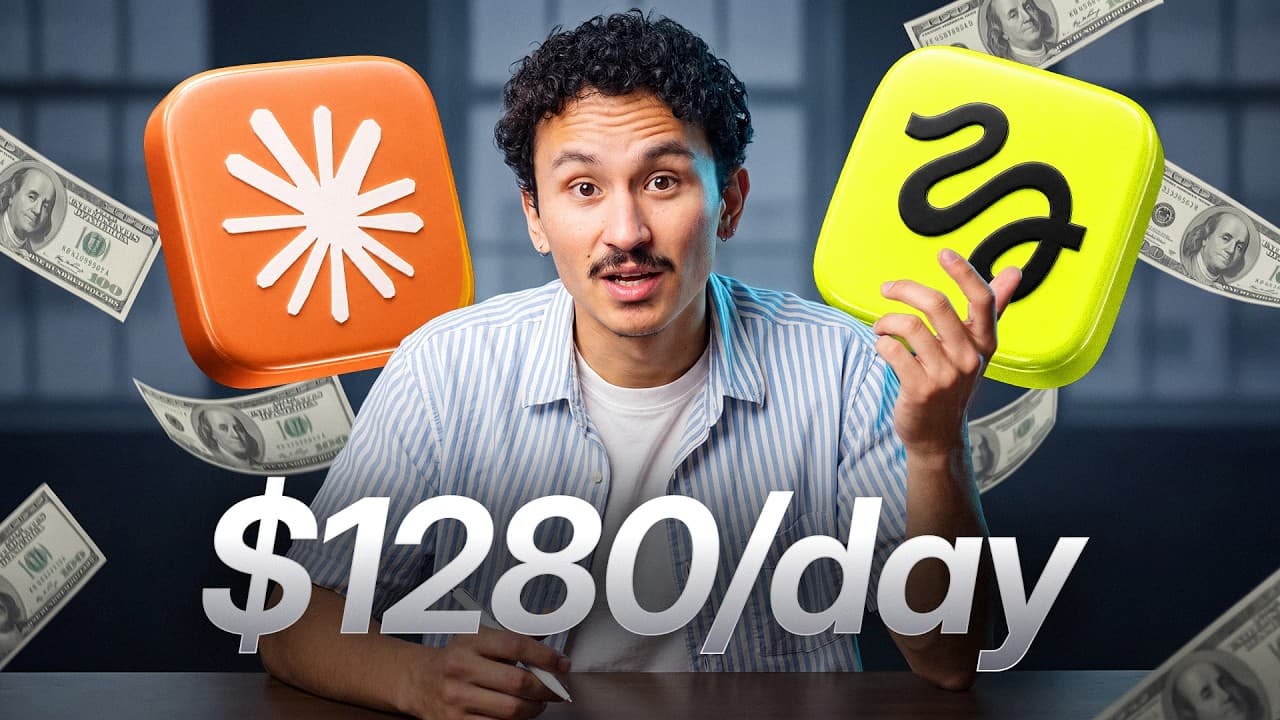
Build a portfolio of 15-second motion ads for tech, beverage, and education brands, then contact qualified businesses through Google Maps, Kickstarter, Amazon, and Shopify. The workflow combines Claude with Higgsfield MCP to generate storyboards, videos, and variations, while AI-assisted prospecting and Gmail outreach reduce the manual work involved in finding and contacting potential clients.
Transcript
Every day I receive hundreds of questions on how to make money with AI and Thropic just dropped Claude Fable 5 and I discovered the absolute easiest and fastest way. And today I'm going to show it to you. You'll learn how to earn money on AI, create ads, build a portfolio, and most importantly, find clients. Even without any experience in sales or ... Read More
Key Insights
- A portfolio is required before outreach because prospective clients commonly ask to see examples of previous work. The suggested starter portfolio contains three 15-second advertisements covering technology, beverage, and education niches, which helps businesses understand the service being offered.
- Claude and Higgsfield MCP divide the workflow into guidance and production. Claude asks questions and manages the process, while Higgsfield generates visual assets, storyboards, and videos, allowing a beginner without motion design experience to complete much of the work through prompts and approvals.
- A detailed storyboard improves consistency across an AI-generated advertisement. The demonstrated workflow uses eight frames, reviews whether the sequence aligns, and requires approval before video generation, reducing the likelihood of receiving random or disconnected shots in the final output.
- Classic motion is presented as suitable for digital products, while hypermotion is presented as suitable for physical products. This distinction gives beginners a straightforward way to choose a visual approach based on the type of product a prospective client sells.
- AI-generated variations can reduce production time for clients who need multiple versions. The presenter contrasts an estimated 80 hours for ten manually produced videos at eight hours each with an MCP workflow that can create variations for colors, flavors, or models in minutes.
- Google Maps prospecting focuses on restaurants, boutiques, gyms, coffee shops, and studios. The client-finder workflow filters inactive accounts, prioritizes active emails associated with owners or head managers, and searches additional public platforms when contact information is not immediately available.
- Kickstarter prospecting targets campaigns that have raised between 10 and 50% of their funding goal. Projects with zero funding are excluded for lacking market validation and budget, while very large campaigns are avoided because they may already use agencies or internal teams.
- The reported outreach produced 16 replies from 200 emails after 14 hours. Seven respondents were interested and agreed to proceed after hearing the price, although the transcript ends before providing the presenter's complete beginner pricing analysis or final recommended rate.
Install to Summarize YouTube Videos and Get Transcripts
Explore YouTube Video Summarizer or Get YouTube Transcript Extractor
Questions & Answers
Q: How can beginners create AI motion ads for businesses?
Beginners can connect Claude with Higgsfield MCP, upload the demonstrated motion design skill, and request a motion design video. Claude then asks for details such as assets, duration, format, style, and storyboard structure. In the example, the presenter chooses a 15-second horizontal video and an eight-frame storyboard, reviews the generated sequence, and approves it before final video generation.
Q: What should an AI motion design portfolio include?
A starter portfolio should contain examples that make the service clear to prospective clients. The presenter creates three motion videos for technology, beverage, and education niches before beginning outreach. These examples provide evidence of the expected visual quality and help answer the common client request to see previous work, even when the creator has not yet completed paid projects.
Q: How does Claude work with Higgsfield MCP?
Claude acts as the workflow guide, while Higgsfield performs the visual generation. After the custom connector is added through Claude's settings, the two accounts work together. Claude collects creative requirements and guides decisions, while Higgsfield can generate a missing logo, build a storyboard with GPT Image 2, and run Seedance 2.0 to produce the video.
Q: How long should an AI-generated motion advertisement be?
The demonstrated workflow uses a duration of 15 seconds, which the presenter describes as suitable for motion advertising. The creator also chooses a horizontal format and develops eight storyboard frames before generation. These are the settings used in the example rather than universal requirements, and the workflow allows users to choose another style or provide their own assets when available.
Q: What is the difference between classic motion and hypermotion?
The presenter recommends classic motion for digital products and hypermotion for physical products. This rule is offered as a simple way for beginners to adapt their service to different clients without conducting extensive marketing analysis. A software or other digital product would receive classic motion, while a beverage or another tangible item would receive the hypermotion approach.
Q: How can freelancers find clients for AI-generated ads?
The proposed prospecting system uses Google Maps, Kickstarter, Amazon, and Shopify. Google Maps provides local businesses such as restaurants, boutiques, gyms, coffee shops, and studios. Kickstarter provides campaigns needing product animations or explainers, while Amazon and Shopify provide established sellers whose storefronts may rely mainly on photographs, text, and reviews. AI collects and filters the contact information.
Q: Which Kickstarter campaigns should motion designers contact?
The presenter targets Kickstarter campaigns that have raised between 10 and 50% of their funding goal. Campaigns with zero funding are skipped because they may lack market validation and a working budget. Multimillion-dollar campaigns are also excluded because they may already have agency contracts or internal teams. Using these filters, the workflow produced 50 potential Kickstarter contacts.
Q: What results did the automated email outreach produce?
The workflow collected 200 email addresses across the presented prospecting sources and used a Gmail connector to personalize and send messages. The presenter says the complete email blast took about two minutes. After 14 hours, 16 recipients had replied. Some declined, while seven expressed interest and agreed to move forward after hearing the price.
Summary & Key Takeaways
-
The proposed service is creating 15-second motion advertisements with Claude and Higgsfield MCP. Claude guides the creative process, while Higgsfield produces assets, storyboards, and videos. A custom motion design skill asks for specifications such as duration, format, style, and storyboard length before generating the finished advertisement.
-
Before contacting clients, the presenter creates portfolio pieces for three common niches: technology, beverages, and education. He recommends eight storyboard frames because greater storyboard detail improves the final result. He also distinguishes classic motion for digital products from hypermotion for physical products, giving beginners a simple framework for matching styles to clients.
-
The client acquisition workflow targets businesses through Google Maps, Kickstarter, Amazon, and Shopify. AI filters contacts, collects public business information, and prepares email lists. The presenter reports finding 200 emails, receiving 16 replies after 14 hours, and identifying seven interested prospects who accepted the stated price and agreed to proceed.
Read in Other Languages (beta)
Share This Summary 📚
Summarize YouTube Videos and Get Video Transcripts with 1-Click
Try YouTube Summary with ChatGPT & Claude or YouTube Transcript Generator
Explore More Summaries from Higgsfield AI 📚





Summarize YouTube Videos and Get Video Transcripts with 1-Click
Try YouTube Summary with ChatGPT & Claude or YouTube Transcript Generator