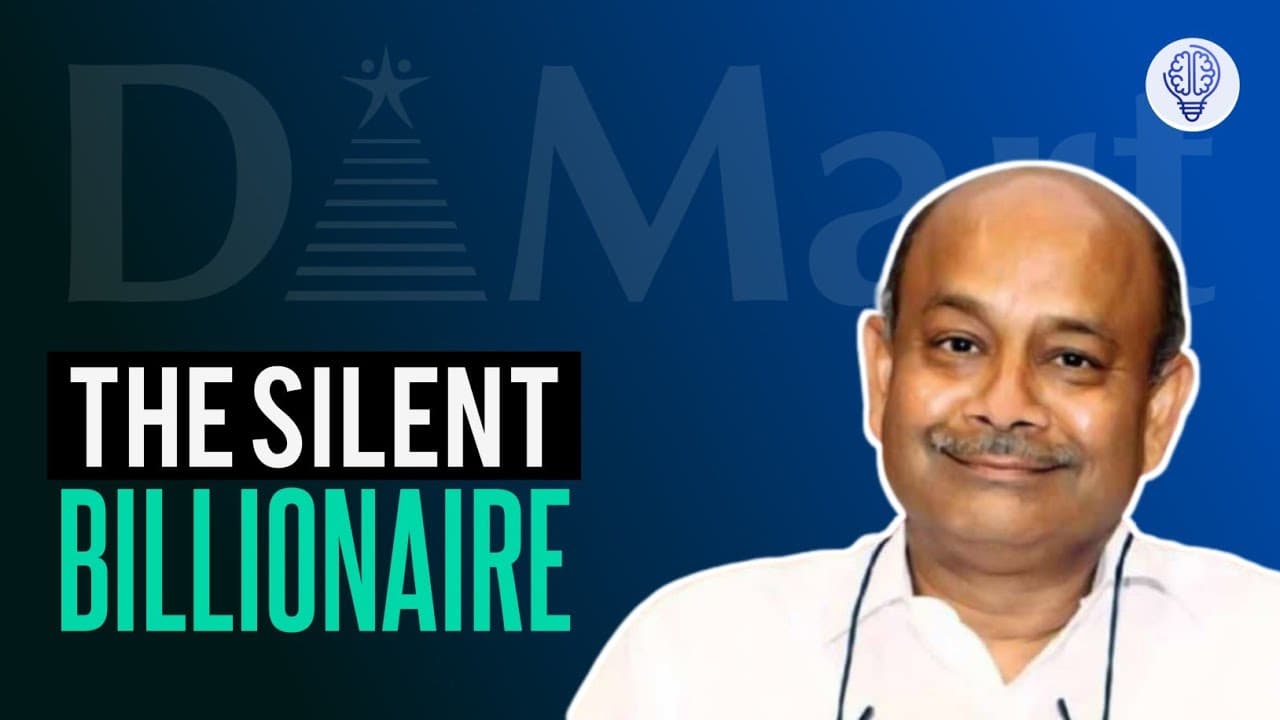
How Did DMart’s Business Strategy Make Radhakishan Damani the Retail King of India?
TL;DR
DMart dominated Indian grocery retail by selling products 6% to 15% below MRP while using higher sales volume, rapid inventory turnover, bulk purchasing, low-cost locations, and store ownership to control costs. Its careful expansion also strengthened operations and supplier relationships: after 19 years, it had 220 stores and had closed none before 2020. Read on to see how each part of Radhakishan Damani’s strategy reinforced the others.
Transcript
Hi everybody. DMart has been one of the most disruptive companies in the food retail industry of India. Ever since it went IPO in 2017, In just four years, demand share price shot up by 580 percent going from just 616 rupees to more than 4200 rupees in 2021. And the most astonishing thing about DMart is that in its 19 years of existence, it had not... Read More
Key Insights
- • DMart's core customer proposition is consistently low pricing, with products described as selling 6% to 15% below MRP. These discounts can materially improve household savings, especially for families whose income leaves little money for emergencies, medical visits, guests, or investments.
- • Small grocery discounts can create significant household value because essential purchases occur repeatedly. In the example from December 1993, applying a 15% DMart discount to groceries increases monthly savings from 183 rupees to 243 rupees, which the transcript characterizes as an increase of about 30%.
- • Deep discounting works by accepting a smaller profit per unit to stimulate higher sales volume and store traffic. The ghee example compares 1,000 packets sold at 579 rupees with 1,500 packets sold at 529 rupees, showing how discounts can accelerate demand despite lower direct profit.
- • Product assortment increases the value of customer traffic because shoppers attracted by a discounted item may purchase other goods during the same visit. DMart can therefore benefit beyond the margin earned on the promoted product, making store-wide sales volume important to the economics of discounting.
- • Faster inventory turnover reduces expired products and wastage while placing fresher stock on shelves. Rapid sales also let DMart order larger quantities from suppliers, improving its ability to negotiate lower purchase prices and preserve healthy unit profits while maintaining low consumer prices.
- • Bulk purchasing can make DMart's selling price equal to or lower than another retailer's purchase price. The transcript illustrates DMart buying 20,000 ghee packets at 399 rupees and selling at 499 rupees, while a smaller retailer purchases at 499 rupees and sells at the 579-rupee MRP.
- • Careful expansion supports operational discipline because DMart takes time to understand customers, improve efficiency, and strengthen supplier relationships before adding stores. After 19 years, the transcript reports only 220 stores and says no store had closed before 2020, when closures supported its online operation.
- • Store ownership and low-cost locations reduce recurring expenses and improve unit economics. The transcript reports equivalent rent at only 0.2% of DMart's total expenses in 2017, while its 2016 revenue and profitability reached 25,844 rupees and 965 rupees per square foot, respectively.
Install to Summarize YouTube Videos and Get Transcripts
Explore YouTube Video Summarizer or Get YouTube Transcript Extractor
Questions & Answers
Q: How did DMart dominate Indian grocery retail?
DMart combined prices 6% to 15% below MRP with deep discounting, product assortment, rapid inventory turnover, and large supplier orders. It also controlled expenses through store ownership, inexpensive locations, and careful expansion. Together, these choices increased customer traffic and bargaining power while reducing procurement costs and wastage.
Q: Why do DMart’s 6% to 15% discounts matter to households?
Groceries are recurring necessities, so even modest discounts can materially affect households with little money left after monthly expenses. In the December 1993 example, a family earning 5,458 rupees saved only 183 rupees, but a 15% grocery discount increased the stated savings to 243 rupees. The transcript describes that as about a 30% increase in savings.
Q: How does DMart’s deep-discounting strategy work?
DMart accepts less profit on each discounted item to attract more customers and sell more units. In the ghee example, selling 1,000 packets at 579 rupees produces about 87,000 rupees in profit, while selling 1,500 packets at 529 rupees produces 55,500 rupees. The greater traffic can still generate additional sales because shoppers may buy other products during the same visit.
Q: What is DMart’s product assortment strategy?
DMart uses a discounted product to bring more shoppers into stores, where they may purchase other items from its broader assortment. This means the value of the discount is not limited to the profit earned on the promoted product. Higher customer traffic can therefore support sales across multiple product categories.
Q: How does faster inventory turnover strengthen DMart’s business?
Faster turnover helps DMart replace sold inventory with fresh stock, resulting in fewer expired products and less wastage. Rapid sales also allow it to place larger orders with suppliers. Those orders provide bargaining power to negotiate lower procurement prices while continuing to offer low retail prices.
Q: Why can small retailers struggle to match DMart’s prices?
Small retailers may lack the sales volume needed to secure DMart’s procurement prices. In the transcript’s example, a smaller retailer buys ghee at 499 rupees and sells it at the 579-rupee MRP, while DMart orders 20,000 units at 399 rupees and sells them at 499 rupees. DMart’s selling price can therefore equal or undercut another retailer’s purchase price.
Q: Why did DMart expand its store network carefully?
DMart expanded carefully to understand customers, improve operational efficiency, and strengthen supplier relationships before opening more locations. After 19 years, it had only 220 stores, and the transcript says it had not closed a store before 2020. The 2020 closures were used to support its online operation during the pandemic.
Q: How did store ownership and low-cost locations help DMart?
DMart avoided fancy mall locations and owned many of its store properties, reducing recurring rental expenses despite the higher upfront cost. In 2017, its equivalent rent represented only 0.2% of total expenses, compared with 8% for Future Retail, 5% for HyperCity, and 3.4% for Reliance. These choices supported stronger economics at the store level.
Summary & Key Takeaways
-
DMart made low prices central to its appeal, particularly for middle-class and lower-middle-class households with limited monthly savings. The transcript illustrates that a 15% grocery discount could raise one example household's savings from 183 rupees to 243 rupees, making apparently modest discounts financially meaningful and encouraging strong customer loyalty.
-
Deep discounting reduces profit on an individual sale but can increase customer traffic, overall sales volume, and purchases across the product assortment. Faster inventory turnover also limits expired stock and wastage, keeps shelves supplied with fresh products, and enables DMart to negotiate lower procurement prices through substantially larger orders from suppliers.
-
DMart paired discounting with careful expansion, store ownership, and inexpensive locations outside fancy malls. By taking time to understand customers, improve operations, and build supplier relationships, it avoided closing a store until the pandemic. In 2016, it also generated substantially higher revenue and profit per square foot than the cited competitors.
Read in Other Languages (beta)
Share This Summary 📚
Summarize YouTube Videos and Get Video Transcripts with 1-Click
Try YouTube Summary with ChatGPT & Claude or YouTube Transcript Generator
Explore More Summaries from Think School 📚





Summarize YouTube Videos and Get Video Transcripts with 1-Click
Try YouTube Summary with ChatGPT & Claude or YouTube Transcript Generator