How Do Baclofen and Gabapentin Treat Pain?
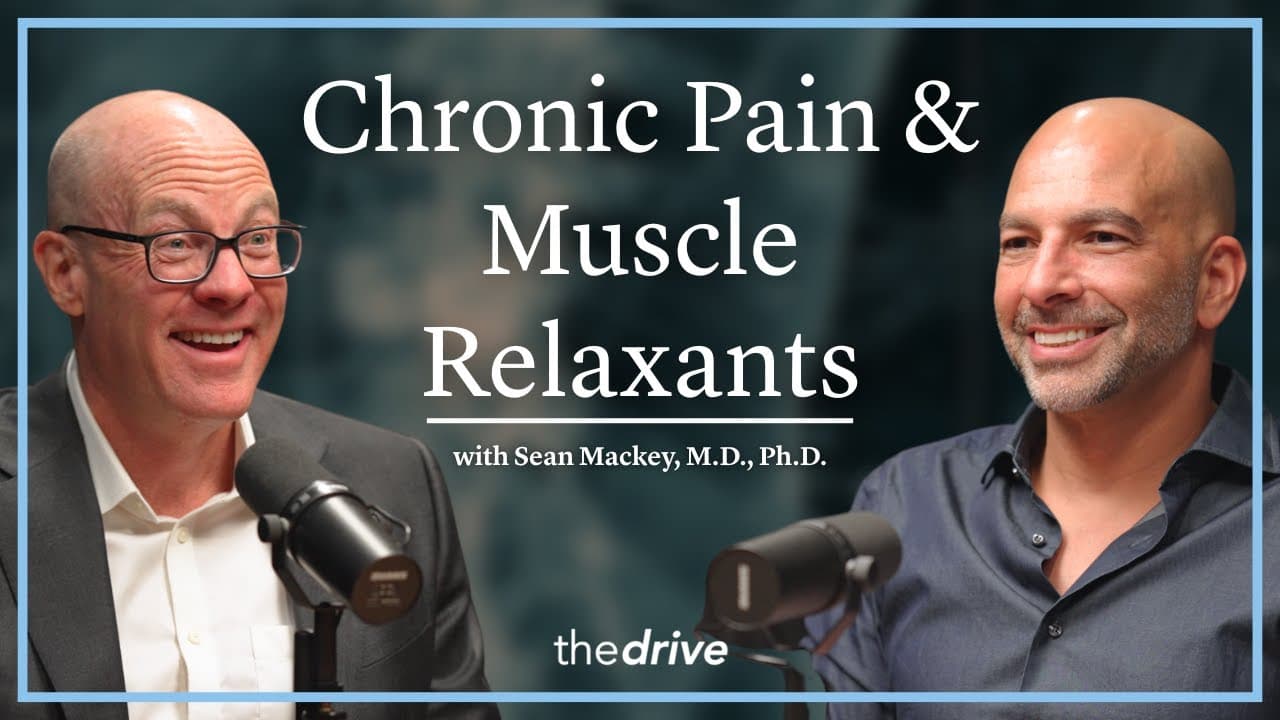
TL;DR
Baclofen can reduce muscle spasms with relatively low dependence risk, while gabapentin and pregabalin can turn down pain-signal processing in the spinal cord and brain. Each drug may cause sedation, and continued treatment should depend on measurable benefit. Chronic pain is best defined contextually as pain persisting beyond the expected period of tissue healing.
Transcript
I want to talk about muscle relaxants. So the other thing that has been a real uh favorite tool of mine is blephin. Now it's not a particularly potent muscle relaxing. Um but it seems to for me and for the patients of mine in whom it works offer something that something really potent like volume doesn't bring all the baggage of of of a benzo. Yeah.... Read More
Key Insights
- Baclofen is considered one of the safer muscle relaxants because it is not habit-forming like some alternatives. It can still cause sedation, particularly at higher doses, so its risks and benefits must be evaluated for the individual receiving it.
- Muscle relaxants are not typically supported for long-term chronic conditions by the available data discussed here. Baclofen may nevertheless be continued for years when an individual receives meaningful benefit, provided the clinician regularly checks whether treatment remains useful and appropriate.
- Intrathecal baclofen is delivered through a catheter into the cerebrospinal fluid for conditions such as spinal cord injury with intractable spasticity. This approach can control severe spasms when effective oral doses cannot be achieved without unacceptable limitations.
- Gabapentin and pregabalin work on the alpha 2 delta subunit of a calcium channel in the spinal cord and brain. They turn down the processing of incoming signals rather than acting directly on the injured nerve in a leg or another peripheral location.
- Sedation is a major practical risk of gabapentin and pregabalin. Patients may become too drowsy to drive or operate heavy machinery, while older patients may become unstable and face a greater concern about falls during treatment.
- Gabapentin dosing can be weighted toward nighttime because pain may become more noticeable when daytime distraction and coping strategies disappear. A lower daytime dose and a larger nighttime dose may reduce pain while also helping the patient get to sleep.
- Gabapentin absorption is limited by an active transport system in the small intestine. The discussion places its practical ceiling at roughly 900 to 1,000 milligrams per dose because medication beyond that amount may simply pass through without entering the system.
- Chronic pain is pain that persists beyond the expected time of tissue healing. The definition is context-specific because recovery after a relatively limited procedure differs from recovery after a massive operation such as a total knee replacement.
Install to Summarize YouTube Videos and Get Transcripts
Explore YouTube Video Summarizer or Get YouTube Transcript Extractor
Questions & Answers
Q: How is baclofen used for muscle spasms and pain?
Baclofen may be used for acute or subacute muscle spasms and as a monitored trial in selected chronic conditions. One discussed example involved short courses combined with an NSAID after sleep-related neck tightness or prolonged driving. The clinician emphasized that treatment decisions depend on the individual’s benefit, sedation, dose, and ongoing balance between costs and benefits.
Q: Is baclofen safe for long-term use?
Baclofen can be continued long term, even for a person’s lifetime, when it provides sustained benefit and its adverse effects remain acceptable. However, long-term treatment should not continue automatically. The clinician should repeatedly ask whether the medication still helps, whether sedation or other costs are significant, and whether the dose should be reduced or gradually weaned.
Q: What baclofen dose was discussed for pain treatment?
The discussion described comfort with baclofen doses of up to 20 milligrams three times daily, while noting that about 80 milligrams was believed to be the upper end and was not usually reached in practice. Sedation was described as individual and dose-dependent, meaning higher doses generally create a greater likelihood of drowsiness and require closer evaluation.
Q: When is intrathecal baclofen considered?
Intrathecal baclofen may be considered for people with a spinal cord injury and intractable spasticity when oral medication cannot adequately control their spasms. A small catheter is threaded into the cerebrospinal fluid so baclofen can be delivered directly. The procedure was characterized as minimal surgery and potentially lifesaving for appropriately selected patients with severe symptoms.
Q: How do gabapentin and pregabalin reduce neuropathic pain?
Gabapentin and pregabalin share the same mechanism of action, working on the alpha 2 delta subunit of a calcium channel in the spinal cord and brain. They reduce the processing of signals traveling through the central nervous system. They do not primarily repair or suppress the peripheral nerve located in the painful foot, leg, or other body part.
Q: What side effects can gabapentin and pregabalin cause?
Gabapentin and pregabalin can cause sedation severe enough to make driving or operating heavy machinery unsafe. Older patients may also become unstable, creating concern about falls. Both drugs can produce peripheral edema or water retention, and pregabalin was particularly associated with this observation. Their sedating effects may help sleep, although perceived sleep quality can vary.
Q: Why might a clinician switch from gabapentin to pregabalin?
A clinician may switch when gabapentin provides benefit but has reached its useful dosing limit. Gabapentin relies on active transport in the small intestine and maxes out at roughly 900 to 1,000 milligrams per dose. Pregabalin has a linear kinetic profile, so increasing its dose puts progressively more medication into the system and may address more resistant pain.
Q: How is chronic pain defined without a fixed time limit?
Chronic pain is defined as pain that continues beyond the expected period of tissue healing, rather than pain that simply lasts three or six months. The expected period depends on the procedure or injury. Persistent pain a few months after a quickly healing operation may raise concern, while substantial pain after a total knee replacement may still fit its longer recovery context.
Summary & Key Takeaways
-
Baclofen is described as a relatively safe, non-habit-forming option for muscle spasms. It may be tried for acute, subacute, or selected chronic problems, with sedation becoming more likely at higher doses. Long-term use can be reasonable when benefits continue, but treatment should be reassessed and reduced when it no longer helps.
-
Gabapentin and pregabalin act on the alpha 2 delta subunit of calcium channels in the spinal cord and brain, reducing processed pain signals rather than directly treating a peripheral nerve. Both can cause sedation, instability, edema, and sleep-related effects, so dosing and safety precautions must reflect each patient’s response.
-
Gabapentin absorption reaches a practical limit because it depends on active transport in the small intestine, while pregabalin has a linear kinetic profile. A clinician may switch to pregabalin when gabapentin is helping but additional gabapentin provides little value. Chronic pain itself is defined by expected healing time, not a rigid calendar threshold.
Read in Other Languages (beta)
Share This Summary 📚
Summarize YouTube Videos and Get Video Transcripts with 1-Click
Try YouTube Summary with ChatGPT & Claude or YouTube Transcript Generator
Explore More Summaries from Peter Attia MD 📚






Summarize YouTube Videos and Get Video Transcripts with 1-Click
Try YouTube Summary with ChatGPT & Claude or YouTube Transcript Generator