How Did Lincoln Overcome Distraction and Danger?
TL;DR
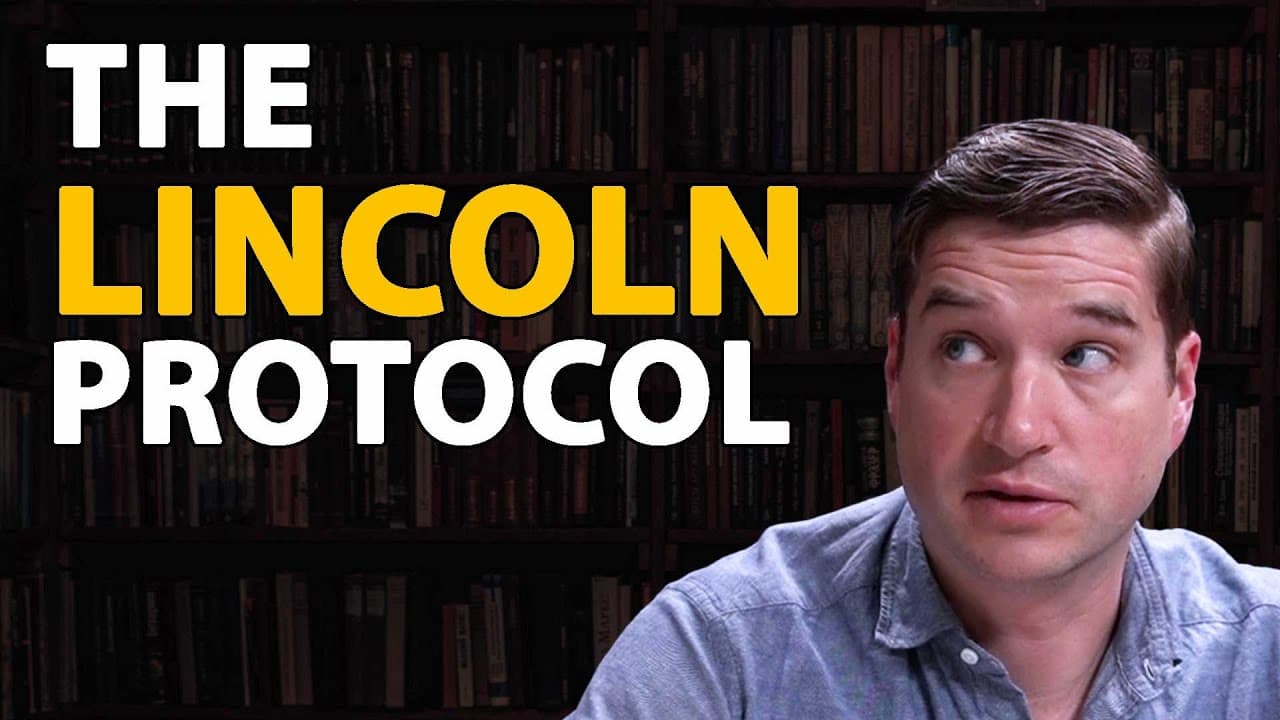
Abraham Lincoln’s life suggests that meaningful achievement remains possible amid distraction, danger, and darkness. Although his frontier environment lacked smartphones and social media, it contained powerful diversions, physical violence, prejudice, poverty, and repeated hardship, yet Lincoln developed the focus needed for an improbable rise. His example reframes digital distraction as a recurring human challenge rather than a uniquely modern barrier.
Transcript
Back in 2008, in the early days of my writing career, when I had just published two books and my newsletter was still new, I published an essay with a anacronistic title. It was called, "Would Lincoln still be president if he had email?" I actually want to load this newsletter essay up on the screen here for people who are watching instead of just ... Read More
Key Insights
- Lincoln’s frontier environment contained analog versions of modern digital traps. Alcohol, tobacco, gambling, violence, prejudice, poverty, and grim hardship competed with difficult but meaningful pursuits, much as online entertainment and conflict can divert attention from valuable work today.
- Newport’s 2008 argument was that internet distraction might prevent potential historic figures from developing their abilities. After studying Lincoln through at least half a dozen full-length biographies, he concluded that Lincoln’s own environment was already filled with powerful distractions and destabilizing forces.
- Meaningful achievement requires sustained focus on difficult questions. Newport’s original essay argued that history’s influential figures were willing to invest long, hard hours, then asked whether people surrounded by internet distractions still possessed the ability to make that commitment.
- Alcohol was a major life-diverting distraction in Lincoln’s frontier world. A contemporary description of Pigeon Creek reported extensive whiskey consumption, while records from a nearby town showed three retail liquor licenses in 1819 despite a population of fewer than one hundred.
- Physical violence was a recurring danger in frontier communities. Men fought for status, boredom, or revenge, and the consequences could include broken bones or the loss of eyes and ears, creating a genuinely threatening environment rather than merely a reputational one.
- Lincoln’s arrival in New Salem required him to confront the local social order. After moving there in 1831 to work as a store clerk, he fought Jack Armstrong of the Clary Grove Boys and won, aided by his six-foot-four, 185-pound frame and strength.
- Darkness in Lincoln’s environment included widespread hatred toward Native Americans. William Lee Miller described this hatred as ubiquitous, connecting it to violent encounters that remained within the recent memory of white settlers living in western frontier communities.
- Lincoln’s family history included violence, lost property, and poverty. His grandfather was killed in his Kentucky farm fields, his father Thomas narrowly escaped, and the family could not preserve the land, leaving Thomas without property or an inheritance to pass down.
Install to Summarize YouTube Videos and Get Transcripts
Explore YouTube Video Summarizer or Get YouTube Transcript Extractor
Questions & Answers
Q: How did Abraham Lincoln overcome a distracting environment?
Lincoln’s example shows that a distracting environment does not make meaningful achievement impossible. He spent his formative years in a frontier culture shaped by alcohol, tobacco, gambling, violence, prejudice, poverty, and repeated hardship. Newport argues that Lincoln still developed his mind and pursued consequential work, suggesting that progress depends on cutting through available diversions and directing sustained effort toward difficult, important questions.
Q: What is the Lincoln Protocol described by Cal Newport?
The Lincoln Protocol is Newport’s framing for drawing lessons about modern digital life from Abraham Lincoln’s response to his own difficult environment. The supplied transcript establishes its central comparison: smartphones, social media, streaming entertainment, video games, online mobs, and other digital pressures have historical counterparts in frontier distraction, physical danger, hatred, and hardship. Lincoln’s rise provides the model for escaping those traps.
Q: Why does Cal Newport compare smartphones with frontier alcohol?
Newport compares them because both can offer immediate relief from harder and ultimately more rewarding activities. Smartphones provide apps, streaming content, games, and other forms of intense engagement. In Lincoln’s frontier setting, alcohol served as a common escape from a difficult life. The technologies differ, but Newport argues that the underlying temptation to avoid demanding work is similar.
Q: What distractions existed while Abraham Lincoln was growing up?
Lincoln’s environment included heavy drinking, smoking, chewing tobacco, and gambling. A contemporary recollection said that large quantities of whiskey were consumed in Pigeon Creek and that drinking occurred whenever occasions arose. Newport also cites a nearby town that issued three retail liquor licenses in 1819 despite having fewer than one hundred residents, showing how deeply alcohol was embedded in frontier life.
Q: How dangerous was the frontier society around Lincoln?
Frontier danger included frequent and sometimes brutal physical fights. Men fought for social standing, boredom, or revenge, and participants could suffer broken bones or lose eyes and ears. When Lincoln moved to New Salem in 1831 to become a store clerk, he had to fight Jack Armstrong, leader of the Clary Grove Boys, before being accepted into local economic life.
Q: Why did Cal Newport change his view about Lincoln and email?
In 2008, Newport worried that internet distraction could derail people who might otherwise lead meaningful or historically important lives. After reading at least half a dozen full-length biographies of Lincoln, he recognized that Lincoln’s world had its own severe forms of distraction, danger, and darkness. Newport therefore came to believe that Lincoln could still have risen amid digital distractions and that modern readers can study his example.
Q: What does Lincoln’s life suggest about modern digital distraction?
Lincoln’s life suggests that distraction is not solely a technological problem. Modern people face email, smartphones, social media, artificial intelligence, online mobs, streaming entertainment, video games, and meme culture, while Lincoln faced alcohol, gambling, violence, prejudice, poverty, and instability. Newport’s comparison implies that difficult surroundings can obstruct meaningful work, but they do not necessarily eliminate the possibility of focus and influence.
Q: How did family hardship shape Abraham Lincoln’s early life?
Lincoln’s grandfather was killed while working in his Kentucky farm fields, and Lincoln’s father, Thomas, narrowly escaped being killed. The family then could not maintain its land and lost the property, leaving Thomas without an inheritance. Newport connects this history to the poverty of Lincoln’s upbringing and to a broader frontier environment marked by bad luck, violence, hardship, and resentment.
Summary & Key Takeaways
-
Cal Newport revisits a 2008 essay asking whether Abraham Lincoln could have become president in an age of email. After reading at least half a dozen full-length Lincoln biographies, Newport changes his view. He argues that Lincoln faced analog versions of modern distraction, danger, and darkness, making his life relevant to digital culture.
-
Frontier communities offered compelling escapes from difficult lives through heavy alcohol use, tobacco, gambling, and frequent fighting. Pigeon Creek, where Lincoln spent roughly ages seven through twenty-one, reflected this culture. A nearby town with fewer than one hundred residents granted three separate retail liquor licenses in 1819, illustrating alcohol’s prevalence.
-
Lincoln also lived with physical danger, deep prejudice, poverty, and family trauma. His grandfather was killed in Kentucky, and the resulting loss of property contributed to the family’s hardship. Newport presents Lincoln’s improbable rise as evidence that difficult surroundings do not automatically prevent disciplined development, meaningful action, or lasting influence.
Read in Other Languages (beta)
Share This Summary 📚
Summarize YouTube Videos and Get Video Transcripts with 1-Click
Try YouTube Summary with ChatGPT & Claude or YouTube Transcript Generator
Explore More Summaries from Cal Newport 📚



Summarize YouTube Videos and Get Video Transcripts with 1-Click
Try YouTube Summary with ChatGPT & Claude or YouTube Transcript Generator