How Do Paid Newsletters Generate Seven Figures?
TL;DR
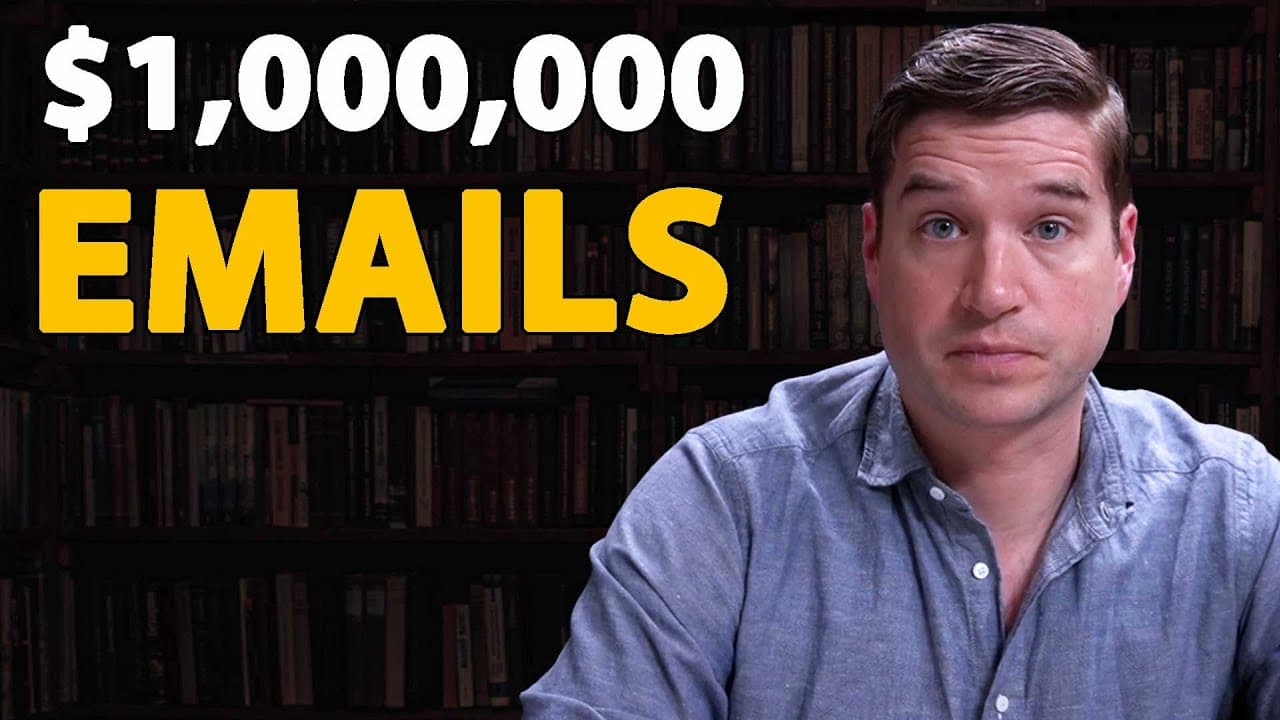
A large free audience can generate seven-figure annual revenue when even a small share buys a paid newsletter subscription. Paul Krugman’s Substack has 505,000 subscribers and charges $7 per month, so Cal Newport’s scenarios produce estimated annual revenue ranging from $1.26 million to more than $4 million before accounting for Substack’s cut.
Transcript
Right around this time last year, one of the big stories in the world of media was the announcement that the economist and columnist Paul Krugman was leaving the New York Times. I'm going to load here on the screen for people who are watching one of the articles from around this period. You can see the headline was Paul Krugman on leaving the New Y... Read More
Key Insights
- Paul Krugman’s Substack has 505,000 subscribers and ranks number six in US politics. That audience reportedly rivals The New York Times Sunday print circulation and gives an independent newsletter considerable reach within political and economic discussion.
- Krugman’s publishing schedule is approximately daily, with recent posts appearing on consecutive days. His work ranges from short observations written during a travel day to longer posts containing analysis, links, a table, and commentary on current events.
- The paid subscription costs $7 per month and provides subscriber-only posts, access to the complete archive, and permission to comment. Free followers still receive considerable material because only one post per week appeared to be restricted at the time examined.
- Substack says newsletters combining free and paid tiers can expect between 5% and 10% of subscribers to pay, with 3% representing a lower-end scenario. Newport uses all three conversion rates because Krugman’s actual number of paying subscribers is not disclosed.
- A 10% conversion rate would give Krugman 50,000 paying subscribers and generate $350,000 per month. That scenario produces more than $4 million in annual subscription revenue before subtracting Substack’s share.
- A 5% conversion rate would produce approximately 25,000 paying subscribers, $175,000 in monthly fees, and slightly more than $2 million annually. The calculation shows how a modest paid share can support an independent writer when the total audience is exceptionally large.
- A 3% conversion rate would still create 15,000 paying subscribers and $105,000 in monthly fees. That equals approximately $1.26 million in annual revenue, supporting the claim that Krugman’s earnings have moved comfortably into seven figures.
- Successful newsletter publishing is demanding professional work rather than an effortless extension of personal commentary. Nate Silver, whose politics ranking was described as similar to Krugman’s, says producing his newsletter is creatively fulfilling and financially rewarding but also requires substantial effort.
Install to Summarize YouTube Videos and Get Transcripts
Explore YouTube Video Summarizer or Get YouTube Transcript Extractor
Questions & Answers
Q: How much money could Paul Krugman earn from Substack?
Paul Krugman could plausibly generate between $1.26 million and more than $4 million in annual subscription revenue, based on the scenarios presented. The low estimate assumes 3% of his 505,000 subscribers pay $7 monthly, while the high estimate assumes 10% pay. These figures do not subtract Substack’s cut, so they represent revenue rather than final take-home income.
Q: How is Paul Krugman’s Substack revenue estimated?
The estimate multiplies Krugman’s 505,000 total subscribers by possible paid-conversion rates of 3%, 5%, and 10%. The resulting paid-subscriber totals are then multiplied by the $7 monthly subscription price and extended across a year. Because his true paid-subscriber count is unavailable, the calculation provides a plausible range rather than a confirmed income figure.
Q: What paid conversion rate does Substack suggest?
Substack says a standard newsletter offering both free and paid tiers can expect approximately 5% to 10% of subscribers to choose the paid option. A rate of 3% is presented as a lower-end case. Newport applies each of these rates to Krugman’s audience because no exact count of his paying subscribers is provided.
Q: What do paying subscribers receive from Krugman’s newsletter?
Paying subscribers receive subscriber-only posts, access to the complete archive, and the ability to participate in comments. The subscription costs $7 per month. Free followers receive occasional public posts, and the review described substantial free access because Krugman appeared to reserve only one post per week for paying subscribers while publishing approximately every day.
Q: How often does Paul Krugman publish on Substack?
Paul Krugman publishes approximately every day. The newsletter page showed posts from the recording day and from each of the preceding several days. The format varies with his schedule and subject: one travel-day entry contained only two paragraphs and a sentence, while another was a longer current-events analysis with links, a table, and a musical coda.
Q: Can paid newsletters replace traditional journalism?
Paid newsletters may provide an economic foundation for independent professional journalism when respected experts bring large audiences and convert a small share into paying subscribers. Krugman’s example demonstrates substantial reach and seven-figure revenue potential. However, the discussion frames replacement as an open question, not a settled conclusion, and asks whether his success is broadly reproducible or exceptional.
Q: Why is Paul Krugman’s Substack significant for media?
Krugman’s newsletter challenges the pessimistic idea that the decline of traditional media must eliminate careful expert analysis. After leaving The New York Times, he built a Substack audience of 505,000 subscribers, reportedly influenced public discussion, and entered a seven-figure earnings range. His case suggests expertise can potentially survive through direct reader support outside established publications.
Q: How much work does a successful Substack require?
A leading Substack requires frequent and demanding professional work. Krugman publishes approximately every day, producing both quick observations and longer analytical posts. Nate Silver, described as having a similar position on the Substack politics leaderboard, says creating his own newsletter is creatively fulfilling and financially rewarding, but also emphasizes that the production process involves substantial effort.
Summary & Key Takeaways
-
Paul Krugman’s departure from The New York Times initially appeared to represent the continuing decline of traditional media. His subsequent success on Substack suggests a more optimistic possibility: established experts may reach large audiences, influence public discussion, and earn substantial income without relying on a traditional newspaper or attention-driven social platform.
-
Krugman’s Substack has 505,000 subscribers, ranks number six in US politics, and publishes roughly every day. Free followers receive occasional public posts, while paying subscribers receive subscriber-only posts, the complete archive, and commenting privileges. Recent examples range from brief observations to longer, evidence-supported analysis of current events.
-
Using Substack’s expected paid-conversion range, Newport estimates Krugman could earn between $1.26 million and more than $4 million annually before Substack’s cut. The analysis indicates that converting only a small portion of a very large audience can create substantial revenue, although maintaining a leading newsletter requires frequent, demanding work.
Read in Other Languages (beta)
Share This Summary 📚
Summarize YouTube Videos and Get Video Transcripts with 1-Click
Try YouTube Summary with ChatGPT & Claude or YouTube Transcript Generator
Explore More Summaries from Cal Newport 📚



Summarize YouTube Videos and Get Video Transcripts with 1-Click
Try YouTube Summary with ChatGPT & Claude or YouTube Transcript Generator