Products
Features
YouTube Video Summarizer
Summarize YouTube videos
Web & PDF Highlighter
Highlight web pages & PDFs
Chat with PDF
Ask any PDF questions with AI
Ask AI Clone
Chat with your highlights & memories
Audio Transcriber
Transcribe audio files to text
Glasp Reader
Read and highlight articles
Kindle Highlight Export
Export your Kindle highlights
Idea Hatch
Hatch ideas from your highlights
Integrations
Obsidian Plugin
Notion Integration
Pocket Integration
Instapaper Integration
Medium Integration
Readwise Integration
Snipd Integration
Hypothesis Integration
Apps & Extensions
Chrome Extension
Safari Extension
Edge Add-ons
Firefox Add-ons
iOS App
Android App
Discover
Discover
Ideas
Discover new ideas and insights
Articles
Curated articles and insights
Books
Book recommendations by great minds
Posts
Essays and notes from readers
Quotes
Inspiring quotes collection
Videos
Curated videos and summaries
Explore Glasp
Glasp Newsletter
Weekly insights and updates
Glasp Talk
Interview series with great minds
Glasp Blog
Latest news and articles
Glasp Use Cases
Learn how others use Glasp
Build & Support
Glasp API
Access Glasp's API for developers
MCP Connector
Connect Glasp to Claude & ChatGPT
Community
Glasp Reddit Community
Students
Student discount and benefits
FAQs
Frequently Asked Questions
AboutPricing
DashboardLog inSign up

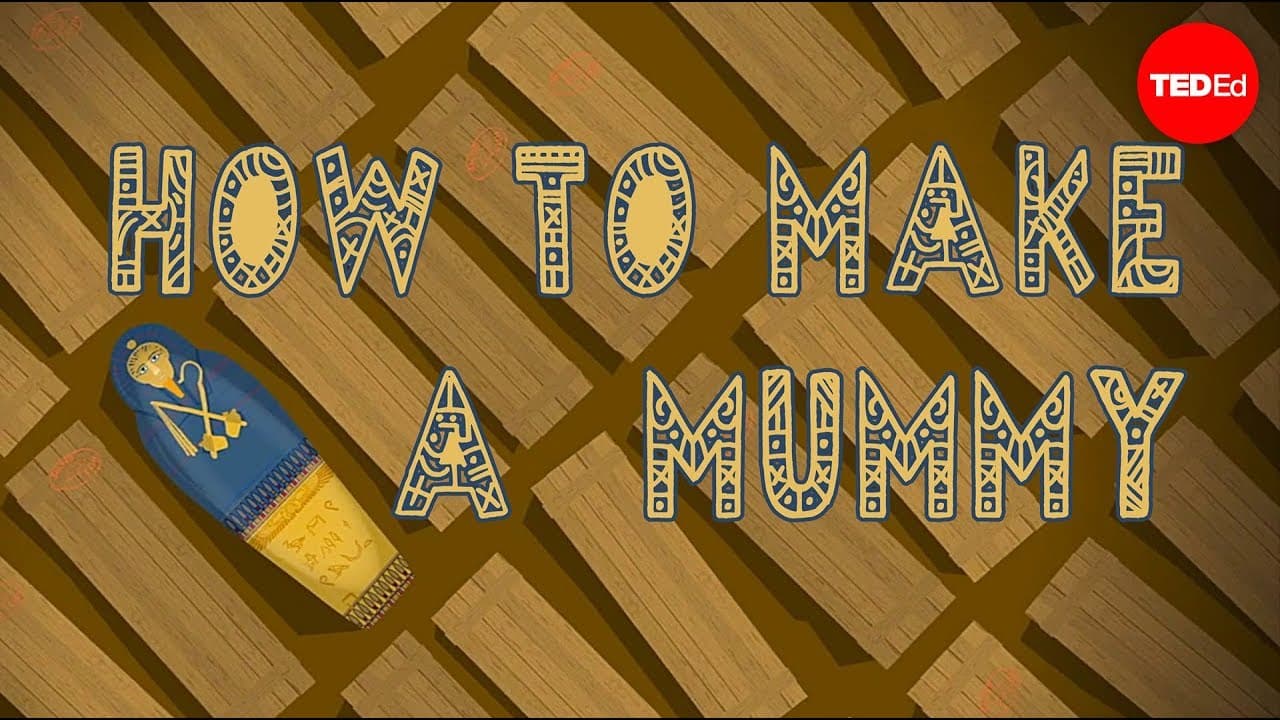
How Did Ancient Egyptians Make Mummies?
5.2M views
•
June 18, 2015
by
TED-Ed
YouTube video player
How Did Ancient Egyptians Make Mummies?

TL;DR

Ancient Egyptians mummified bodies by removing internal organs and using natron salts to prevent decay. The process involved treating the body with resin and wrapping it in linen, resulting in remarkably preserved mummies that continue to provide insights into ancient health and diseases.

Transcript

Death and taxes are famously inevitable, but what about decomposition? As anyone who's seen a mummy knows, ancient Egyptians went to a lot of trouble to evade decomposition. So, how successful were they? Living cells constantly renew themselves. Specialized enzymes decompose old structures, and the raw materials are used to build new ones. But wh... Read More

Key Insights

  • 🛟 Ancient Egyptians used a complex process to preserve bodies and evade decay, resulting in well-preserved mummies.
  • 👻 Mummification allowed scientists to perform autopsies on mummies and gain insights into ancient diseases such as cardiovascular disease and tuberculosis.
  • 😀 Ancient Egyptians faced air pollution, likely due to indoor fires used to bake bread.
  • 👻 The removal of organs and the preservation process resulted in mummies that were not intact human bodies but allowed for DNA samples to be isolated.

Install to Summarize YouTube Videos and Get Transcripts

Explore YouTube Video Summarizer or Get YouTube Transcript Extractor

Questions & Answers

Q: How did Ancient Egyptians prevent decomposition of the brain?

Ancient Egyptians removed the brain by hammering a spike into the skull, flushing it out the nose, and pouring tree resins into the skull to prevent further decay.

Q: What were the risks associated with decaying guts?

Decaying guts contained digestive enzymes and bacteria which start eating the corpse from the inside. To prevent this, priests removed the lungs and abdominal organs first.

Q: What substance did Ancient Egyptians use to prevent decay?

They used natron, which is a naturally occurring salt mainly composed of alkaline salts like soda ash and baking soda. Natron kills bacteria, prevents the body's enzymes from working, and maintains the corpse's structure.

Q: How did Ancient Egyptians preserve the outer flesh of the mummy?

After removing the organs and treating with natron, the corpse was placed in a bed of natron for around 35 days, which preserved the outer flesh by sucking out fluids and forming hard brown clumps.

Summary & Key Takeaways

  • Ancient Egyptians mummified bodies to avoid decomposition by removing organs and utilizing natron salts.

  • Brains and internal organs were removed first, followed by the use of natron to prevent decay.

  • The body was then treated with resin, wrapped in linen, and placed in nested coffins, resulting in well-preserved mummies.


Read in Other Languages (beta)

English

Share This Summary 📚

Summarize YouTube Videos and Get Video Transcripts with 1-Click

Download browser extensions on:

Try YouTube Summary with ChatGPT & Claude or YouTube Transcript Generator

Explore More Summaries from TED-Ed 📚

The myth of Icarus and Daedalus - Amy Adkins thumbnail
The myth of Icarus and Daedalus - Amy Adkins
TED-Ed
The immortal cells of Henrietta Lacks - Robin Bulleri thumbnail
The immortal cells of Henrietta Lacks - Robin Bulleri
TED-Ed
Why is it so hard to cure cancer? - Kyuson Yun thumbnail
Why is it so hard to cure cancer? - Kyuson Yun
TED-Ed
How does laser eye surgery work? - Dan Reinstein thumbnail
How does laser eye surgery work? - Dan Reinstein
TED-Ed
How the food you eat affects your gut - Shilpa Ravella thumbnail
How the food you eat affects your gut - Shilpa Ravella
TED-Ed
How to manage your time more effectively (according to machines) - Brian Christian thumbnail
How to manage your time more effectively (according to machines) - Brian Christian
TED-Ed

Summarize YouTube Videos and Get Video Transcripts with 1-Click

Download browser extensions on:

Try YouTube Summary with ChatGPT & Claude or YouTube Transcript Generator

Apps & Extensions

  • Chrome Extension
  • Safari Extension
  • Edge Add-ons
  • Firefox Add-ons
  • iOS App
  • Android App

Key Features

  • YouTube Video Summarizer
  • Web & PDF Summarizer
  • Web & PDF Highlighter
  • Chat with PDF
  • Ask AI Clone
  • Audio Transcriber
  • Glasp Reader
  • Kindle Highlight Export
  • Idea Hatch

Integrations

  • Obsidian Plugin
  • Notion Integration
  • Pocket Integration
  • Instapaper Integration
  • Medium Integration
  • Readwise Integration
  • Snipd Integration
  • Hypothesis Integration

More Features

  • APIs
  • MCP Connector
  • Blog & Post
  • Embed Links
  • Image Highlight
  • Personality Test
  • Quote Shots

Company

  • About us
  • Blog
  • Community
  • FAQs
  • Job Board
  • Newsletter
  • Pricing
Terms

•

Privacy

•

Guidelines

© 2026 Glasp Inc. All rights reserved.