How a wound heals itself - Sarthak Sinha
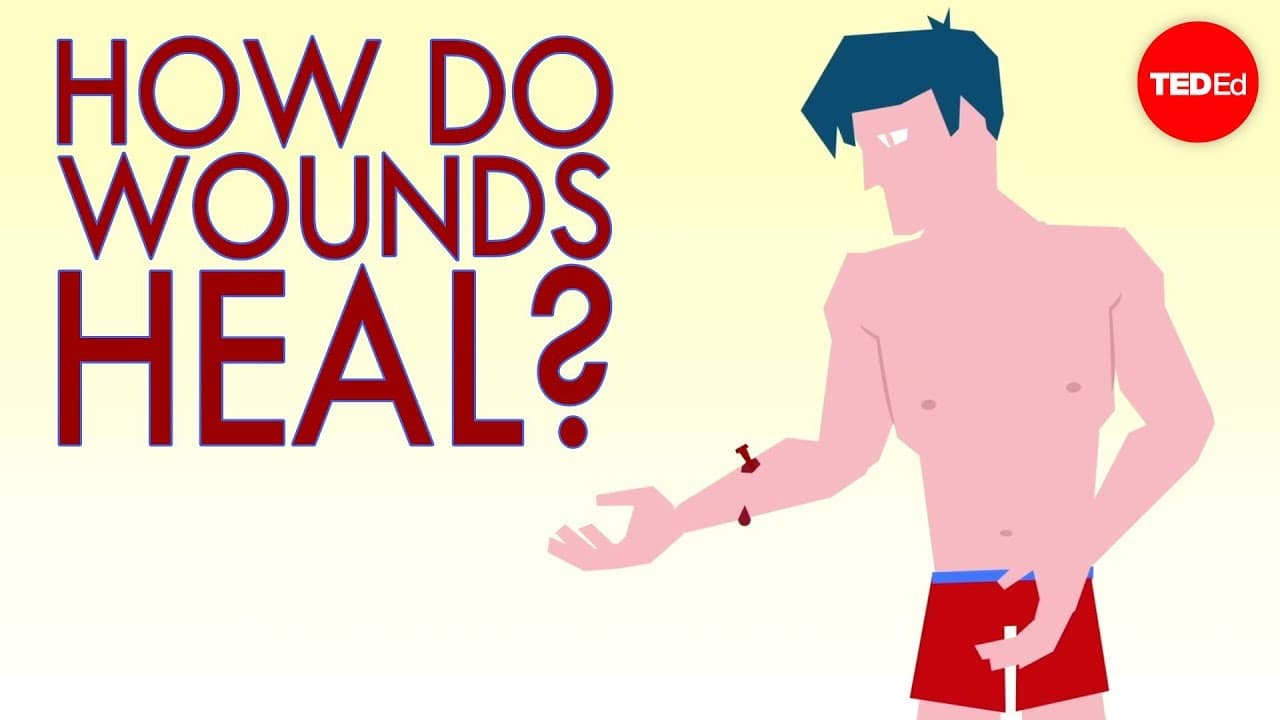
TL;DR
Skin heals through four overlapping stages: hemostasis, inflammation, proliferation, and remodeling. While it can recover partially, it may not regain full functional capacity, leading to scarring, which is a common issue after injury. The skin ultimately reaches 50-80% of its original function, depending on the severity of the wound.
Transcript
The largest organ in your body isn't your liver or your brain. It's your skin, with a surface area of about 20 square feet in adults. Though different areas of the skin have different characteristics, much of this surface performs similar functions, such as sweating, feeling heat and cold, and growing hair. But after a deep cut or wound, the newly ... Read More
Key Insights
- ❓ Skin regenerates through four stages: hemostasis, inflammation, proliferation, and remodeling.
- 🤍 White blood cells play a crucial role in fighting pathogens and aiding healing during the skin regeneration process.
- 🏣 Scarring can occur post-injury as the skin does not fully recover its original function, impacting tensile strength and appearance.
Install to Summarize YouTube Videos and Get Transcripts
Explore YouTube Video Summarizer or Get YouTube Transcript Extractor
Questions & Answers
Q: What are the four stages involved in skin regeneration after a wound?
The four stages are hemostasis, inflammation, proliferation, and remodeling, where the skin responds to injury by forming blood clots, fighting pathogens, producing collagen, and maturing the wound.
Q: What role do white blood cells play in the skin regeneration process?
White blood cells, like macrophages, help in fighting pathogens through phagocytosis and produce growth factors to aid healing during the inflammatory stage of skin regeneration.
Q: Why does the skin sometimes not fully regain its original function after healing?
The skin may not fully recover due to scarring, where the newly deposited collagen does not fully replicate the original skin structure, impacting function to some degree post-injury.
Q: What mysteries remain regarding the skin healing process?
Some unresolved mysteries include the origin of fibroblast cells during wound healing and why some mammals like deer can heal wounds more efficiently than humans.
Summary
The human skin, the largest organ in the body, undergoes a regenerative process when injured. This process consists of four stages: hemostasis, inflammation, proliferation, and remodeling. However, the skin does not fully recover and scarring remains a major clinical issue. Many mysteries about the healing process, such as the origin of fibroblast cells and the differences with other mammals, are yet to be understood.
Questions & Answers
Q: What is the largest organ in the human body?
The largest organ in the human body is the skin, with a surface area of about 20 square feet in adults. It performs various functions such as sweating, feeling heat and cold, and growing hair.
Q: What happens to the newly healed skin after a deep cut or wound?
After a deep cut or wound, the newly healed skin may look different from the surrounding area and may not fully regain all its abilities for a while, or at all.
Q: What are the different layers of the skin?
The skin consists of different layers. The top layer is called the epidermis, which mostly consists of hardened cells called keratinocytes and provides protection. The deeper layer, known as the dermis, contains blood vessels, glands, and nerve endings that enable the skin's many functions.
Q: What are the four stages of the regenerative process?
The regenerative process of the skin consists of four stages: hemostasis, inflammation, proliferation, and remodeling.
Q: What happens during the hemostasis stage?
The hemostasis stage is the skin's response to immediate threats. It involves vasoconstriction, where blood vessels tighten to minimize bleeding, and the formation of a blood clot using a protein called fibrin. This prevents blood from flowing out and pathogens from getting in.
Q: What occurs during the inflammation stage?
The inflammation stage begins approximately three hours after the wound. With bleeding controlled and the barrier secured, the body sends special cells, including white blood cells called macrophages, to fight any pathogens that may have entered. Macrophages devour bacteria, damage tissue, and produce growth factors to promote healing.
Q: When does the proliferative stage happen?
The proliferative stage occurs about two to three days after the wound. During this stage, fibroblast cells enter the wound and produce collagen, a fibrous protein that forms connective skin tissue. Epidermal cells also divide to reform the outer layer of skin, while the dermis contracts to close the wound.
Q: What is the final stage of the regenerative process?
The final stage of the regenerative process is remodeling. During this stage, the newly deposited collagen is rearranged and converted into specific types. This process can take over a year and improves the tensile strength of the new skin while strengthening blood vessels and other connections.
Q: How much of the original healthy function can the new tissue reach?
The new tissue can reach from 50-80% of its original healthy function, depending on the severity of the initial wound and the specific function itself.
Q: Why is scarring a major clinical issue?
Scarring continues to be a major clinical issue for doctors worldwide because the skin does not fully recover after healing. Complete restoration of the skin remains a challenge.
Q: What are some unresolved mysteries surrounding the healing process?
Many fundamental mysteries about the healing process remain unresolved. For example, it is still unclear whether fibroblast cells arrive from the blood vessels or from skin tissue adjacent to the wound. Additionally, researchers are wondering why some other mammals, like deer, heal their wounds more efficiently and completely than humans.
Takeaways
The human skin undergoes a complex regenerative process when injured. This process involves four stages: hemostasis, inflammation, proliferation, and remodeling. However, despite the healing process, the skin does not fully recover, and scarring remains a significant clinical concern. Many unanswered questions persist, but unlocking the mysteries of the healing process could potentially lead to more efficient and complete healing, making scars a thing of the past.
Summary & Key Takeaways
-
The skin is the body's largest organ, with various functions like sweating and growing hair.
-
Skin heals wounds through four stages - hemostasis, inflammation, proliferation, and remodeling.
-
Despite regenerating partially, the skin may not fully recover, leading to scarring.
Read in Other Languages (beta)
Share This Summary 📚
Summarize YouTube Videos and Get Video Transcripts with 1-Click
Try YouTube Summary with ChatGPT & Claude or YouTube Transcript Generator
Explore More Summaries from TED-Ed 📚





Summarize YouTube Videos and Get Video Transcripts with 1-Click
Try YouTube Summary with ChatGPT & Claude or YouTube Transcript Generator