How Does Evolution Shape Our Sense of Beauty?
TL;DR
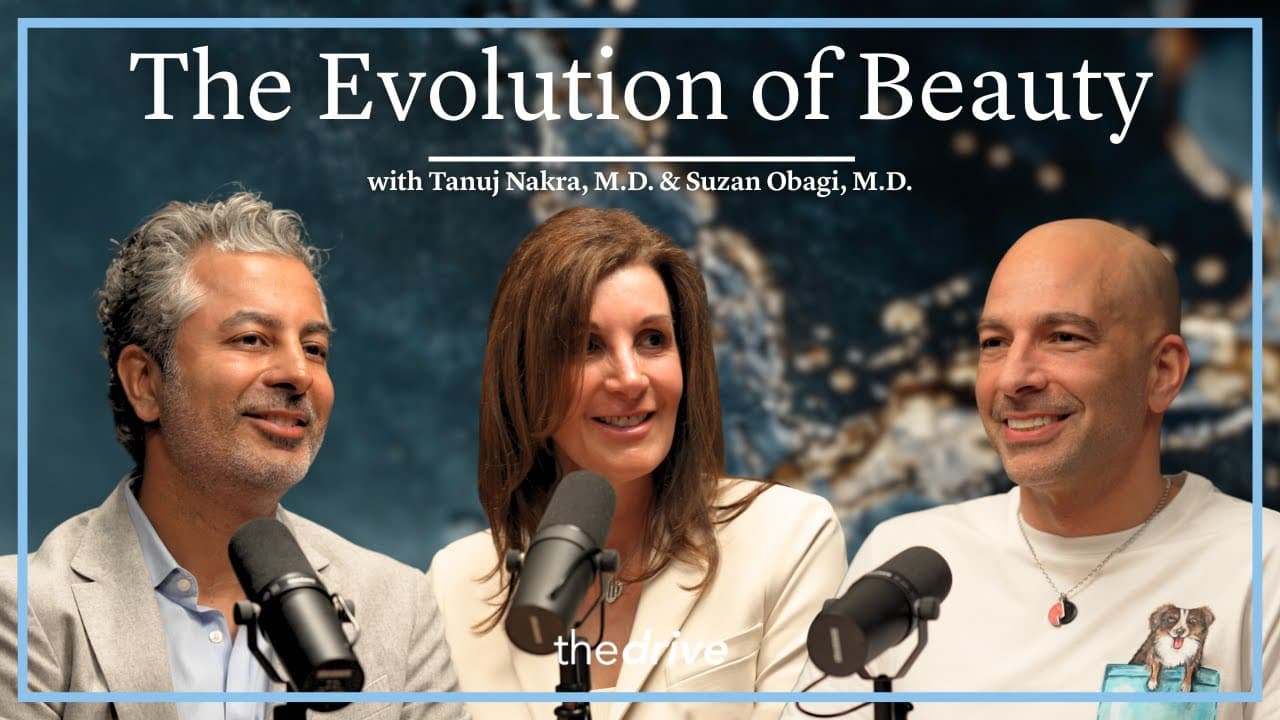
Beauty likely stems from an evolutionary drive to select healthy genetics, with symmetry, balanced proportions, and sexual dimorphism signaling fertility. These cues appear hardwired from infancy, yet social context and exposure through globalization can shape preferences. Modern longevity and non-reproductive ages add complexity to how beauty functions today.
Transcript
Is there an evolutionary explanation for any of this? I mean, I I don't know if aesthetics, if you think about this through an evolutionary lens, but I mean, historically, we didn't need to look good beyond our 20s. If looking, if the purpose of looking good was to attract a mate, so again, none of us sitting around this table need to look good in ... Read More
Key Insights
- Beauty appreciation is genetically hardwired, evidenced by infant studies showing a preference for attractive faces.
- Universal beauty cues include facial symmetry, balanced proportions, and sexual dimorphism that signal health and fertility.
- An average composite face across many people is often perceived as universally beautiful due to statistical averaging of features.
- Societal and cultural factors shape beauty standards, overlaying the genetic baseline on top of biology.
- Globalization and social media expand the visual genetic pool, potentially altering beauty norms over time.
- Evolutionary advantages of beauty are most relevant before reproductive age, as longevity changes the context of mate selection.
- Changes in diet and chewing demands historically affected facial structure, jawline, and dental alignment, influencing beauty signals.
- Despite changes, there is a persistence of fundamental facial metrics that cross races, indicating deep biological underpinnings of attractiveness.
Install to Summarize YouTube Videos and Get Transcripts
Explore YouTube Video Summarizer or Get YouTube Transcript Extractor
Questions & Answers
Q: A real search query question about beauty and evolution (e.g. 'How does...').
Why do humans across cultures tend to prefer similar facial features such as symmetry and certain proportions, and how might these preferences reflect an underlying biological drive? The answer lies in a genetic basis for beauty that manifests as a preference for features indicating good development, health, and potential fertility, which in turn historically aided reproductive success.
Q: What is the evidence that infants prefer beautiful faces?
Infant studies from the 1980s documented by Judith Langlois show newborns preferentially attend to faces deemed beautiful versus less attractive, suggesting an innate, hardwired bias toward beauty that exists before social learning or cultural conditioning, pointing to an evolutionary basis for aesthetic preference.
Q: What three categories do experts cite as universal beauty signals?
Experts point to symmetry, facial proportion, and sexual dimorphism as universal signals of beauty. Symmetry implies good development and genetics, proportional balance reflects optimal facial structure, and dimorphism like strong jaws in men or full lips in women signals fertility and hormonal status, influencing mate choice across populations.
Q: How does globalization affect perceptions of beauty?
Globalization and increased exposure to diverse faces expand the visual genetic pool, potentially broadening beauty norms. The evolving exposure may shift preferences as people compare a wider range of facial features, yet the underlying biological cues provide a persistent baseline that remains recognizable across cultures.
Q: Why is beauty less about reproduction in modern times?
Historically beauty related to reproductive success, but longevity and changes in life history mean mate selection is no longer limited to reproductive years. The discussion notes that evolutionary drivers for beauty primarily operated when reproductive timing was earlier, while modern lifespan introduces new social and health considerations beyond fertility.
Q: Do beauty standards override genetic cues in all cases?
While genetic cues set foundational preferences, social factors like hair, makeup, and fashion can transform appearance and influence perceived attractiveness. The conversation emphasizes that despite these overlays, the core signals of symmetry, proportion, and dimorphism often remain influential across different contexts and populations.
Q: What role does jaw structure play in beauty signals?
Jaw structure relates to facial harmony and health indicators. A strong jawline historically signals good development and genetics, while changes in diet and chewing demands have influenced jaw shape over time. These factors intersect with cultural standards, contributing to how beauty is perceived today.
Q: Is there a single universal standard of beauty?
There is no single universal standard, but common metrics like symmetry, balanced proportions, and sexual dimorphism appear across races and cultures, suggesting a shared biological basis. However, cultural conditioning and personal experiences also shape individual preferences, making beauty a blend of universal signals and context-specific tastes.
Summary & Key Takeaways
-
The clip argues that beauty evolved to aid mate selection, with a genetic basis for appreciating attractive faces evident even in newborns, suggesting deep evolutionary roots. It also notes that symmetry, facial proportion, and sexual dimorphism are universal cues across cultures, guiding perceptions of health and fertility.
-
The discussion acknowledges societal influence on beauty, recognizing that social media and global exposure broaden the visual pool and can shift preferences, while underlying biology sets baseline standards across populations.
-
The conversation highlights that changes in diet and modern living affect physical features over time, potentially altering jaw structure and dental alignment, which influences perceived attractiveness in the context of evolving human biology.
Read in Other Languages (beta)
Share This Summary 📚
Summarize YouTube Videos and Get Video Transcripts with 1-Click
Try YouTube Summary with ChatGPT & Claude or YouTube Transcript Generator
Explore More Summaries from Peter Attia MD 📚


Summarize YouTube Videos and Get Video Transcripts with 1-Click
Try YouTube Summary with ChatGPT & Claude or YouTube Transcript Generator