Is Romeo and Juliet's Love True or Just Lust?
TL;DR
Romeo and Juliet's love is a complex interplay of genuine emotion and youthful impulsiveness. Their quick shift from infatuation to deep connection raises questions about the nature of true love, especially when societal obstacles and expectations come into play. Ultimately, the play reflects the tension between personal desires and familial obligations, illustrating the tragic consequences of their choices.
Transcript
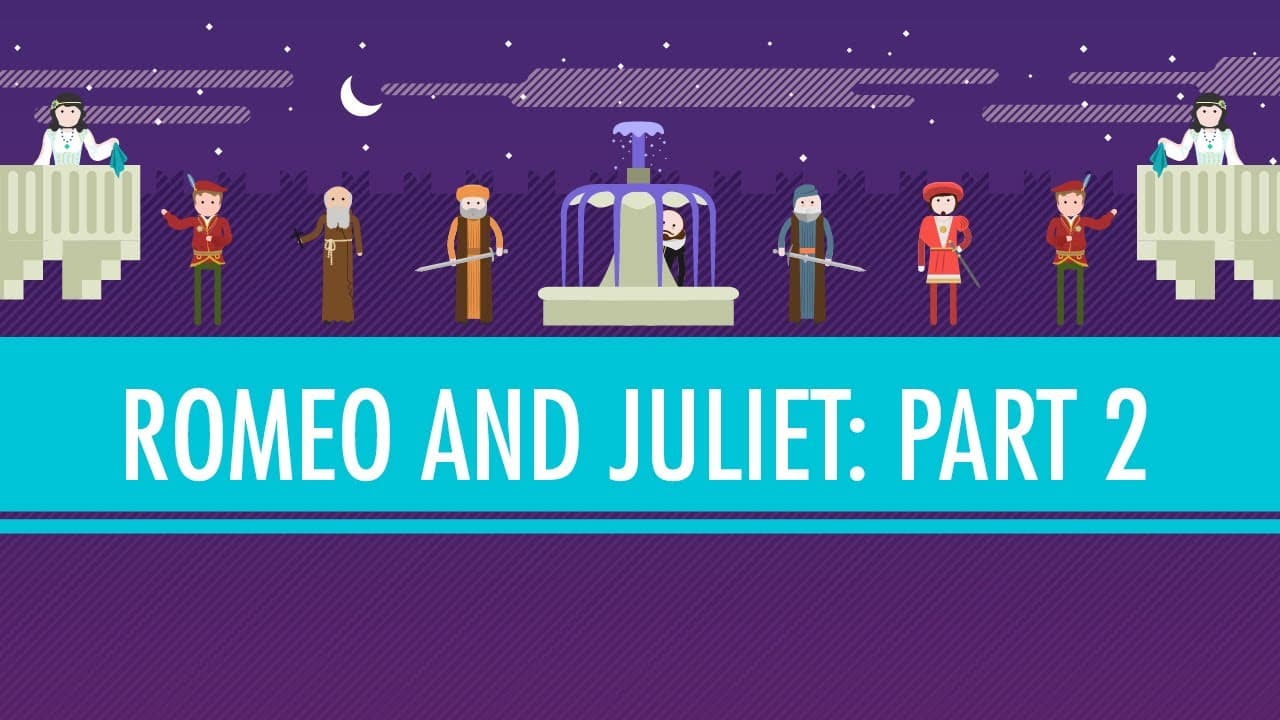
Hi, I'm John Green, this is Crash Course English Literature, and today we return to Romeo and Juliet, a tale of love and woe. Or else a tale of lust and woe. Anyway, it's definitely a tale of woe. As the play begins, Romeo is telling us that he is completely in love with a girl, and will never love anybody else, and her name is Rosaline. And a day ... Read More
Key Insights
- Romeo's quick shift from Rosaline to Juliet raises questions about the nature of true love versus lust and impulsive attraction.
- Juliet's feelings are described as both fleeting and infinite, illustrating the intense yet unstable nature of young love.
- The play's bawdy humor and courtly love traditions highlight the tension between romantic ideals and physical desires.
- Romeo and Juliet's love challenges societal norms, yet their inability to fully reject authority contributes to their tragic fate.
- The play is a meditation on youth's impetuousness, as well as the constraints imposed by family, society, and fate.
- Shakespeare employs rich imagery and poetic dialogue to convey the depth of Romeo and Juliet's connection.
- The play explores the theme of fate versus free will, questioning whether the lovers' downfall was predetermined or self-inflicted.
- Modern adaptations of Romeo and Juliet continue to explore themes of love and societal barriers, demonstrating the story's enduring relevance.
Install to Summarize YouTube Videos and Get Transcripts
Explore YouTube Video Summarizer or Get YouTube Transcript Extractor
Questions & Answers
Q: How does the play portray the nature of Romeo and Juliet's love?
The play portrays Romeo and Juliet's love as intense, immediate, and fraught with challenges. Their relationship is marked by a rapid transition from infatuation to deep commitment, raising questions about the authenticity of their love. Shakespeare uses poetic language and imagery to convey the depth of their feelings, while also highlighting the impulsive nature of youthful love.
Q: What role does societal pressure play in the tragedy of Romeo and Juliet?
Societal pressure plays a significant role in the tragedy, as the lovers are caught between their personal desires and the expectations of their families, the church, and the state. Their inability to fully reject these authoritative forces contributes to their downfall. The play underscores the conflict between individual passion and societal norms, a theme that resonates with audiences across time.
Q: How does Shakespeare use humor in the play?
Shakespeare incorporates bawdy humor through characters like the Nurse and Mercutio, who make jokes about sex and love. This humor serves to contrast the serious, romantic elements of the play and highlights the tension between idealized love and physical desire. It adds a layer of complexity to the narrative, illustrating the multifaceted nature of human relationships.
Q: What is the significance of light and dark imagery in the play?
Light and dark imagery is used to symbolize the dualities in Romeo and Juliet's relationship, such as love and hate, passion and danger, and life and death. Characters frequently call upon celestial bodies, like the sun and moon, to express their longing and desire to control their fate. This imagery reinforces the theme of the lovers' struggle against external forces and their quest for an unattainable ideal.
Q: How does the play address the theme of fate versus free will?
The play presents fate versus free will as a central theme, questioning whether the lovers' tragic end is predestined or the result of their own choices. The term 'star-crossed' suggests that their fate is sealed, yet their actions, such as defying their families, imply a degree of agency. Shakespeare leaves the interpretation open, allowing audiences to reflect on the balance between destiny and personal responsibility.
Q: In what ways is Romeo and Juliet relevant to modern audiences?
Romeo and Juliet remains relevant due to its exploration of universal themes like love, societal pressure, and the tension between individual desires and external expectations. Modern adaptations often reframe the story within contemporary contexts, such as racial or religious divides, demonstrating the timeless nature of its core conflicts and the enduring appeal of its characters' passionate defiance.
Q: What does the play suggest about the nature of youthful passion?
The play suggests that youthful passion is intense and often reckless, driven by strong emotions and a lack of experience. Romeo and Juliet's swift transition from infatuation to marriage exemplifies the impulsive nature of young love. Shakespeare portrays this passion as both beautiful and dangerous, highlighting the potential for both profound connection and tragic consequences.
Q: How does the play depict the conflict between love and societal expectations?
The play depicts the conflict between love and societal expectations through the characters' struggle to balance personal desires with obligations to family, religion, and social norms. Romeo and Juliet's love defies their families' feud and societal conventions, yet they are ultimately unable to escape the constraints imposed by their world. This tension underscores the tragedy of their situation and reflects broader themes of individual versus collective identity.
Summary & Key Takeaways
-
John Green analyzes whether Romeo and Juliet's love is genuine or merely youthful impulsiveness, considering societal constraints in medieval Verona. He draws parallels to modern relationships, suggesting that intense love often requires overcoming obstacles.
-
The play's exploration of romantic ideals versus physical desires is highlighted through bawdy humor and the concept of courtly love. Shakespeare's use of poetic dialogue and imagery emphasizes the depth of the lovers' connection.
-
Romeo and Juliet's tragic end raises questions about fate and free will. Their story is a reflection on youth's impulsiveness and the societal pressures that complicate personal desires, making it relevant to contemporary audiences.
Read in Other Languages (beta)
Share This Summary 📚
Summarize YouTube Videos and Get Video Transcripts with 1-Click
Try YouTube Summary with ChatGPT & Claude or YouTube Transcript Generator
Explore More Summaries from CrashCourse 📚





Summarize YouTube Videos and Get Video Transcripts with 1-Click
Try YouTube Summary with ChatGPT & Claude or YouTube Transcript Generator