How to Recharge Your Mental Battery in a Busy World
TL;DR
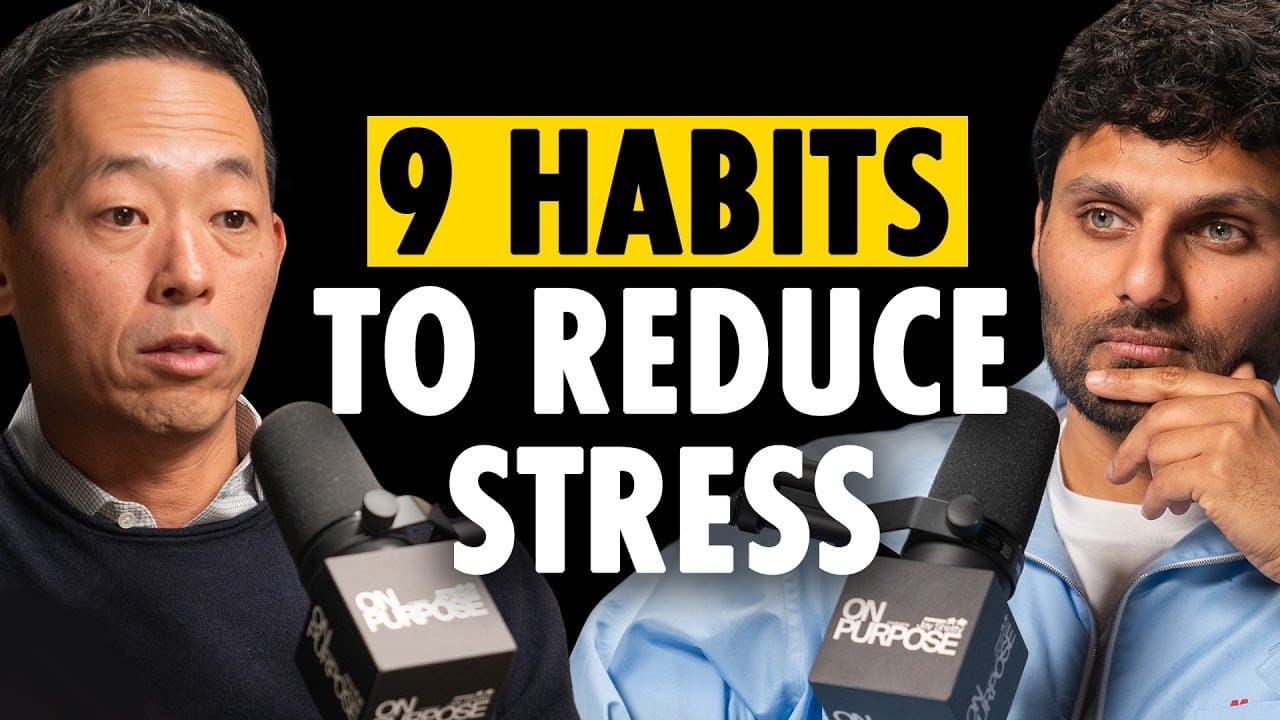
Recharge your mental battery with simple zone based checks and practical techniques. The interview explains four battery zones and nine recharging tactics to prevent burnout, boost resilience, and stay present at work and home. It also covers how to talk about stress and lead with vulnerability while managing burnout.
Transcript
61% of people feel expected to just get over stress yeah it's like just power through the moment CEO of calm author of recharge David code good stress could lead to resilience you're never really going to have a stressfree work environment not everything has to be 24/7 365 because at some point you've caused a lot of bad stress that's a real kind o... Read More
Key Insights
- Battery health is a daily measure that can be tracked like a phone battery, using percentage levels to guide actions.
- The four battery zones (75-100, 50-75, 25-50, 0-25) provide a simple language to assess readiness and recharge needs.
- Recharge strategies include going for a walk, taking deep breaths, and choosing a workout that suits the individual.
- Communication about energy levels with others can reduce misunderstandings and improve support.
- Vulnerability in leadership can foster trust and improve team resilience during stress and burnout.
- Good stress is not the same as bad stress; understanding the type of stress helps guide healthier responses.
- Mental health in the workplace benefits from proactive conversations and structured recharge routines.
- The book Recharge and related conversations advocate practical, accessible tools rather than abstract concepts.
- More videos from this channel:
- More from this channel: Jay Shetty Podcast
Install to Summarize YouTube Videos and Get Transcripts
Explore YouTube Video Summarizer or Get YouTube Transcript Extractor
Questions & Answers
Q: What is the battery analogy used in the interview and why is it effective?
The battery analogy describes mental energy as a charge that can be depleted by stress and drained by continuous work without breaks. By framing energy as a percentage from 0 to 100, people can quickly assess when to pause, recharge, or adjust activities. This simple metaphor makes energy management tangible, easy to discuss in conversations, and less emotionally loaded than discussing mood alone.
Q: How are the four battery zones defined and used?
The four zones provide a quick framework: 75 to 100 is a healthy, stable zone where one can continue with minimal changes; 50 to 75 signals emerging need for recharge and adjustments; 25 to 50 indicates a real push to take breaks such as walks or reduced workload; 0 to 25 is a critical alert to stop, reset, and prioritize recharge, guiding immediate actions.
Q: What are some practical recharge techniques mentioned?
Recharge techniques include stepping away from screens, going for a walk, practicing deep breathing, and performing a workout that fits the person. The book lists multiple techniques, allowing individuals to select one or several that feel sustainable. The underlying idea is to create quick, repeatable habits that restore energy without adding more stress.
Q: Why is asking about battery levels preferred over asking how someone is doing?
Asking about battery levels provides a concrete, non judgmental cue that people can report honestly. It reduces the ambiguity of vague responses like I am fine and invites specific discussion about energy needs. This approach helps people acknowledge strain before burnout and enables timely support from others.
Q: How does vulnerability in leadership relate to burnout prevention?
Vulnerability in leadership builds trust and psychological safety, encouraging teams to share how their energy levels are and where they need support. When leaders model recharge practices, they set norms that taking breaks and setting boundaries are acceptable, which can reduce collective burnout and improve long term performance.
Q: What is the difference between good stress and bad stress according to the discussion?
Good stress can drive performance and growth when managed with awareness and recharge practices, while bad stress drains energy and compounds fatigue. Understanding the type of stress helps individuals deploy appropriate coping strategies and prevents it from becoming chronic burnout.
Q: How does the interview connect mental health to workplace culture?
The interview argues that mental health in the workplace improves when conversations about energy and recharge are normalized. Practical tools and structured routines for recharge can be integrated into culture, reducing stigma, supporting employees, and sustaining productivity in high demand environments.
Q: What overall message does the book Recharge advocate?
Recharge advocates practical, accessible tools that help people manage mental energy in a digital world. By focusing on simple conversations, real world techniques, and resilience building, it aims to empower individuals to maintain energy, reduce burnout, and lead healthier, more sustainable lives without needing elaborate or expensive interventions.
Summary & Key Takeaways
-
A practical framework is offered to monitor mental energy using a four zone model and a percentage based scale.
-
The conversation emphasizes simple, repeatable actions like walks, breaths, and breaks to recharge amidst a demanding schedule.
-
The episode links stress management to leadership, workplace culture, and long term resilience, with actionable steps for individuals and teams.
Read in Other Languages (beta)
Share This Summary 📚
Summarize YouTube Videos and Get Video Transcripts with 1-Click
Try YouTube Summary with ChatGPT & Claude or YouTube Transcript Generator
Explore More Summaries from Jay Shetty Podcast 📚






Summarize YouTube Videos and Get Video Transcripts with 1-Click
Try YouTube Summary with ChatGPT & Claude or YouTube Transcript Generator