How Do Lungs Work to Enable Breathing?
TL;DR
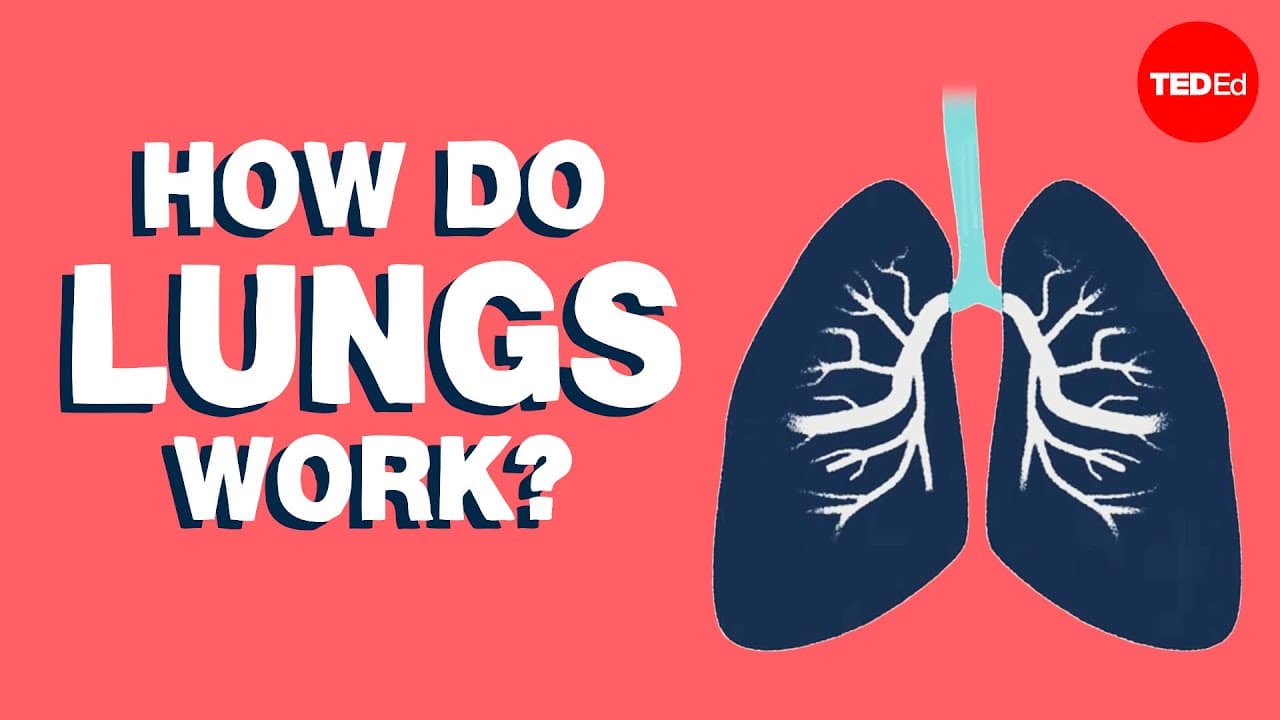
Lungs work by expanding to take in oxygen and contracting to expel carbon dioxide, all controlled by the autonomic nervous system. The alveoli in the lungs facilitate gas exchange, allowing oxygen to enter the bloodstream while carbon dioxide is expelled. On average, humans breathe 15 to 25 times per minute, processing about 10,000 liters of air daily.
Transcript
Many of us have hundreds of things on our minds at any moment, often struggling to keep track of everything we need to do. But fortunately, there's one important thing we don't have to worry about remembering: breathing. When you breathe, you transport oxygen to the body's cells to keep them working and clear your system of the carbon dioxide that... Read More
Key Insights
- 💦 The respiratory system consists of specialized components that work together to facilitate breathing, including the lungs, bronchioles, and alveoli.
- 🎮 The autonomic nervous system plays a crucial role in controlling the muscles involved in breathing.
- 🛻 Oxygen and carbon dioxide exchange occurs in the alveoli, where oxygen is picked up by hemoglobin and transported throughout the body.
- ❓ The respiratory system continuously inhales and exhales, ensuring the body is supplied with oxygen and removing carbon dioxide.
- 👱 The average person inhales and exhales 15 to 25 times per minute, amounting to approximately 10,000 liters of air each day.
Install to Summarize YouTube Videos and Get Transcripts
Explore YouTube Video Summarizer or Get YouTube Transcript Extractor
Questions & Answers
Q: Why don't we have to consciously think about breathing?
We don't have to consciously think about breathing because the autonomic nervous system, which operates unconsciously, triggers the movements of the muscles involved in breathing.
Q: What happens when we inhale?
When we inhale, the muscles around the lungs flatten the diaphragm and contract the intercostal muscles, increasing the space for the lungs to expand. Oxygen-rich air enters the body through the nose and mouth, moving through the respiratory system.
Q: What is the role of the alveoli?
The alveoli are tiny air sacs located at the end of the bronchioles. They are surrounded by capillaries filled with red blood cells containing hemoglobin. This is where the exchange of oxygen and carbon dioxide takes place.
Q: How does the body get rid of carbon dioxide?
When the lungs exhale, the autonomic nervous system causes the diaphragm to contract and the intercostal muscles to relax, reducing the size of the chest cavities. This forces the lungs to compress, expelling carbon dioxide-rich air from the body.
Summary & Key Takeaways
-
Breathing is the process of transporting oxygen to cells and removing carbon dioxide from the body.
-
The respiratory system consists of the lungs and other organs, working together to facilitate breathing.
-
The autonomic nervous system controls the movements of the muscles involved in breathing.
Read in Other Languages (beta)
Share This Summary 📚
Summarize YouTube Videos and Get Video Transcripts with 1-Click
Try YouTube Summary with ChatGPT & Claude or YouTube Transcript Generator
Explore More Summaries from TED-Ed 📚



Summarize YouTube Videos and Get Video Transcripts with 1-Click
Try YouTube Summary with ChatGPT & Claude or YouTube Transcript Generator