How does the Rorschach inkblot test work? - Damion Searls
TL;DR
The Rorschach inkblot test reveals personality traits by analyzing how individuals perceive ambiguous images rather than what they see. Developed by Hermann Rorschach, it offers insights into psychological profiles and can help diagnose mental health conditions. Properly administered, the test remains valid, providing meaningful data about perception and personality.
Transcript
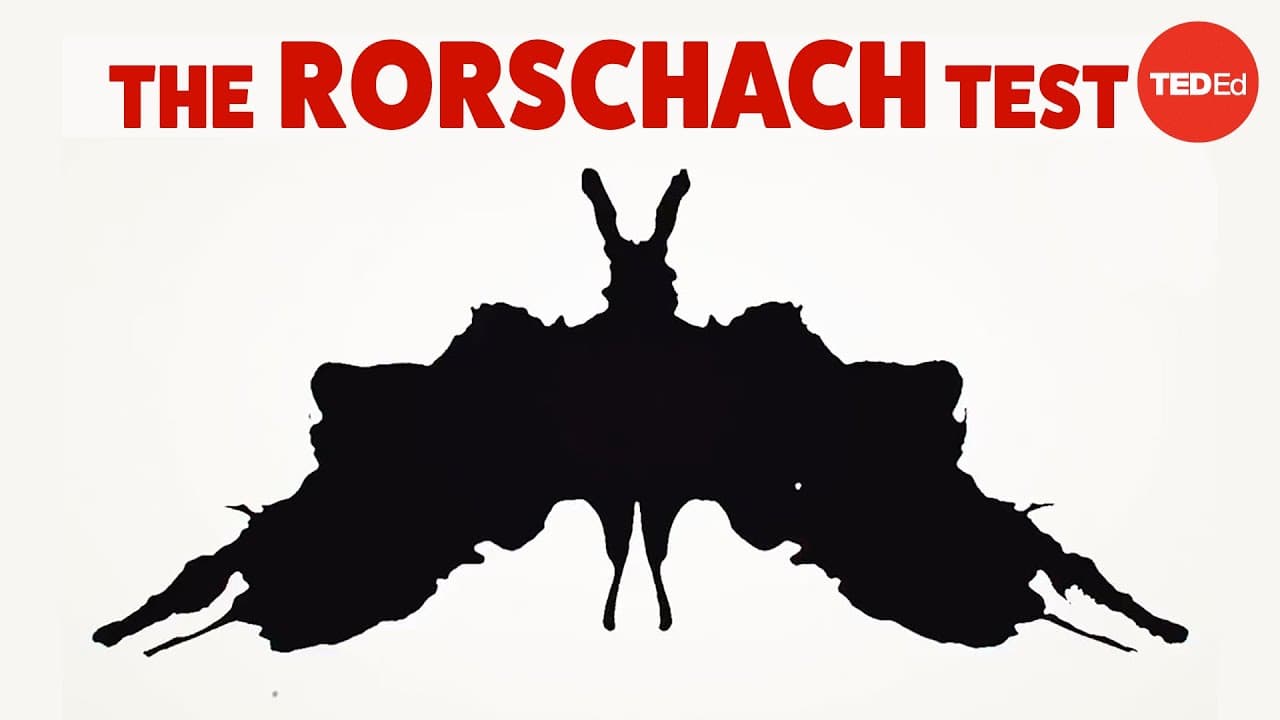
Take a look at this image. What might this be? A frightening monster? Two friendly bears? Or something else entirely? For nearly a century, ten inkblots like these have been used as what seems like an almost mystical personality test. Long kept confidential for psychologists and their patients, the mysterious images were said to draw out the work... Read More
Key Insights
- 🎨 The Rorschach Test was designed to study variations in visual perception and provide insights into personality traits.
- 🛝 Results from the test can help diagnose mental illnesses and round out a patient's psychological profile.
- 🛀 The test's validity was supported by a 2013 review, showing its usefulness when administered properly.
- 💨 The test's popularity declined due to misuse in speculative ways and its controversial reputation.
- 🖤 The visual approach and lack of a single right answer in the test help psychologists understand how individuals perceive the world.
- 👻 Rorschach's coding system allowed for the quantification of responses and the identification of patterns in perceptual approaches.
- 🏆 The test was used to diagnose conditions difficult to pinpoint with other methods, making it a valuable tool in psychological assessment.
Install to Summarize YouTube Videos and Get Transcripts
Explore YouTube Video Summarizer or Get YouTube Transcript Extractor
Questions & Answers
Q: Who invented the Rorschach Test and why?
Hermann Rorschach, a Swiss psychiatrist, invented the test to study variations in visual perception and gain insights into the workings of the mind.
Q: What is the main focus of the Rorschach Test?
The test focuses on an individual's approach to visual stimuli, including which parts of the image they focus on, ignore, or perceive differently.
Q: How did Hermann Rorschach code and analyze responses to the inkblots?
Rorschach developed a coding system to quantify responses and identify patterns in how individuals approached the test, categorizing them into different perceptual styles.
Q: Why did the reputation of the Rorschach Test decline over time?
After Rorschach's death, the test was misused in speculative ways, leading to its decline in popularity among medical professionals and its controversial reputation.
Summary
The Rorschach Test is a personality test using ten inkblot images, invented by Swiss psychiatrist Hermann Rorschach in the early 20th century. It is designed to reveal a person's approach to perception rather than specific interpretations. Rorschach developed a coding system to analyze test-takers' responses and found that similar personalities and mental illnesses shared similar approaches. The test became popular worldwide but was later misused and fell out of clinical use. However, a 2013 review showed that when administered properly, the test can still yield valid results for diagnosing mental illness.
Questions & Answers
Q: What is the Rorschach Test?
The Rorschach Test is a personality test created by Hermann Rorschach using ten inkblot images.
Q: What is the purpose of the Rorschach Test?
The purpose of the Rorschach Test is to understand a person's general approach to perception, rather than focusing on specific interpretations of the inkblots.
Q: How did Hermann Rorschach develop the test?
Hermann Rorschach was an amateur artist fascinated by the variations in visual perception. He carried this interest to medical school and later designed a series of mysterious inkblot images during his work at a mental hospital to gain insight into the enigmatic process of perception.
Q: What did Rorschach focus on during the test?
Rorschach was more interested in how test-takers approached the task rather than the specific things they saw. He observed which parts of the image they focused on, if they saw movement, and how the colors influenced their answers.
Q: How did Rorschach quantify the test-takers' responses?
Rorschach developed a coding system to quantify people's responses, reducing a wide range of interpretations to manageable numbers. This helped him classify test-takers into different categories based on their approach to the inkblots.
Q: What insights did analyzing the test-taker's approach provide?
Analyzing the overall approach of test-takers provided valuable insights into their psychology. Patterns began to emerge, where people with similar personalities or mental illnesses exhibited similar approaches to the inkblots, making the test a reliable diagnostic tool.
Q: How did the Rorschach Test gain popularity?
After publishing his coding system and the ten inkblots, the Rorschach Test gained popularity worldwide over the next few decades. It was officially administered millions of times in the U.S. alone by the 1960s.
Q: What happened to the Rorschach Test after Hermann Rorschach's death?
Without Rorschach to guide its use, the test began to be used in speculative ways. It was given to Nazi war criminals, shown to remote communities as a universal personality test, and even led to prejudiced hiring decisions based on reductive decoding charts.
Q: Is the Rorschach Test still controversial?
Yes, the Rorschach Test is still controversial, and many people assume it has been disproven. However, a comprehensive review in 2013 showed that when administered properly, the test can yield valid results for diagnosing mental illness or understanding a patient's psychological profile.
Q: What is the significance of the Rorschach Test?
The Rorschach Test, while not a standalone key to understanding the human mind, offers a visual approach and lacks a single right answer. This helps psychologists gain a more nuanced understanding of how individuals perceive the world.
Takeaways
The Rorschach Test, created by Hermann Rorschach, is a personality test that focuses on a person's general approach to perception using ten inkblot images. Despite being misused and falling out of clinical use, a 2013 review confirmed the validity of the test when properly administered. It allows for the diagnosis of mental illnesses and provides psychologists with a valuable tool to paint a more nuanced picture of how individuals perceive the world.
Summary & Key Takeaways
-
Hermann Rorschach created the test in the early 20th century to study perception variations.
-
The test focuses on how individuals approach visual stimuli rather than specific interpretations.
-
Results from the test can provide valuable insights into personality traits and mental health.
Read in Other Languages (beta)
Share This Summary 📚
Summarize YouTube Videos and Get Video Transcripts with 1-Click
Try YouTube Summary with ChatGPT & Claude or YouTube Transcript Generator
Explore More Summaries from TED-Ed 📚



Summarize YouTube Videos and Get Video Transcripts with 1-Click
Try YouTube Summary with ChatGPT & Claude or YouTube Transcript Generator