How to Design a Transistor Circuit for Low-Power Control?
TL;DR
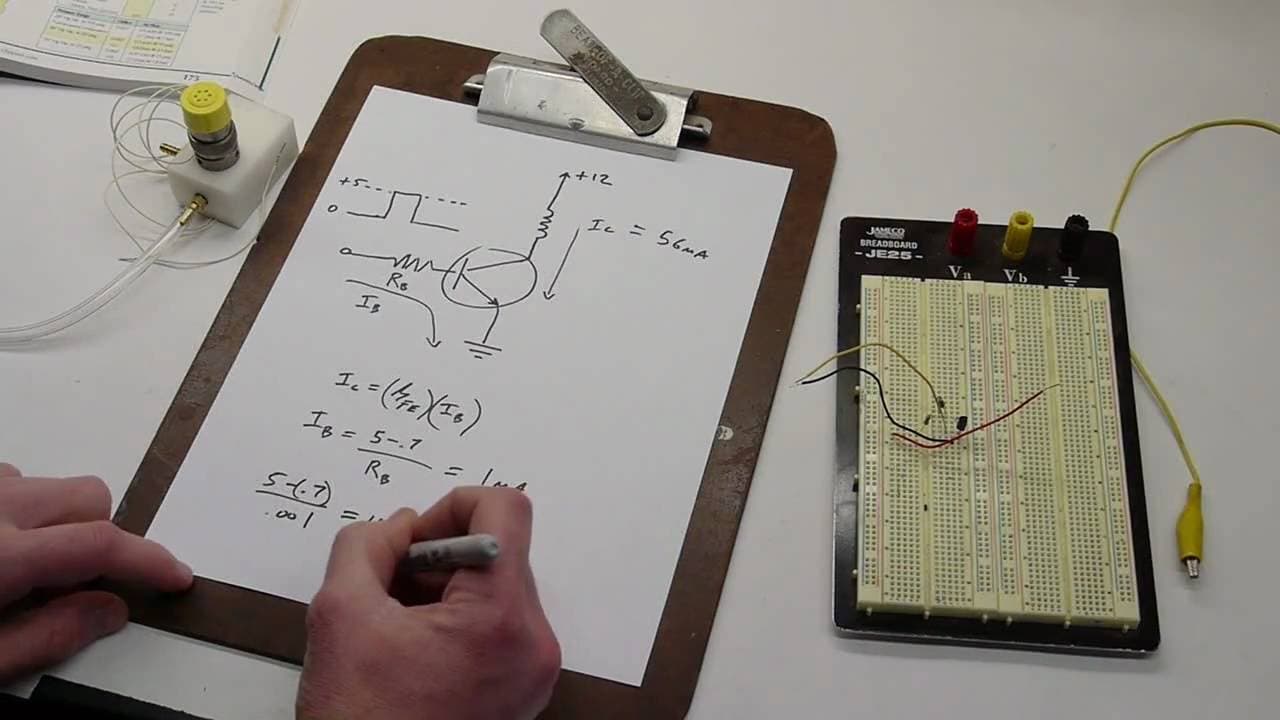
To design a transistor circuit for low-power devices, use an NPN bipolar transistor like the PN2222A, which can control a solenoid by allowing a small base current to trigger a larger collector current. Ensure to include a base resistor to limit the current and a clamp diode to protect against voltage spikes from inductive loads.
Transcript
hey guys Ben here I thought I'd make a quick video that shows how I normally design circuits with transistors uh so today we'll focus on just switching things on and off like actuators uh most of the time you have a microcontroller and want to control something like a a motor or solenoid or something so this video will show you how to size the tran... Read More
Key Insights
- 🧑🦼 Transistors can be used as switches for controlling actuators like motors or solenoids.
- 😒 Different switching components, such as relays, solid-state relays, mosfets, igbts, and Darlington transistors, have specific use cases and considerations.
- 😄 Npn transistors are commonly preferred for switching applications due to their ease of base current control.
- 🗯️ Selecting the right transistor involves considering factors like current handling capacity, gain, and package size.
- ⚾ A base resistor is necessary to limit base current and prevent transistor self-destruction.
- ⚡ Adding a clamp diode and capacitor in the circuit helps protect the transistor and smooth out voltage spikes caused by inductive kickback.
- ⚡ The voltage drop across the transistor can affect the voltage across the load.
Install to Summarize YouTube Videos and Get Transcripts
Explore YouTube Video Summarizer or Get YouTube Transcript Extractor
Questions & Answers
Q: What are some common tasks that transistors are used for besides amplification?
Besides amplification, transistors are often used as switches to turn devices on and off, particularly for controlling actuators like motors or solenoids.
Q: Why is using a relay not an ideal choice for switching tasks?
While relays can handle high currents and provide circuit isolation, they are generally not preferred for switching tasks due to their mechanical nature, slow switching speed, and high cost.
Q: What is the difference between npn and pnp transistors, and why is npn commonly used in switching applications?
The main difference lies in the direction of conventional current flow. In npn transistors, current flows from collector to emitter, while in pnp transistors, it flows from emitter to collector. Npn transistors are commonly used for switching as it is easy to control base current flow to turn them on or off.
Q: How do you choose the right transistor for a switching application?
Factors to consider when choosing a transistor include its current handling capacity, gain (hfe or beta), and package size. For small-scale designs, transistors like the pn2222a, with a beta of around 100 and low cost, are commonly used.
Summary & Key Takeaways
-
The video focuses on controlling actuators, like motors or solenoids, using transistors as switches instead of amplifiers.
-
Different types of switching components, such as relays, solid-state relays, mosfets, igbts, and Darlington transistors, are discussed, with reasons for choosing or not choosing them.
-
The video primarily focuses on using an npn bipolar transistor for switching and provides detailed explanations on how to select the right transistor and set up the circuit.
Read in Other Languages (beta)
Share This Summary 📚
Summarize YouTube Videos and Get Video Transcripts with 1-Click
Try YouTube Summary with ChatGPT & Claude or YouTube Transcript Generator
Explore More Summaries from Applied Science 📚





Summarize YouTube Videos and Get Video Transcripts with 1-Click
Try YouTube Summary with ChatGPT & Claude or YouTube Transcript Generator