How to Build a DIY X-ray CT Scanner with Arduino
TL;DR
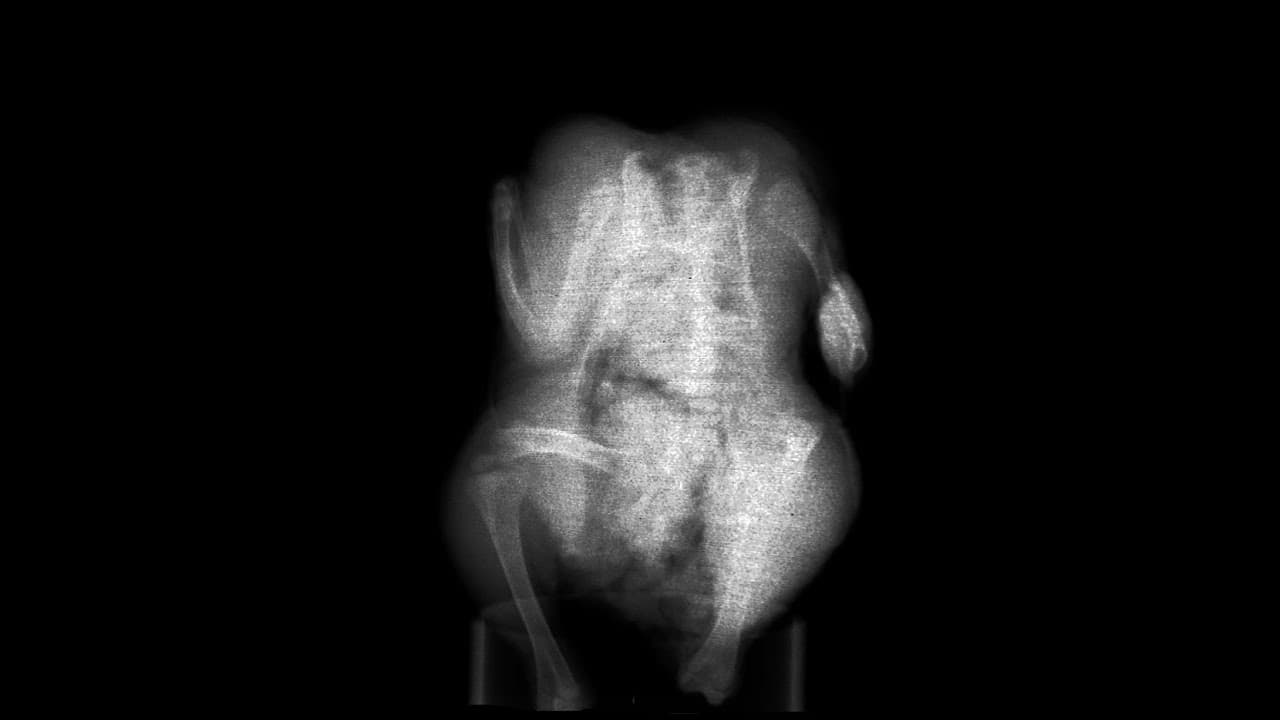
To build a DIY X-ray CT scanner, use an Arduino to control a stepper motor that rotates an object while capturing X-ray images from multiple angles. These 2D images are then processed with a filtered back projection algorithm to create a 3D reconstruction of the object. Essential components include an Arduino, stepper motor, and an X-ray tube.
Transcript
hey guys after finishing my x-ray backscatter imaging project I realized that I could also build an x-ray CT scanner which produces even more interesting images so let me show you what's involved a CT scanner or cat scanner is they used to be called stands for computed tomography where tomography means that we're going to get a sectional view like ... Read More
Key Insights
- 📤 X-ray CT scanners offer a way to generate sectional views of 3D objects by taking x-ray images from different angles.
- 📤 Building a homemade CT scanner involves stationary x-ray sources and detectors, with the object being rotated instead.
- 📤 The filtered back projection algorithm is used to reconstruct a 3D volume of data from the collected 2D x-ray images.
- 🏗️ Building a DIY CT scanner requires components such as an Arduino, stepper motor, and an x-ray tube.
Install to Summarize YouTube Videos and Get Transcripts
Explore YouTube Video Summarizer or Get YouTube Transcript Extractor
Questions & Answers
Q: What is the purpose of a CT scanner?
A CT scanner is used to capture sectional views of 3D objects by taking x-ray images from multiple angles and reconstructing them into a 3D image using computer algorithms.
Q: What components are used to build a homemade CT scanner?
To build a homemade CT scanner, you would need an Arduino for sequencing, a stepper motor driver coupled to a large ring bearing for rotation, and an x-ray tube for emitting x-rays.
Q: How does the filtered back projection algorithm work?
The filtered back projection algorithm reverse-engineers the process by extruding the 2D image from the phosphor screen back to the x-ray source, reconstructing a 3D image by tracing all the shadows on the screen back to the point source inside the x-ray tube.
Q: What challenges were faced in building the CT scanner?
Challenges included minimizing backscatter x-ray interference, controlling exposure time of the camera during rotation, using an intervalometer to control the camera and x-ray tube, and correcting perspective distortion in the images using Photoshop.
Summary & Key Takeaways
-
X-ray CT scanners, also known as cat scanners, provide sectional views of 3D objects using x-ray images taken from multiple angles.
-
Building a homemade CT scanner involves keeping the x-ray source and detector stationary while rotating the object being scanned.
-
The collected 2D images are then processed using an algorithm called filtered back projection to reconstruct a 3D volume of data.
Read in Other Languages (beta)
Share This Summary 📚
Summarize YouTube Videos and Get Video Transcripts with 1-Click
Try YouTube Summary with ChatGPT & Claude or YouTube Transcript Generator
Explore More Summaries from Applied Science 📚
Summarize YouTube Videos and Get Video Transcripts with 1-Click
Try YouTube Summary with ChatGPT & Claude or YouTube Transcript Generator