How Do Temperature-Sensing RFID Tags Work in Stir Bars?
TL;DR
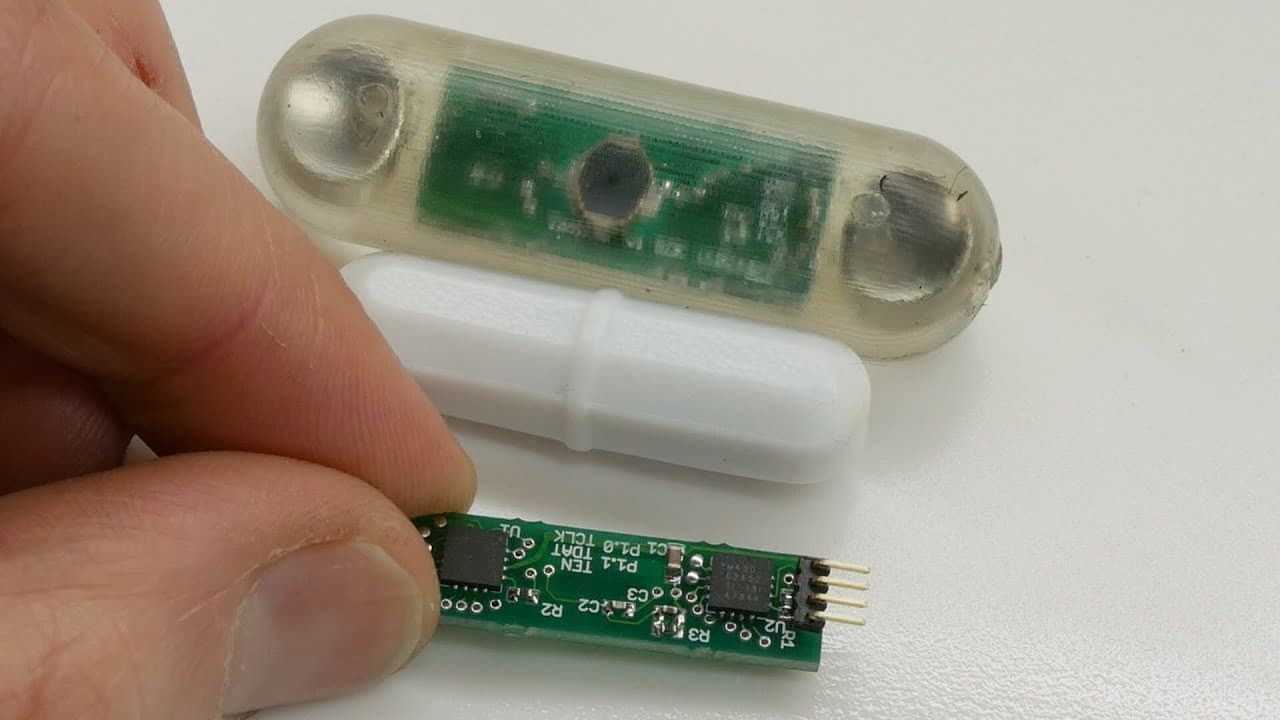
Temperature-sensing RFID tags in stir bars enable wireless measurement by transmitting data to an RFID reader embedded in the hotplate, eliminating the need for traditional probes. This innovation enhances lab efficiency and allows for tracking and auditing of equipment, while also providing the potential to monitor additional parameters like pH and viscosity.
Transcript
today on applied science I'd like to show you this proof of concept that friends and I built years ago we aren't going to do anything with this so I'm going to open source the code in schematics here and like all of my videos I post to both patreon and YouTube but this will be a free video for my patrons thanks very much so what is this this is a o... Read More
Key Insights
- 🍽️ RFID technology in a laboratory stir plate enables wireless temperature sensing, improving efficiency.
- 👻 Integration of RFID allows tracking and auditing of lab equipment with unique serial numbers.
- 🤢 Beyond temperature, RFID can sense parameters like pH, turbidity, and traction on the stir bar for enhanced experiments.
- 😅 Safety features like pressure sensors can prevent accidents by shutting off the hot plate when liquid levels are low.
- 🫠 Concentric coils in the base and stir bar ensure a good read range for precise data transmission.
- 👷 Economical solutions like off-the-shelf components and ceramic-coated wires enhance affordability and construction feasibility.
- 🫠 Limitations in coil size and power requirements may need optimization for increased read range in the future.
Install to Summarize YouTube Videos and Get Transcripts
Explore YouTube Video Summarizer or Get YouTube Transcript Extractor
Questions & Answers
Q: What is the main advantage of using RFID technology for temperature sensing in a laboratory setting?
The main advantage is the elimination of external probes, which saves time, reduces annoyance, and improves experiment quality by providing wireless and real-time temperature data directly from the stir plate.
Q: What additional parameters besides temperature can be sensed with the RFID technology integrated into the stir bar?
Beyond temperature, parameters like pH, orp, turbidity, or even the traction on the stir bar can be sensed, enabling a wider range of applications and improved experiment control.
Q: How can RFID technology be used to track and audit lab equipment like beakers with RFID-equipped stir bars?
By assigning each stir bar a unique serial number, auditing and tracking equipment usage, thermal cycles, maximum temperatures, and more becomes possible, enhancing lab management and data recording.
Q: What safety features can be implemented by integrating pressure sensors in the stir bar?
Pressure sensors inside the stir bar can estimate liquid levels in beakers, providing a safety feature to shut off the hot plate if the liquid runs out, preventing accidents due to dry beakers.
Summary & Key Takeaways
-
An off-the-shelf laboratory stir hot plate is modified with RFID technology for wireless temperature sensing.
-
The RFID reader in the base and temperature-sensing tag in the stir bar enable real-time temperature measurement.
-
Wireless sensing eliminates the need for external probes, enhancing lab efficiency and experiment precision.
Read in Other Languages (beta)
Share This Summary 📚
Summarize YouTube Videos and Get Video Transcripts with 1-Click
Try YouTube Summary with ChatGPT & Claude or YouTube Transcript Generator
Explore More Summaries from Applied Science 📚


Summarize YouTube Videos and Get Video Transcripts with 1-Click
Try YouTube Summary with ChatGPT & Claude or YouTube Transcript Generator