How Does China's Belt and Road Pressure India?
TL;DR
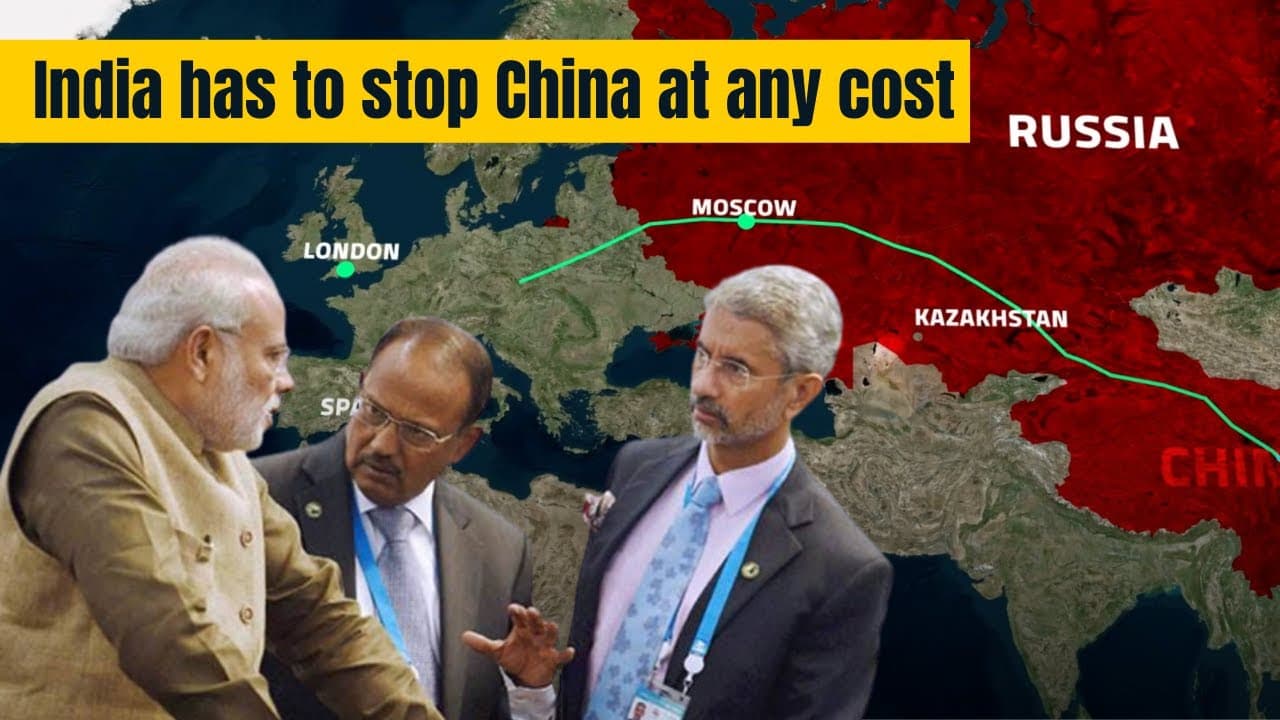
China’s Belt and Road Initiative seeks to reduce its dependence on vulnerable maritime routes by financing foreign ports and connecting them to China through pipelines, highways, and railways. The transcript argues that projects in Pakistan, Sri Lanka, Myanmar, and Djibouti could expand Chinese influence, secure trade and energy access, and create strategic pressure around India.
Transcript
china's new silk road has been touted as one of the most ambitious infrastructure projects ever conceived one that will dramatically change the landscape of global trade suspicions abound that china does not care about development but about increasing its global influence china peddles corrupt infrastructure deals in exchange for political influenc... Read More
Key Insights
- China’s Belt and Road Initiative is presented as a plan to create alternative trade and energy routes. By developing ports and overland corridors, China aims to reduce exposure to maritime bottlenecks and strengthen its ability to move resources into its inland regions.
- National power is described through resource dependence, foreign dependence on domestic production, and strategic alliances. A country becomes more vulnerable when essential resources come from abroad, while control over valuable supplies, military access, and strategically located partners can provide international leverage.
- China’s manufacturing and solar supply chains give it substantial economic influence. The transcript says China dominates important parts of solar production and holds the largest manufacturing market share, making many foreign buyers and industries dependent on Chinese output.
- The Strait of Malacca is identified as a central Chinese vulnerability. Much of China’s petroleum, liquefied natural gas, and trade passes through this area and the South China Sea, creating a potential chokepoint that rivals and regional partners could obstruct during a conflict.
- Chinese infrastructure financing is portrayed as creating dependency through loans, restricted contracting, and repayment pressure. The transcript argues that borrowers must award projects to Chinese companies, allowing project funds to flow back through those companies and their Chinese workers while debt remains with the borrowing country.
- Sri Lanka’s Hambantota port is presented as an example of infrastructure debt leading to long-term Chinese control. According to the transcript, Sri Lanka’s repayment problems were followed by China obtaining the port and surrounding land, illustrating the strategic concern behind the debt-trap allegation.
- Djibouti is strategically important because it connects access between the Red Sea and the Indian Ocean. Its position also links routes involving the Asia-Pacific, Persian Gulf, Horn of Africa, North Africa, and the Middle East, making infrastructure control there commercially and strategically valuable.
- Economic corridors connect foreign ports to China’s inland regions through pipelines, highways, and railways. The Myanmar corridor is presented as an example, moving natural gas toward Yunnan and providing road and rail connections that could reduce reliance on longer maritime routes.
Install to Summarize YouTube Videos and Get Transcripts
Explore YouTube Video Summarizer or Get YouTube Transcript Extractor
Questions & Answers
Q: What is China’s Belt and Road Initiative designed to achieve?
China’s Belt and Road Initiative is described as an infrastructure and trade strategy designed to build alternative routes connecting China with foreign markets and resource suppliers. It combines overseas ports with pipelines, highways, and railways leading toward China’s inland regions. The transcript argues that this network could reduce China’s vulnerability at maritime chokepoints, expand its influence in participating countries, and improve its strategic position against India and the United States.
Q: Why is the Strait of Malacca important to China?
The Strait of Malacca is important because the transcript says a large share of China’s petroleum, liquefied natural gas, and wider trade passes through it and the South China Sea. China lacks nearby ports that could fully remove this dependence. During a conflict, India and the United States could potentially work with Singapore to obstruct this route, forcing Chinese shipping onto longer and more difficult alternatives.
Q: How could the Belt and Road Initiative pressure India?
The initiative could pressure India by placing Chinese-linked ports and infrastructure around the Indian peninsula. The transcript highlights projects in Pakistan, Sri Lanka, and Myanmar, together with connections extending toward China’s inland regions. These facilities could give China more secure access to energy and trade routes, reduce the leverage created by the Strait of Malacca, and increase Chinese strategic influence in locations surrounding India.
Q: How does Chinese infrastructure lending create dependency?
Chinese infrastructure lending is portrayed as creating dependency through relatively expensive loans, shorter repayment periods, opaque agreements, and requirements that projects go to Chinese companies. Those companies may use Chinese workers and control project pricing, so much of the borrowed money can return to China while the borrower retains the debt. If revenues are insufficient, the country may require additional loans or surrender control over strategically important assets.
Q: Why is Sri Lanka’s Hambantota port discussed as a warning?
Hambantota is discussed as a warning because the transcript says Sri Lanka borrowed from China for infrastructure but later struggled to repay the debt. China subsequently obtained control of the port along with surrounding land. The example is used to support the argument that poorly performing projects financed under restrictive terms can convert financial dependence into long-term Chinese control over strategically located infrastructure.
Q: Why is Djibouti strategically valuable to China?
Djibouti is valuable because it sits near one of the world’s busiest maritime routes and controls access linking the Red Sea with the Indian Ocean. The transcript also describes it as a gateway connecting the Asia-Pacific, Persian Gulf, Horn of Africa, North Africa, and Middle Eastern regions. Chinese influence over infrastructure there can therefore support important trade flows and provide broader strategic access.
Q: How do economic corridors support China’s port strategy?
Economic corridors make distant ports useful by connecting them directly with China’s inland regions. The transcript describes these corridors as combinations of pipelines, highways, and railway lines that carry energy and goods from coastal facilities toward Chinese provinces. Without these links, overseas ports would remain separated from China’s hinterland. With them, China can create practical alternatives to maritime routes exposed to geopolitical disruption.
Q: What factors determine a country’s global power?
The transcript identifies three broad factors: dependence on other countries for essential resources, the degree to which foreign countries depend on its production, and the strength and location of its strategic allies. Heavy reliance on imported energy can create vulnerability, while dominance in important industries creates leverage. Overseas partners and military access can also provide control over strategically valuable locations during conflict.
Summary & Key Takeaways
-
China already possesses considerable economic leverage through its manufacturing strength and importance to the solar industry, but the transcript identifies weaknesses in its foreign military presence and dependence on maritime trade. These vulnerabilities, particularly around the Strait of Malacca, help explain why China is developing alternative routes through the Belt and Road Initiative.
-
The transcript portrays Chinese infrastructure financing as a system in which loans fund projects assigned to Chinese companies, which may also employ Chinese workers. It argues that much of the money consequently returns to China while the borrowing country retains the debt, potentially increasing dependence when projects fail to generate enough revenue for repayment.
-
Ports in Sri Lanka, Pakistan, Myanmar, and Djibouti are presented as strategically valuable links in China’s trade network. Pipelines, highways, and railways can connect these coastal facilities with inland Chinese regions, allowing goods and energy supplies to bypass vulnerable passages while also increasing China’s political and commercial influence around India.
Read in Other Languages (beta)
Share This Summary 📚
Summarize YouTube Videos and Get Video Transcripts with 1-Click
Try YouTube Summary with ChatGPT & Claude or YouTube Transcript Generator
Explore More Summaries from Think School 📚





Summarize YouTube Videos and Get Video Transcripts with 1-Click
Try YouTube Summary with ChatGPT & Claude or YouTube Transcript Generator