Who Was Marie Curie and Her Impact on Science?
TL;DR
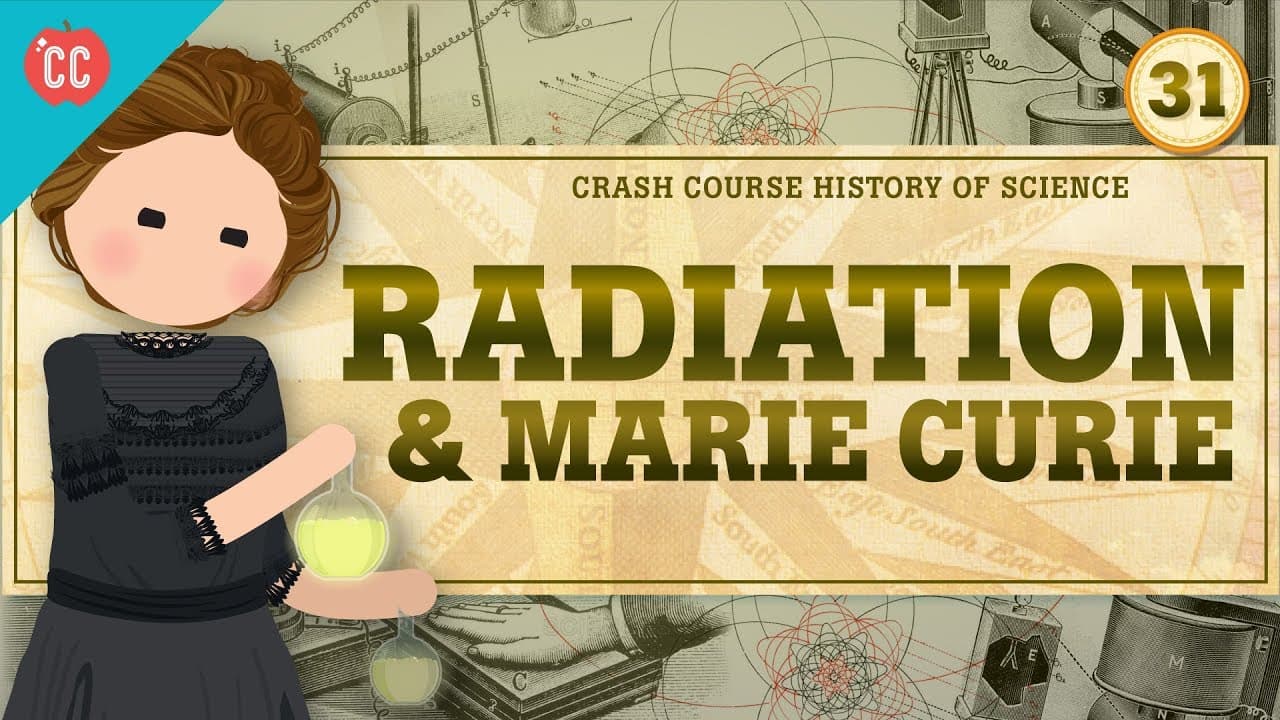
Marie Curie revolutionized science with her discovery of radioactivity, becoming the first woman to win a Nobel Prize and the only person to win in two different sciences. Her work laid the foundation for modern physics and had significant medical applications, including cancer treatment. Despite challenges, she pursued education and scientific research, leaving a lasting legacy.
Transcript
The late 1800s and early 1900s saw a revolution in the very basics of what-is-stuff. This story features killer rays and a family of geniuses: it’s the discovery of radioactivity, the birth of particle physics, and the life and enduring legacy of Marie Skłodowska Curie. Now, Nobel Prizes—which started being given out in Marie’s time—aren’t everythi... Read More
Key Insights
- Marie Curie was the first woman to win a Nobel Prize and the only person to win in two different sciences.
- Radioactivity was discovered through the work of Marie Curie and her contemporaries, fundamentally changing physics.
- Curie developed techniques for isolating radioactive isotopes, crucial for scientific and medical advancements.
- Her work demonstrated that atoms could be split, contradicting the long-held belief of their indivisibility.
- Marie Curie's research led to the use of radioactive materials in cancer treatment, a practice still in use today.
- Despite societal limitations, Curie achieved higher education and scientific success, inspiring future generations.
- The Curie family, including Marie's daughter, achieved multiple Nobel Prizes, highlighting their scientific contributions.
- Marie Curie's legacy extends beyond her lifetime, influencing both the scientific community and public health.
Install to Summarize YouTube Videos and Get Transcripts
Explore YouTube Video Summarizer or Get YouTube Transcript Extractor
Questions & Answers
Q: How did Marie Curie contribute to the discovery of radioactivity?
Marie Curie contributed to the discovery of radioactivity by developing a theory of radioactive decay, demonstrating that certain elements emit energy as they decay. Her work involved isolating radioactive isotopes and showing that radioactivity was a property of atoms themselves, fundamentally altering the understanding of atomic physics and laying the groundwork for future research in the field.
Q: What were the challenges Marie Curie faced in her scientific career?
Marie Curie faced numerous challenges, including societal restrictions on women's education and participation in science. Despite these obstacles, she pursued higher education at the University of Paris and conducted groundbreaking research in radioactivity. Her perseverance and dedication enabled her to overcome these barriers and significantly contribute to the scientific community, inspiring future generations of women in science.
Q: What impact did Marie Curie's discoveries have on medical treatments?
Marie Curie's discoveries in radioactivity had a profound impact on medical treatments, particularly in cancer therapy. Her research demonstrated that radioactive materials could be used to shrink tumors, leading to the development of radiation therapy. This application of her work has saved countless lives and remains a cornerstone of modern cancer treatment, highlighting the enduring significance of her scientific contributions.
Q: How did Marie Curie's work influence modern physics?
Marie Curie's work on radioactivity significantly influenced modern physics by demonstrating that atoms could be split, contradicting the long-held belief in their indivisibility. Her research laid the foundation for the development of nuclear physics and advanced the understanding of atomic structures, influencing numerous scientific advancements and paving the way for future discoveries in the field.
Q: What were the key scientific achievements of the Curie family?
The Curie family, led by Marie Curie, achieved multiple scientific milestones, including the discovery of radioactivity and the isolation of radioactive isotopes. Marie and her husband Pierre discovered polonium and radium, while their daughter Irène Joliot-Curie continued their legacy by winning a Nobel Prize for her work in chemistry. Their collective achievements have had a lasting impact on both science and medicine.
Q: Why is Marie Curie's legacy significant in the history of science?
Marie Curie's legacy is significant in the history of science due to her groundbreaking discoveries in radioactivity, her role as a pioneer for women in science, and the lasting impact of her work on both physics and medical treatments. Her achievements have inspired countless scientists and continue to influence research and innovation in various scientific fields, underscoring her enduring influence.
Q: How did societal norms affect Marie Curie's educational and career opportunities?
Societal norms of the time, which restricted women's access to education and professional opportunities, significantly affected Marie Curie's educational and career paths. Despite these limitations, she pursued higher education in Paris, overcoming gender-based barriers to achieve scientific success. Her determination and achievements challenged these norms, paving the way for future generations of women in science.
Q: What role did Marie Curie play in the development of radiation therapy?
Marie Curie played a crucial role in the development of radiation therapy by discovering the properties of radioactive materials and demonstrating their potential in medical treatments. Her research on radioactive isotopes led to the use of radium in shrinking tumors, establishing radiation therapy as a viable cancer treatment. This application of her work has had a lasting impact on medical practice and patient care.
Summary & Key Takeaways
-
Marie Curie, a pioneer in radioactivity, became the first woman to win a Nobel Prize and remains the only person to win in two different sciences. Her discoveries laid the groundwork for modern physics and medical treatments, particularly in cancer therapy. Despite societal challenges, she pursued education and scientific research, leaving a lasting legacy in science.
-
Curie's work on radioactivity revealed that atoms could decay, releasing energy, thus challenging the notion of their indivisibility. She isolated radioactive isotopes and applied her discoveries to medical practices, notably in cancer treatment. Her achievements have inspired countless scientists and advanced the field of physics significantly.
-
The Curie family, with Marie at the forefront, achieved multiple Nobel Prizes, showcasing their profound impact on science. Marie's determination to succeed in a male-dominated field and her groundbreaking research have left an indelible mark on both science and society, influencing future generations of scientists.
Read in Other Languages (beta)
Share This Summary 📚
Summarize YouTube Videos and Get Video Transcripts with 1-Click
Try YouTube Summary with ChatGPT & Claude or YouTube Transcript Generator
Explore More Summaries from CrashCourse 📚



Summarize YouTube Videos and Get Video Transcripts with 1-Click
Try YouTube Summary with ChatGPT & Claude or YouTube Transcript Generator