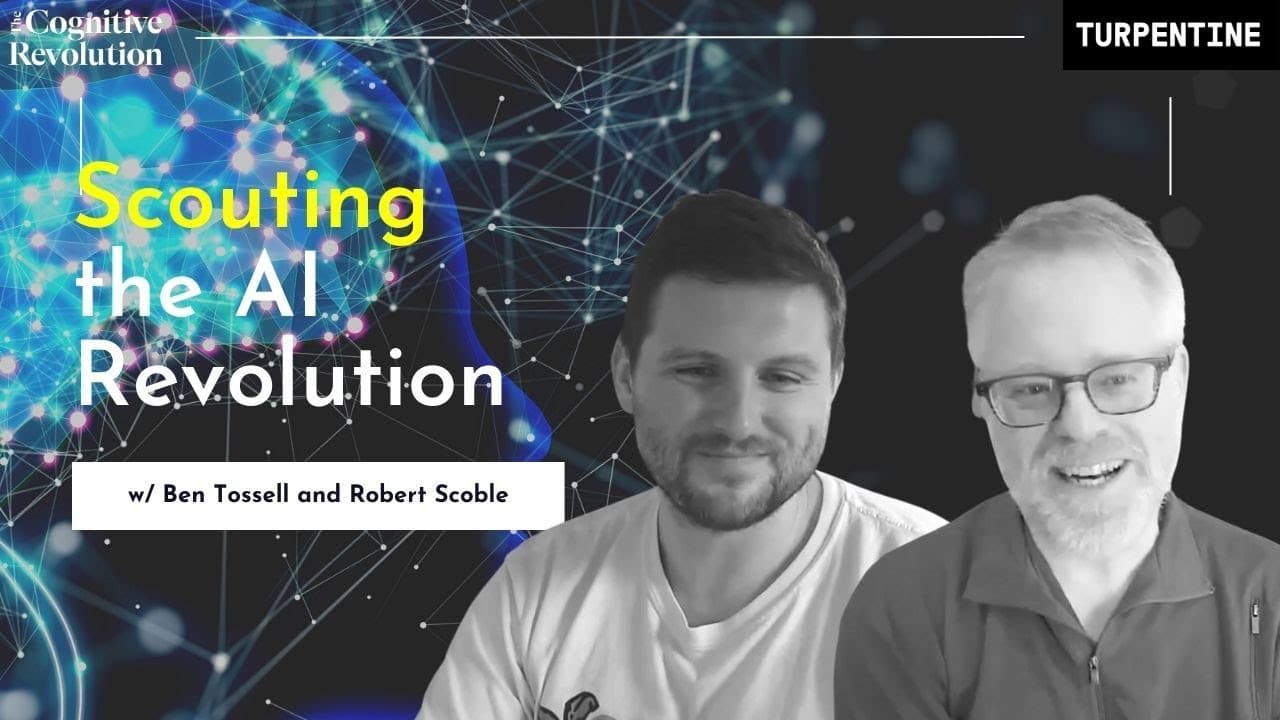
How Do AI Scouts Predict Technology’s Future? Robert Scoble and Ben Tossell on The Cognitive Revolution
TL;DR
AI scouts predict technology’s future by studying AI fundamentals, tracking new developments, testing products and models, reading research, and examining systems as they actually behave. Host Nathan Labenz aims to devote 50% of his time to this work, while guests Robert Scoble and Ben Tossell offer their own scouting approaches. Read on to understand the role, its methods, and why rapidly improving AI makes it valuable.
Transcript
I mean I tried to talk Bill Gates out of 300 million dollars one time actually a little bit more but he's like I don't think so it's cool so I know how hard it is to get a corporation the size of a Microsoft to spend 300 million dollars they just spent 10 billion dollars on chat on open AI with AI it's not where are you today it's how fast is it im... Read More
Key Insights
- AI scouts are individuals who study AI developments to understand and predict future trends.
- AI is rapidly evolving, with significant investments from major corporations like Microsoft.
- AI can surpass human capabilities in specific tasks, such as identifying tumors in medical scans.
- The future may see AI integrated into all major tools and platforms, reducing the need for multiple applications.
- AI has the potential to revolutionize industries like education and healthcare by offering new ways of learning and diagnosis.
- Startups and incumbents are both vying for dominance in the AI space, with different strategies and challenges.
- AI safety and governance are critical concerns, especially with the potential for AI to become autonomous.
- Global competition, particularly between the US and China, will shape the future of AI development and deployment.
Install to Summarize YouTube Videos and Get Transcripts
Explore YouTube Video Summarizer or Get YouTube Transcript Extractor
Questions & Answers
Q: What is an AI scout?
An AI scout is a specialist who studies AI from multiple angles and levels of abstraction to understand its actual capabilities, behavior, and direction. The role is intended to help companies, policymakers, and society make better decisions about developing, deploying, and using AI.
Q: How can someone become an effective AI scout?
Nathan Labenz’s approach combines studying AI fundamentals with reading research papers, testing AI products, using the latest models, following online discussions, and listening to podcasts. He also speaks with entrepreneurs, builders, researchers, and fellow scouts to reduce major blind spots and deepen his understanding.
Q: Why does Nathan Labenz believe society needs more AI scouts?
AI capabilities are difficult to predict, and system behaviors can be hard to control. Labenz argues that society is moving rapidly into an increasingly unpredictable AI future, so specialists should examine the technology carefully and work toward accurate beliefs even when the conclusions are uncomfortable.
Q: How much time does Nathan Labenz aim to spend studying AI?
Labenz aims to spend 50% of his time studying AI fundamentals and keeping up with current developments. His goal is to avoid major AI blind spots and understand the field’s most critical questions more deeply.
Q: How capable are current AI systems compared with humans?
The discussion says the best AI systems still generally fall short of human expert performance. However, they consistently outperform the average human on a huge number of challenging and economically valuable tasks, and they continue to improve.
Q: Why is the speed of AI improvement important?
Robert Scoble argues that AI should be judged not only by where it is today but by how quickly it is improving. A tool such as ChatGPT may currently be unsuitable for some work, but continued updates could address its limitations.
Q: Will AI reduce the number of tools people need?
The speakers expect AI to appear in all major tools and platforms as companies release new capabilities. Because people generally prefer fewer tools, one capable AI-enhanced platform could replace workflows that currently require 10 separate tools.
Q: How do AI-first products challenge established platforms?
Smaller companies can build products around AI from the beginning, while established platforms add AI to their existing tools. The discussion asks how much market share AI-first products could take from incumbents and emphasizes that product details will determine the outcome.
Summary & Key Takeaways
-
AI scouts like Robert Scoble and Ben Tossell explore the rapid advancements in AI, discussing the potential of AI-first products versus AI-enhanced existing tools. They emphasize the importance of understanding AI behavior and capabilities to make informed decisions about its development and deployment.
-
The discussion highlights the role of AI in transforming industries, with AI's ability to surpass human capabilities in specific tasks. The integration of AI into major tools and platforms could streamline processes and reduce the need for multiple applications.
-
AI safety and governance are critical concerns, with the potential for AI to become autonomous. The global competition, particularly between the US and China, will significantly influence the future of AI development and deployment, requiring careful consideration of ethical and strategic implications.
Read in Other Languages (beta)
Share This Summary 📚
Summarize YouTube Videos and Get Video Transcripts with 1-Click
Try YouTube Summary with ChatGPT & Claude or YouTube Transcript Generator
Explore More Summaries from Cognitive Revolution "How AI Changes Everything" 📚




Summarize YouTube Videos and Get Video Transcripts with 1-Click
Try YouTube Summary with ChatGPT & Claude or YouTube Transcript Generator