How Does GPT-4 Impact AI Alignment and Safety?
TL;DR
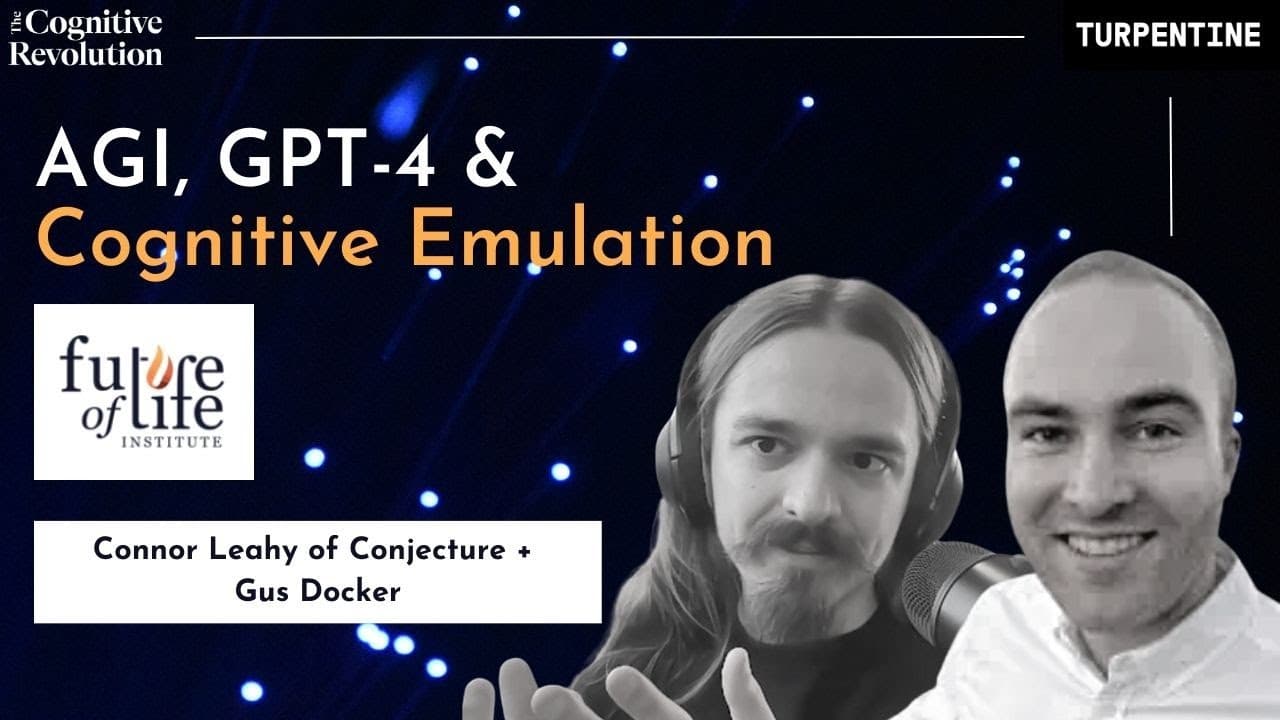
GPT-4 represents a significant leap in AI capabilities, heralding both opportunities and challenges in AI alignment and safety. Connor Leahy discusses the implications of GPT-4, emphasizing the need for cautious development and regulation. Understanding AI as cognitive emulations could offer pathways to safer AI systems that align with human values.
Transcript
hello and welcome back to a special bonus episode of the cognitive Revolution as you may know I recently had the pleasure of appearing as a guest on the future of Life Institute podcast the future of Life Institute you'll recall from our recent interview with Skype founder and influential AI investor Jan Talon and if you haven't heard that episode ... Read More
Key Insights
- GPT-4 has surpassed GPT-3 in terms of capabilities and consistency, making it more reliable in performing tasks.
- AI systems like GPT-4 are not simply larger versions of their predecessors; they are fine-tuned with human feedback to better meet user expectations.
- The concept of 'magic' in machine learning refers to the unpredictable and often inexplicable nature of neural network outputs.
- Cognitive emulations aim to mimic human reasoning processes, potentially making AI more understandable and controllable.
- There is a growing demand for AI systems that are human-like, which could lead to safer integration into existing human-centric environments.
- The leap from aligned human-like AI to aligned superintelligence remains a significant challenge, requiring careful design and regulation.
- Connor Leahy emphasizes the importance of creating AI systems that are both powerful and safe, suggesting that cognitive emulations could be a viable path.
- The future of AI development may hinge on balancing rapid technological progress with ethical considerations and societal impact.
Install to Summarize YouTube Videos and Get Transcripts
Explore YouTube Video Summarizer or Get YouTube Transcript Extractor
Questions & Answers
Q: How does GPT-4 differ from GPT-3 in terms of capabilities?
GPT-4 is designed to be more consistent and reliable than GPT-3, with improvements in reasoning and task performance. It has been fine-tuned with reinforcement learning from human feedback, allowing it to better meet user expectations and perform more complex tasks with greater accuracy.
Q: What is meant by 'magic' in machine learning?
In machine learning, 'magic' refers to the unpredictable and often inexplicable nature of neural network outputs. These systems can produce results that are difficult to understand or predict, leading to challenges in ensuring their reliability and safety. This unpredictability is a key concern in AI alignment and safety discussions.
Q: What are cognitive emulations in AI?
Cognitive emulations are AI systems designed to mimic human reasoning processes. By emulating the way humans think and solve problems, these systems aim to be more understandable and controllable, potentially offering a pathway to safer AI development and deployment that aligns with human values.
Q: Why is there a demand for human-like AI systems?
Human-like AI systems are in demand because they can integrate more seamlessly into human-centric environments. Such systems are easier to understand and control, making them more suitable for applications where safety and alignment with human values are critical. This demand is driven by the need for AI systems that can be trusted and effectively managed.
Q: What challenges remain in aligning superintelligence?
Aligning superintelligence presents significant challenges, as it involves ensuring that AI systems act in ways that are beneficial to humanity. This requires careful design, regulation, and oversight to prevent unintended consequences. The complexity and power of superintelligent systems make this a daunting task that requires innovative solutions.
Q: How can cognitive emulations contribute to AI safety?
Cognitive emulations can contribute to AI safety by providing a framework for developing systems that mimic human reasoning. By aligning AI processes with human cognitive patterns, these systems can be made more predictable and controllable, reducing the risk of unintended actions and enhancing their alignment with human values and goals.
Q: What role does regulation play in AI development?
Regulation plays a crucial role in AI development by setting standards and guidelines for safe and ethical AI deployment. It helps ensure that AI systems are developed with consideration for their societal impact and potential risks, promoting transparency, accountability, and alignment with human values.
Q: What is the potential impact of AI on society according to Connor Leahy?
According to Connor Leahy, AI has the potential to significantly impact society, offering both opportunities and challenges. While AI advancements can drive economic growth and innovation, they also pose risks if not properly aligned with human values. The development of cognitive emulations and other safety measures is essential to harnessing AI's benefits while mitigating its dangers.
Summary & Key Takeaways
-
GPT-4 introduces enhanced capabilities over its predecessors, raising both excitement and concern in the AI community. Connor Leahy discusses the implications of these advancements, particularly in terms of AI alignment and safety. He suggests that understanding AI as cognitive emulations could provide a framework for creating systems that align with human values and are safer to deploy.
-
The concept of 'magic' in machine learning highlights the challenges of understanding and predicting AI behavior. As AI systems become more integrated into society, the demand for human-like AI that can be controlled and understood increases. This could lead to the development of systems that are better aligned with human needs and ethical standards.
-
Aligning superintelligence remains a daunting task, with significant challenges in ensuring that AI systems act in ways that are beneficial to humanity. Connor Leahy suggests that cognitive emulations, which mimic human reasoning, could be a step toward achieving this goal. However, careful consideration of the ethical and societal impacts of AI development is crucial.
Read in Other Languages (beta)
Share This Summary 📚
Summarize YouTube Videos and Get Video Transcripts with 1-Click
Try YouTube Summary with ChatGPT & Claude or YouTube Transcript Generator
Explore More Summaries from Cognitive Revolution "How AI Changes Everything" 📚





Summarize YouTube Videos and Get Video Transcripts with 1-Click
Try YouTube Summary with ChatGPT & Claude or YouTube Transcript Generator