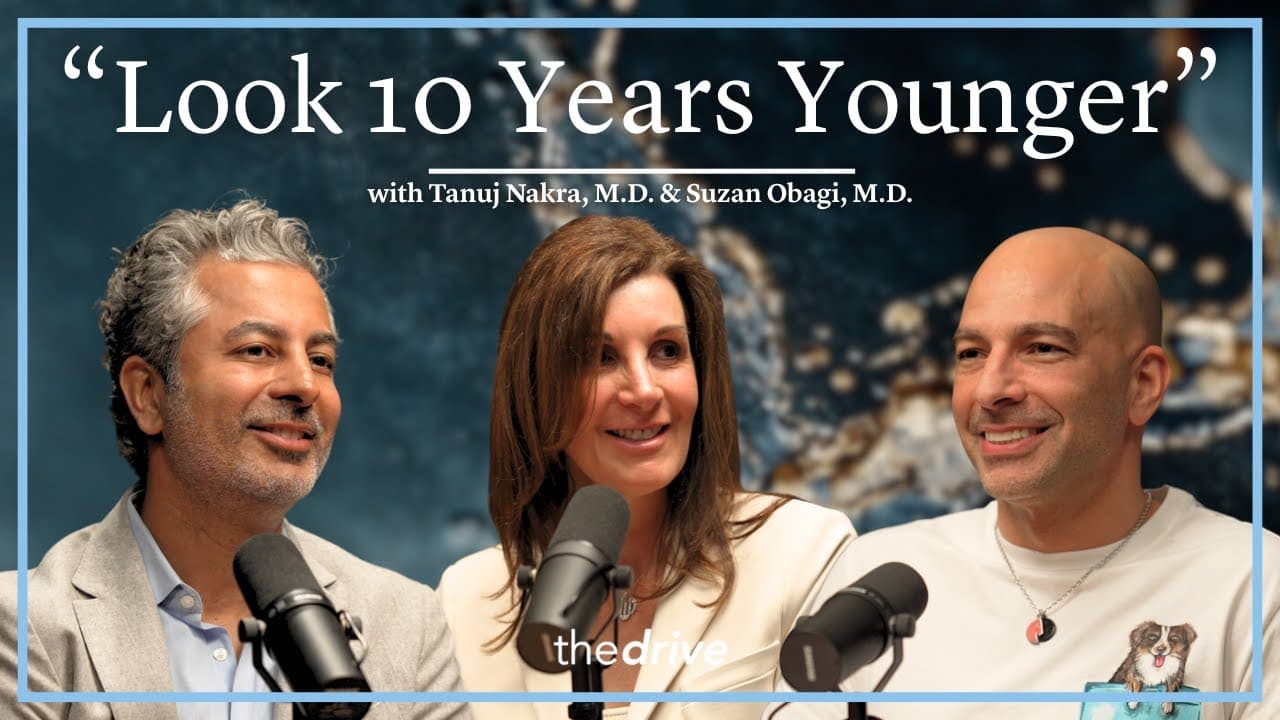
How Do Cosmetic Doctors Plan Facial Rejuvenation? | Tanuj Nakra, M.D. & Suzan Obagi, M.D.
TL;DR
Cosmetic doctors plan facial rejuvenation by evaluating skin, volume, gravity, and bone structure, then matching treatment to the patient’s anatomy, psychology, and goals. Much of the physical assessment occurs within the first 15 seconds, but understanding motivation requires deeper questioning. When emotional distress raises concerns, doctors may favor reversible options such as neuromodulators, fillers, and lasers while postponing irreversible procedures. Read on to see how this individualized process guides safer decisions.
Transcript
Okay. Um, all right. Let us move now into the really confusing realm of I show up in your office. I can't tell you what's wrong, but I show you a picture of me 10 years ago and I say, I want to look like that. And I should have brought a picture in of me so you could actually see it. But like I you've already described it without having seen the pi... Read More
Key Insights
- Facial aging involves four fundamental changes that happen to everyone: skin changes, volume loss, gravitational changes, and bone structural or foundational changes. Doctors analyze how each of these presents individually on a specific patient's face.
- Aesthetic surgeons complete much of their physical exam in the first 15 seconds of meeting a patient, analyzing skin, bone structure, facial proportion, volume loss, dynamic forehead movement, eyelid heaviness, and asymmetries almost automatically.
- Heaviness on the eyes can drive frontalis muscle tone, which in turn causes forehead wrinkles. This connection illustrates why doctors analyze dynamic muscle movement rather than looking at a single static image of the face.
- Understanding patient psychology is a core daily task because patients often cannot articulate what is actually driving their desire for change. Doctors must interpret both spoken words and underlying emotions to identify true motivations.
- A cookie-cutter approach, like automatically injecting Botox for forehead wrinkles or defaulting to a facelift, is poor practice. Every individual has a customized situation anatomically, physiologically, and psychologically that must be figured out.
- Asking whether a patient liked how they looked at 20 reveals intent: a yes suggests they want rejuvenation of natural proportions, while complaints about a lifelong feature suggest they want a more substantial change in that area.
- Emotional distress, such as a spouse leaving, is a common presenting scenario and a potential red flag. Doctors screen social history and may pause treatment, favoring reversible options over irreversible procedures until mental health stabilizes.
- Building trust on the front end lets a doctor decline a procedure and have the patient still listen, because the patient knows the doctor has their best interest in mind and will reach the goal together over time.
Install to Summarize YouTube Videos and Get Transcripts
Explore YouTube Video Summarizer or Get YouTube Transcript Extractor
Questions & Answers
Q: How do cosmetic doctors plan facial rejuvenation?
They assess four areas of facial aging: skin, volume, gravitational changes, and bone structure. They then consider the patient’s facial anatomy, physiology, psychology, and motivation instead of automatically treating a visible wrinkle or sagging area.
Q: What are the four main types of facial aging?
The four changes are skin changes, volume changes, gravitational changes, and bone structural or foundational changes. These occur in everyone, but their individual patterns differ from one face to another.
Q: How quickly does a cosmetic doctor assess a patient’s face?
Much of the physical examination happens within the first 15 seconds of meeting the patient. During that time, the doctor may assess skin, bone structure, facial proportions, volume loss, dynamic movement, eyelid heaviness, and asymmetry.
Q: Why do doctors examine facial movement as well as appearance?
Dynamic movement can reveal relationships between facial features and wrinkles. For example, heaviness around the eyes may drive frontalis muscle tone that contributes to forehead wrinkles.
Q: Why is patient psychology important in facial rejuvenation?
Patients may struggle to explain what they dislike or what is motivating them to seek treatment. Doctors therefore use conversation and detective work to understand the patient’s underlying goals before recommending an approach.
Q: Why should cosmetic treatment avoid a cookie-cutter approach?
Each patient has a distinct anatomical, physiological, and psychological situation. Automatically using Botox for forehead wrinkles or defaulting to a facelift may overlook the actual causes of the concern and the patient’s goals.
Q: How does asking about a patient’s appearance at age 20 guide treatment?
If the patient liked their appearance at 20, they may want rejuvenation that preserves their natural facial proportions. If they describe a lifelong concern, such as a heavy eyelid that interfered with makeup, they may want a more substantial change in that specific area.
Q: When might a doctor postpone an irreversible cosmetic procedure?
A doctor may pause when social history or emotional distress suggests that it is not the right time for a major procedure. The doctor may instead build trust through reversible, low-risk options such as neuromodulators, fillers, skin treatments, or lasers while postponing a facelift.
Summary & Key Takeaways
-
Every person experiences four basic aging changes: skin, volume, gravitational, and bone structural changes. When a patient asks to look ten years younger, doctors spend extra time analyzing the individual nuances of skin, volume, bony ligamentous anatomy, and gravitational shifts specific to that person's face.
-
Much of the physical exam happens within the first 15 seconds. The doctor analyzes skin, bone structure, facial proportion, volume loss, dynamic forehead movement, eyelid heaviness driving frontalis tone, and asymmetries. After this snapshot, the next step is understanding the patient's psychology and motivation, which is detective work.
-
When a patient is in emotional distress, such as a 50-year-old whose husband is leaving, the doctor may act as a therapist, screen for red flags, and choose reversible low-risk treatments like neuromodulators, fillers, and lasers. Building trust first lets the doctor safely guide the patient toward their goal over time.
Read in Other Languages (beta)
Share This Summary 📚
Summarize YouTube Videos and Get Video Transcripts with 1-Click
Try YouTube Summary with ChatGPT & Claude or YouTube Transcript Generator
Explore More Summaries from Peter Attia MD 📚



Summarize YouTube Videos and Get Video Transcripts with 1-Click
Try YouTube Summary with ChatGPT & Claude or YouTube Transcript Generator