What Caused the Extinction of Megalodon Sharks?
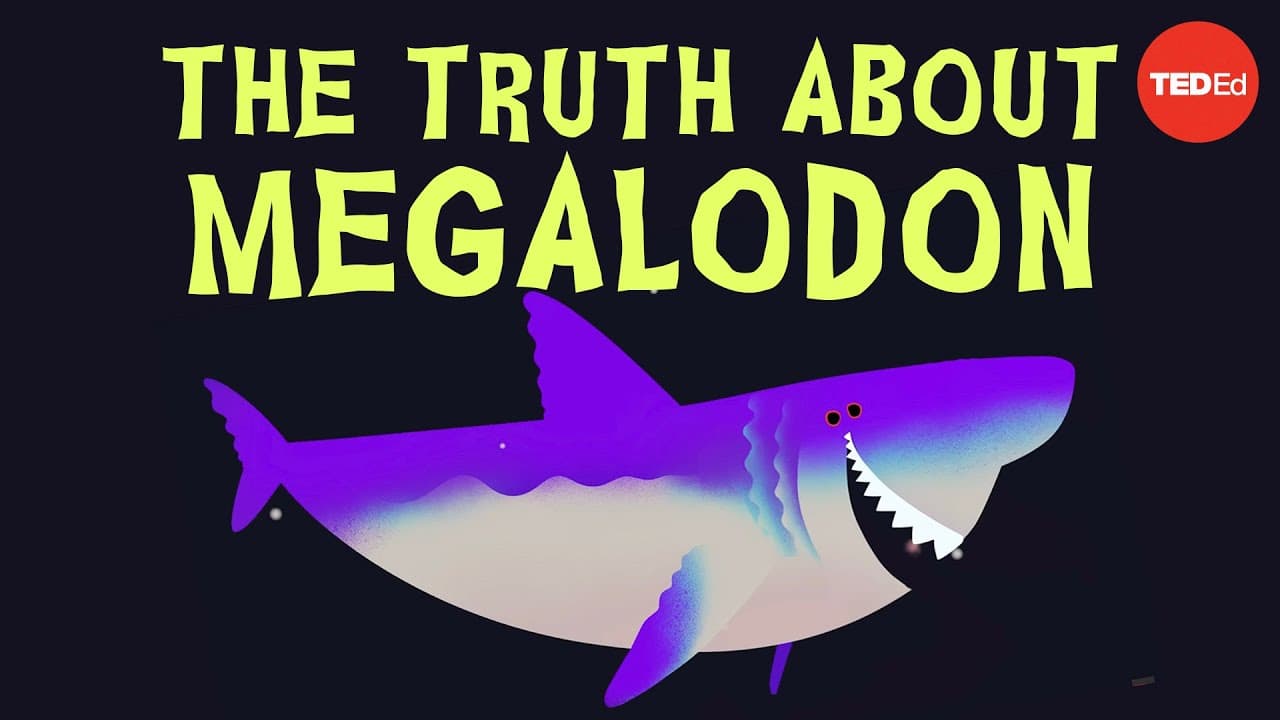
TL;DR
Megalodon sharks went extinct around 3.5 million years ago due to a combination of climate change, a decrease in prey availability, and increased competition from other predators like great white sharks. The cooling climate led to habitat loss and a decline in marine megafauna, ultimately destabilizing the ecosystems that megalodons relied on.
Transcript
In 1667, a Danish scientist finally concluded that certain mysterious stones prized for their supposed medicinal powers, hadn’t fallen from the sky during lunar eclipses and weren’t serpent tongues. In fact, they were fossilized teeth— many belonging to a prehistoric species that would come to be called megalodon, the biggest shark to ever live. So... Read More
Key Insights
- 🦈 Megalodons were prehistoric sharks that lived around 20 million years ago, growing up to 20 meters long, three times the size of great white sharks.
- 🦷 Megalodons shed and replaced thousands of teeth over their lifetime, with nurseries supporting countless generations of young megalodons.
- 🌍 The world was warmer during the reign of megalodons, with diverse marine life and ample food options, including large prey species and even other predators.
- 💪 Megalodons were apex predators, evidenced by their teeth and isotopic analysis, which showed they consumed large protein-rich prey, potentially even each other.
- 🦴 Researchers have analyzed the remains of a 46-year-old megalodon, including a well-preserved spinal column and suggest their stomach could reach volumes of 10,000 liters.
- 🔒 Megalodons went extinct around 3.5 million years ago, likely due to environmental changes, including cooling climate, sea level drop, and competition with other predators like the great white shark.
- 🌊 The extinction of megalodons had global consequences, disrupting nutrient transport and releasing animals from immense predatory pressure, allowing some marine mammals to increase in size.
- 🔬 Conservation efforts focus on protecting sharks from human-induced threats, recognizing the importance of apex predators in maintaining ecosystem stability.
Install to Summarize YouTube Videos and Get Transcripts
Explore YouTube Video Summarizer or Get YouTube Transcript Extractor
Questions & Answers
Q: How did scientists discover the true nature of the mysterious stones initially believed to be megalodon teeth?
In 1667, a Danish scientist identified the stones originally thought to be mystical objects as fossilized teeth, which were later recognized as belonging to the megalodon species.
Q: What were the possible reasons for the extinction of megalodons?
The extinction of megalodons can be attributed to various factors, including climate changes, the loss of coastal habitats, decrease in prey availability, competition with other predators, and disrupted nutrient transport between ecosystems.
Q: How did megalodons compare to great white sharks?
Megalodons were estimated to be three times longer than great whites, reaching up to 20 meters in length, and their teeth bore similarities to those of modern great white sharks.
Q: How did megalodons hunt and what did they eat?
Megalodons were apex predators and consumed large prey species, including baleen whales and potentially other predators like other megalodons. The megalodon's teeth and bite marks on fossilized bones of ancient cetaceans provide evidence of their hunting habits.
Q: How did the extinction of megalodons impact other marine animals?
The extinction of megalodons had global consequences as their long-distance travels helped transport nutrients between ecosystems. With their disappearance, marine ecosystems experienced a release from the immense predatory pressure of megalodons, leading to changes in animal sizes and ecosystem stability.
Q: What actions are conservationists taking to prevent the decline of modern sharks?
Conservationists are working to protect sharks from facing a similar fate as megalodons due to human activities. They aim to prevent overfishing and promote shark conservation efforts to maintain ecological balance in marine ecosystems.
Summary & Key Takeaways
-
Megalodon, the largest shark species, had fossils consisting mainly of teeth, suggesting their cartilaginous skeletons left few remains behind.
-
Megalodons were believed to have evolved in nurseries and grew to enormous sizes, reaching up to three times the length of a great white shark.
-
The extinction of megalodons was likely caused by climate changes, including the cooling of the global climate, which led to the loss of coastal habitats and a decrease in prey availability.
Read in Other Languages (beta)
Share This Summary 📚
Summarize YouTube Videos and Get Video Transcripts with 1-Click
Try YouTube Summary with ChatGPT & Claude or YouTube Transcript Generator
Explore More Summaries from TED-Ed 📚






Summarize YouTube Videos and Get Video Transcripts with 1-Click
Try YouTube Summary with ChatGPT & Claude or YouTube Transcript Generator