How blood pressure works - Wilfred Manzano
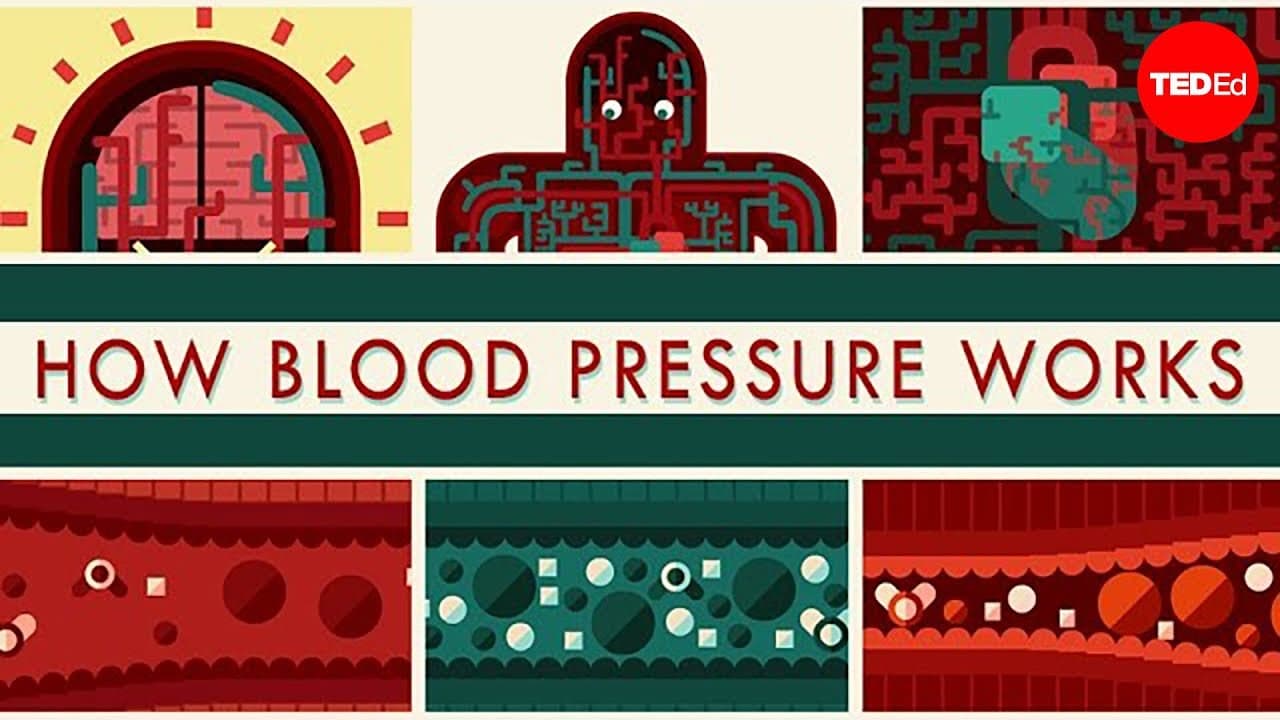
TL;DR
Blood pressure is the force of circulating blood against blood vessel walls, fluctuating with each heartbeat. Consistently high blood pressure, or hypertension, can lead to serious health issues like atherosclerosis, heart attacks, and strokes. Maintaining a normal range — typically less than 120/80 — is crucial for long-term health.
Transcript
If you lined up all the blood vessels in your body, they'd be 95,000 kilometers long and everyday, they carry the equivalent of over 7,500 liters of blood, though that's actually the same four or five liters recycled over and over, delivering oxygen, and precious nutrients like glucose and amino acids to the body's tissues. All that blood exerts a... Read More
Key Insights
- 🫥 The blood vessels in our body, if lined up, would measure approximately 95,000 kilometers long.
- 🧡 Normal blood pressure ranges from around 90-120 systolic and 60-80 diastolic, with a typical reading of less than 120/80.
- 🩸 Factors like blood thickness, high-salt diet, and stress can lead to increased blood pressure.
- 🥰 Atherosclerosis, caused by plaque buildup in arterial walls, can result in serious health complications like heart attacks and strokes.
- 🩸 Angioplasty is a procedure that can widen clogged blood vessels to restore proper blood flow.
- 💓 Arteries are designed to handle the pressure exerted by blood, but they can still be affected by sticky substances and the continuous beating of the heart.
- 🎚️ Blood pressure should be monitored regularly, and lifestyle changes may be necessary to maintain healthy levels.
Install to Summarize YouTube Videos and Get Transcripts
Explore YouTube Video Summarizer or Get YouTube Transcript Extractor
Questions & Answers
Q: What is blood pressure, and how does it change with the phases of the heartbeat?
Blood pressure is the force exerted by blood on the walls of blood vessels. It is highest during systole (when the heart contracts) and lowest during diastole (when the heart rests between beats).
Q: How does a high-salt diet affect blood pressure?
Consuming a high-salt diet promotes water retention, increases blood volume, and raises blood pressure. This is because salt enhances fluid retention and puts strain on blood vessel walls.
Q: How does stress contribute to high blood pressure?
Stress triggers the release of hormones like epinephrine and norepinephrine, which constrict blood vessels and increase resistance to blood flow. This results in higher blood pressure.
Q: What are the risks associated with consistently high blood pressure?
Consistently elevated blood pressure can cause small tears in the arterial walls, leading to atherosclerosis, plaque buildup, and potentially life-threatening conditions like heart attacks and strokes.
Summary
Blood pressure is the force exerted by the blood on the walls of blood vessels as it travels through the circulatory system. It is highest during systole when the heart contracts, and lowest during diastole when the heart is at rest. Normal blood pressure ranges from 90-120 mmHg systolic and 60-80 mmHg diastolic. Various factors can increase blood pressure, including changes in blood viscosity, fluid volume, pipe diameter, and stress. If blood pressure remains consistently high, it can lead to hypertension and cause serious health issues such as atherosclerosis. Atherosclerosis occurs when the arterial walls become damaged and plaque builds up, increasing the risk of blood clots and potentially causing heart attacks or strokes. Treatment options for clogged blood vessels include angioplasty and stent placement. Despite the challenges, arteries are resilient and well-equipped to handle the demands placed on them.
Questions & Answers
Q: What is blood pressure?
Blood pressure refers to the force exerted by the blood on the walls of the blood vessels as it travels through the circulatory system.
Q: When is blood pressure highest and lowest?
Blood pressure is highest during systole when the heart contracts to force blood through the arteries. It is lowest during diastole when the heart is at rest between beats.
Q: What are the normal ranges for blood pressure?
A typical healthy individual produces a systolic pressure between 90 and 120 millimeters of mercury (mmHg) and a diastolic pressure between 60 and 80 mmHg. A normal reading is usually slightly less than 120 over 80 mmHg.
Q: How can certain factors increase blood pressure?
Several factors can increase blood pressure, including changes in the properties of the blood (such as thickening), increased fluid volume, or narrower blood vessels. For example, a high-salt diet can lead to water retention and increased blood volume, resulting in higher blood pressure. Stress can also play a role by releasing hormones that constrict blood vessels, thereby increasing resistance to flow and raising blood pressure.
Q: What happens when blood pressure remains consistently high?
If blood pressure regularly rises above approximately 140 over 90 mmHg, known as hypertension, and stays elevated, it can potentially cause serious problems. The extra strain on the arterial wall can lead to small tears, which trigger an inflammatory response. White blood cells and substances in the blood, such as fat and cholesterol, collect around the tears and form plaque, which thickens and stiffens the inner arterial wall. This condition is called atherosclerosis and can have dangerous consequences.
Q: What are the potential consequences of atherosclerosis?
Atherosclerosis can lead to the formation of blood clots. If a clot forms on top of a tear in a clogged blood vessel, it can further narrow the passageway and potentially block the flow of oxygen and nutrients to cells downstream. If the clot completely obstructs blood flow to the heart, it can cause a heart attack. Similarly, if blood flow to the brain is cut off, it can result in a stroke.
Q: How are clogged blood vessels treated?
One treatment option for clogged blood vessels is angioplasty. During this procedure, a wire is threaded through the vessel to the obstructed site, and a deflated balloon catheter is placed over the wire. When the balloon is inflated, it forces the passageway open again, allowing blood to flow more freely. In some cases, a stent, which is a rigid tube, may be placed in the vessel to help hold it open and restore normal blood flow to oxygen-starved cells downstream.
Q: What challenges do arteries face when it comes to blood pressure?
Arteries face multiple challenges when it comes to maintaining blood pressure. The fluid they pump contains substances that can become sticky and potentially clog the arteries. Additionally, a typical healthy heart beats about 70 times per minute and undergoes at least 2.5 billion beats during an average lifetime, placing a considerable amount of pressure on the arteries.
Q: Can arteries handle the demands placed on them?
Despite the challenges, arteries are well equipped to handle the demands placed on them. Elastic fibers embedded in the walls of blood vessels make them resilient and capable of adapting to changes in blood pressure. However, consistently high blood pressure can still pose serious health risks.
Takeaways
Blood pressure is a vital aspect of circulatory health, as it ensures the delivery of oxygen and nutrients to the body's tissues. However, if blood pressure remains consistently high, it can lead to hypertension and cause serious problems such as atherosclerosis, heart attacks, and strokes. Understanding the factors that contribute to high blood pressure and recognizing the importance of maintaining normal ranges is crucial. Medical interventions such as angioplasty and stent placement can help treat clogged blood vessels. Despite the challenges, arteries have mechanisms to handle the demands placed on them, but it's important to strive for optimal blood pressure for overall cardiovascular health.
Summary & Key Takeaways
-
Blood pressure is the force exerted by blood on the walls of blood vessels and fluctuates with the phases of the heartbeat.
-
Elevated blood pressure can result from factors like blood thickness, high-salt diet, and stress.
-
If blood pressure consistently rises above 140/90 (hypertension), it can lead to atherosclerosis, plaque formation, and potentially life-threatening conditions like heart attacks and strokes.
Read in Other Languages (beta)
Share This Summary 📚
Summarize YouTube Videos and Get Video Transcripts with 1-Click
Try YouTube Summary with ChatGPT & Claude or YouTube Transcript Generator
Explore More Summaries from TED-Ed 📚






Summarize YouTube Videos and Get Video Transcripts with 1-Click
Try YouTube Summary with ChatGPT & Claude or YouTube Transcript Generator