What Are the Main Challenges in AI Safety Debate?
TL;DR
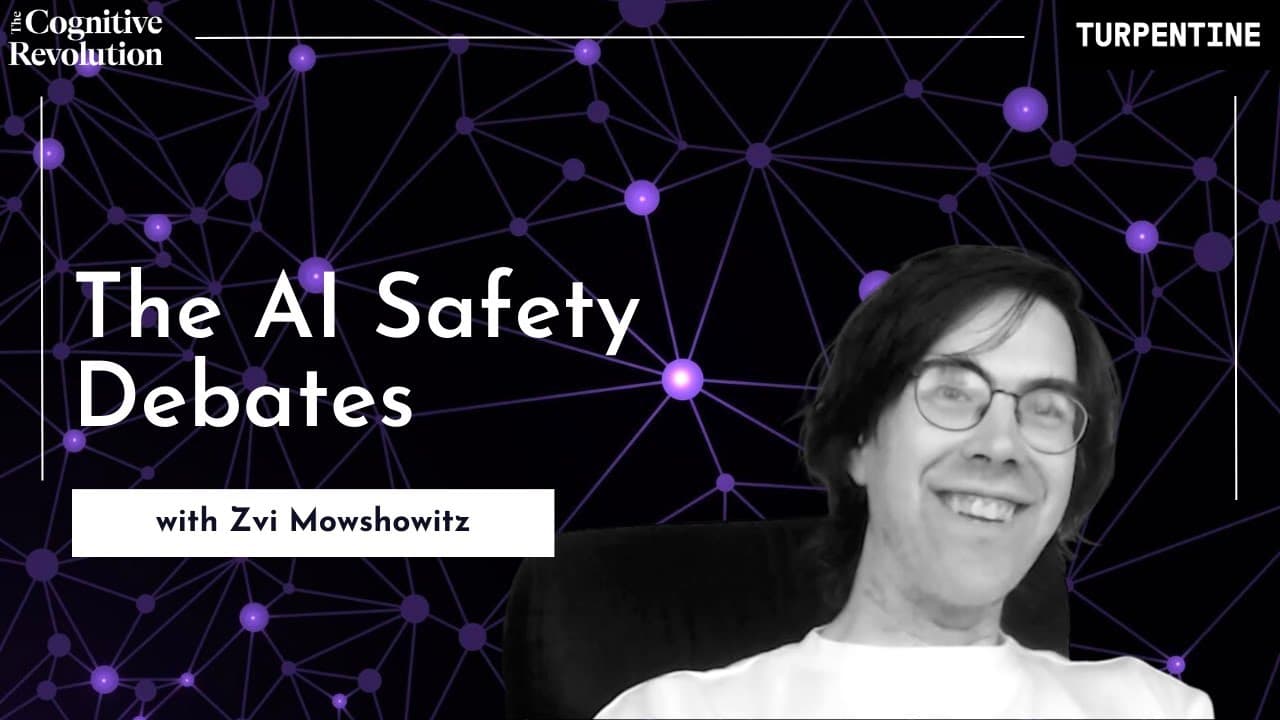
The main challenges in the AI safety debate include aligning AI systems with human values, managing the complexities of varying perspectives on AI risks and benefits, and the need for coordination among global leaders in AI development. Zvi Mowshowitz emphasizes the importance of addressing these issues to ensure positive outcomes as AI technology evolves and becomes more powerful.
Transcript
a lot of people talk about alignment talk about it as some sort of weird Boolean where if you figure out how to align the system suddenly everything is aligned and if everything is aligned that everything is fine and I think this is a serious way people fool themselves into thinking of this problem is a lot easier than it sounds like it is right we... Read More
Key Insights
- Zvi Mowshowitz emphasizes the complexity of AI alignment, highlighting the challenges in specifying and controlling AI goals.
- The discourse around AI safety involves various camps, including accelerationists, AI ethics advocates, and those concerned about existential risks.
- Zvi argues that current AI systems are mostly beneficial, but future systems could pose significant risks if not properly aligned.
- He believes that influential figures in AI companies and governments play a crucial role in shaping the future of AI safety.
- Zvi uses language models primarily for information gathering and brainstorming, rather than for drafting or editing his writing.
- He maintains a probabilistic view of AI outcomes, acknowledging both the potential for catastrophe and the possibility of positive developments.
- Coordination among global powers, especially the U.S. and China, is essential for effective AI governance and safety measures.
- Mowshowitz suggests that media portrayals of AI, like in films and series, significantly influence public perception and discourse.
Install to Summarize YouTube Videos and Get Transcripts
Explore YouTube Video Summarizer or Get YouTube Transcript Extractor
Questions & Answers
Q: What is Zvi Mowshowitz's view on AI alignment?
Zvi Mowshowitz believes that AI alignment is a complex challenge involving the specification and control of AI goals. He argues that while current AI systems are mostly beneficial, future systems could pose significant risks if not properly aligned. He emphasizes the difficulty in ensuring that AI systems act in accordance with human values, especially as they become more powerful.
Q: Who does Zvi Mowshowitz believe are the most influential figures in AI discourse?
Zvi Mowshowitz identifies leaders of AI companies and policymakers as the most influential figures in AI discourse. He believes that individuals like Sam Altman of OpenAI and other leaders in AI development play a crucial role in shaping the future of AI safety. He also emphasizes the importance of coordination among global powers, particularly the U.S. and China, in AI governance.
Q: How does Zvi Mowshowitz use language models in his work?
Zvi Mowshowitz uses language models primarily for information gathering and brainstorming. He finds them useful for generating examples and checking intuitions but does not rely on them for drafting or editing his writing. He believes that current language models are not yet capable of producing the style and clarity he aims for in his work.
Q: What is Zvi Mowshowitz's probabilistic view on AI outcomes?
Zvi Mowshowitz maintains a probabilistic view of AI outcomes, acknowledging both the potential for catastrophe and the possibility of positive developments. He believes that while there is a significant chance of negative outcomes, there is also the potential for AI to bring about substantial benefits. He emphasizes the importance of addressing AI safety challenges to maximize positive outcomes.
Q: Why does Zvi Mowshowitz emphasize coordination among global powers in AI governance?
Zvi Mowshowitz emphasizes coordination among global powers, particularly the U.S. and China, as essential for effective AI governance and safety measures. He believes that without collaboration, competitive dynamics could lead to unsafe AI development. Mowshowitz argues that engaging with global powers is crucial to ensure that AI systems are developed responsibly and aligned with human values.
Q: How do media portrayals of AI influence public perception, according to Zvi Mowshowitz?
According to Zvi Mowshowitz, media portrayals of AI, such as films and television series, significantly influence public perception and discourse. He suggests that these portrayals shape how people understand and engage with AI technologies, often highlighting potential risks and benefits. Mowshowitz believes that media can both inform and misinform the public about AI, affecting the broader discourse.
Q: What are the main camps in AI discourse identified by Zvi Mowshowitz?
Zvi Mowshowitz identifies several main camps in AI discourse, including accelerationists who advocate for rapid AI development, AI ethics advocates focused on current concerns, and those worried about existential risks from AI. He also notes the existence of a 'safety hype' accusation, where some believe AI risks are exaggerated for personal or commercial gain. Mowshowitz emphasizes the need for dialogue among these groups.
Q: What role do influential figures play in shaping AI safety, according to Zvi Mowshowitz?
Influential figures, such as leaders of AI companies and policymakers, play a crucial role in shaping AI safety, according to Zvi Mowshowitz. He believes that their decisions and public statements can significantly influence the direction of AI development and the implementation of safety measures. Mowshowitz argues that these individuals have the power to drive positive change and address potential risks associated with AI.
Summary & Key Takeaways
-
Zvi Mowshowitz, an information hyperprocessor, discusses his AI safety worldview, emphasizing the challenges of aligning AI systems with human values. He highlights the complexity of AI discourse, involving various camps with differing views on AI's potential risks and benefits.
-
The conversation explores the role of influential figures in AI development and policy-making. Mowshowitz believes that leaders in AI companies and governments are crucial in shaping the future of AI safety, advocating for coordination among global powers to address AI governance.
-
Zvi uses language models for information gathering and brainstorming rather than drafting. He maintains a probabilistic view of AI outcomes, acknowledging potential risks and benefits. Media portrayals of AI significantly influence public perception and discourse, according to Mowshowitz.
Read in Other Languages (beta)
Share This Summary 📚
Summarize YouTube Videos and Get Video Transcripts with 1-Click
Try YouTube Summary with ChatGPT & Claude or YouTube Transcript Generator
Explore More Summaries from Cognitive Revolution "How AI Changes Everything" 📚





Summarize YouTube Videos and Get Video Transcripts with 1-Click
Try YouTube Summary with ChatGPT & Claude or YouTube Transcript Generator