What Are the Formal Powers of the U.S. President?
TL;DR
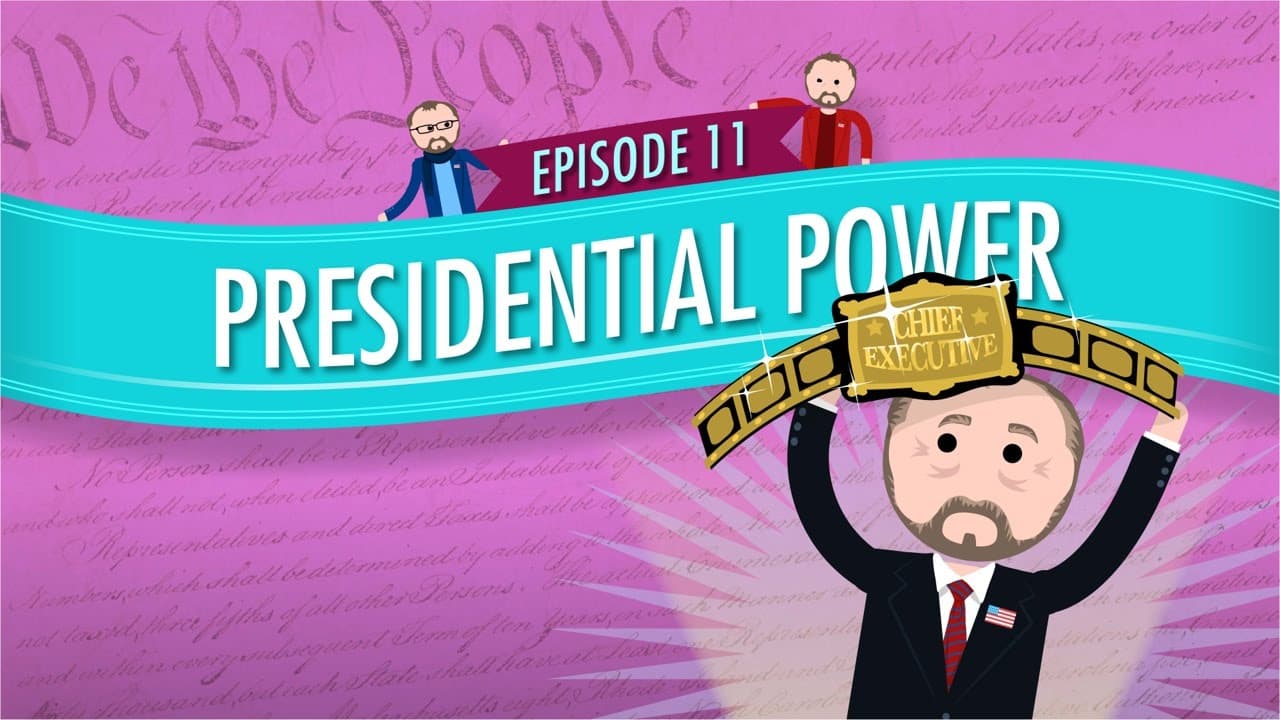
The U.S. President holds significant formal powers defined by the Constitution, including military, judicial, and diplomatic roles. Key powers involve being the Commander in Chief, making treaties, appointing judges, and delivering the State of the Union address, which helps set policy agendas. Though designed to be limited, presidential powers have expanded over time beyond the framers' original intent.
Transcript
This episode of Crash Course is brought to you by SquareSpace. Hi. I'm Craig and this is Crash Course: Government and Politics. And today, we're gonna talk about the most powerful person in the U.S. No, not Chris Hemsworth, although he is powerful, in a physical sense. We're talking about the President of the United States, who right now is Barack ... Read More
Key Insights
- The President of the United States holds significant formal powers, primarily outlined in the Constitution, such as military, judicial, and diplomatic powers.
- The Constitution requires the President to be a natural-born citizen, at least 35 years old, and elected through the Electoral College.
- The President's military power is significant, as he serves as the Commander in Chief, though historically only George Washington led troops in the field.
- Diplomatic powers include making treaties and appointing ambassadors, with the ability to legitimize other nations by receiving ambassadors.
- The State of the Union address is a constitutional requirement that allows the President to set the policy agenda and influence Congress.
- Presidential powers are intentionally limited by the Constitution to prevent the emergence of a tyrannical leader, reflecting the framers' fear of a strong executive.
- Despite limited formal powers, the President's role has expanded over time, influenced by evolving political and social contexts.
- The President's legislative power includes vetoing laws and convening Congress, while judicial powers include appointing judges and granting pardons.
Install to Summarize YouTube Videos and Get Transcripts
Explore YouTube Video Summarizer or Get YouTube Transcript Extractor
Questions & Answers
Q: What are the formal powers of the U.S. President?
The formal powers of the U.S. President, as outlined in the Constitution, include military powers as Commander in Chief, judicial powers through appointing judges and granting pardons, and diplomatic powers like making treaties and appointing ambassadors. These powers are designed to ensure a balance between effective leadership and preventing tyranny.
Q: How is the U.S. President elected?
The U.S. President is elected through the Electoral College system, rather than a direct popular vote. This system was established by the framers of the Constitution to act as a safeguard against the potential dangers of direct democracy, ensuring a balanced and representative election process.
Q: What is the significance of the State of the Union address?
The State of the Union address, required by the Constitution, allows the President to inform Congress about the nation's condition and set the policy agenda for the upcoming year. It serves as a platform for the President to influence legislative priorities and communicate directly with both Congress and the public.
Q: How does the Constitution limit presidential powers?
The Constitution limits presidential powers by clearly defining them and distributing authority across the three branches of government. This separation of powers is intended to prevent any single branch, particularly the executive, from becoming too powerful and threatening individual liberties or democratic governance.
Q: What are the qualifications to become U.S. President?
To become U.S. President, a candidate must be a natural-born citizen of the United States, at least 35 years old, and a resident of the country for at least 14 years. These qualifications ensure that the President has a strong connection to the nation and sufficient maturity and experience.
Q: What role does the President play in the military?
As Commander in Chief, the President holds significant military power, overseeing the armed forces and making critical defense decisions. This role underscores the President's responsibility to ensure national security and protect citizens from foreign threats, reflecting the primary duty of government.
Q: How have presidential powers evolved over time?
Presidential powers have evolved significantly since the Constitution's framing, adapting to changing political, social, and technological contexts. While the Constitution sets the foundation, informal powers and precedents have expanded the President's role, allowing more flexibility in addressing contemporary challenges.
Q: What is the President's role in the legislative process?
The President plays a crucial role in the legislative process through powers like vetoing bills and convening Congress for special sessions. Although the President cannot directly introduce legislation, he can influence legislative priorities and outcomes by collaborating with Congress members and setting the national policy agenda.
Summary & Key Takeaways
-
The episode explores the formal powers of the U.S. President as defined by the Constitution, emphasizing the balance of power among government branches. It highlights the President's military, judicial, and diplomatic powers, and discusses the importance of the State of the Union address in setting policy agendas.
-
The Constitution outlines specific qualifications for the presidency, including being a natural-born citizen and at least 35 years old. The Electoral College system is explained as a mechanism designed by the framers to safeguard against direct popular vote, ensuring a balanced election process.
-
Presidential powers, though limited by the Constitution, have expanded over the years. The episode underscores the framers' intention to prevent a powerful executive akin to a monarchy, while acknowledging the evolving nature of the President's role in modern governance.
Read in Other Languages (beta)
Share This Summary 📚
Summarize YouTube Videos and Get Video Transcripts with 1-Click
Try YouTube Summary with ChatGPT & Claude or YouTube Transcript Generator
Explore More Summaries from CrashCourse 📚
Summarize YouTube Videos and Get Video Transcripts with 1-Click
Try YouTube Summary with ChatGPT & Claude or YouTube Transcript Generator