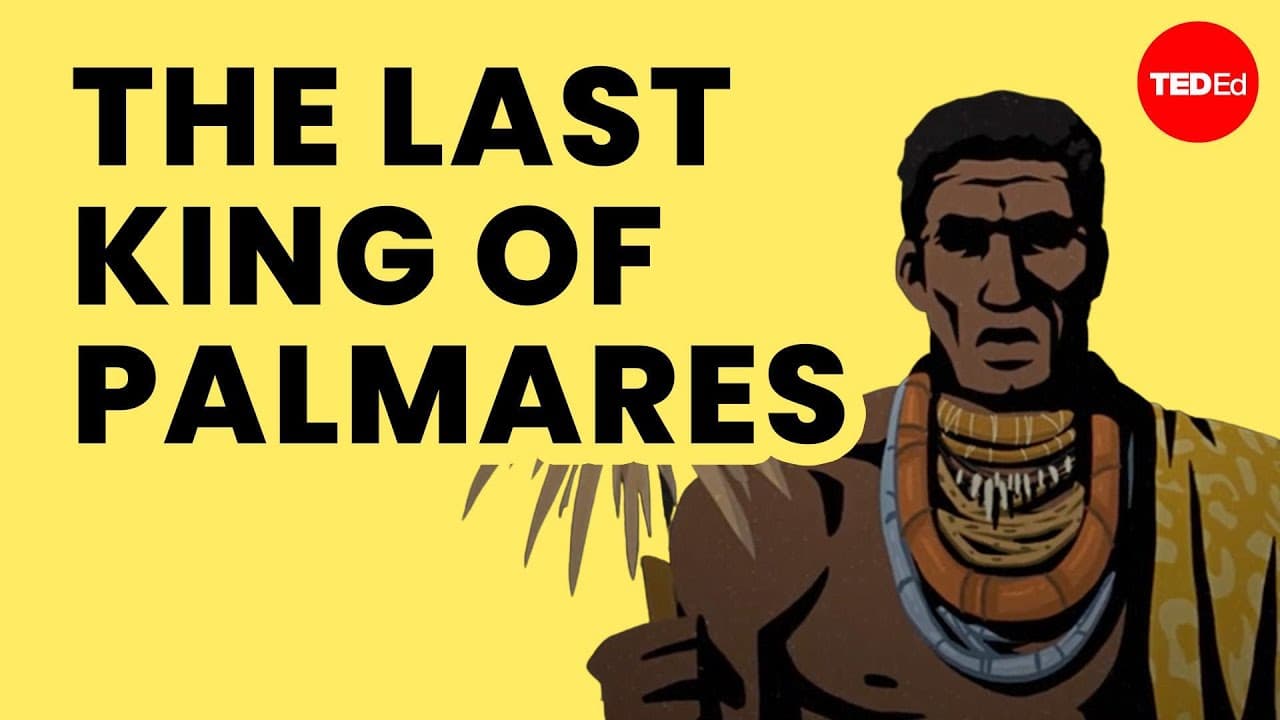
Zumbi: The last king of Palmares - Marc Adam Hertzman & Flavio dos Santos Gomes
TL;DR
Zumbi was the leader who rejected a restrictive peace treaty and continued Palmares’ resistance against Portuguese forces for another 15 years. Founded by people escaping slavery, Palmares became an autonomous confederation of more than 10,000 residents in northeastern Brazil. Its communities farmed, traded, and used fortified settlements and ambushes to defend their freedom. Read on to understand how Palmares endured, fell, and continued to inspire remembrance.
Transcript
During the 1600s, an expansive autonomous settlement called Palmares reached its height in northeastern Brazil. It was founded and led by people escaping from slavery, also called maroons. In fact, it was one of the world’s largest maroon communities, its population reaching beyond 10,000. And its citizens were at constant war with colonial forces... Read More
Key Insights
- 😖 Palmares was an expansive autonomous settlement in Brazil, founded by people escaping slavery and known as maroons. (History)
- 🙊 The Quilombo of Palmares reached its peak during the 1600s, growing into one of the world's largest maroon communities. (History)
- 👯 Palmares' citizens, consisting of African people, Brazilian-born Black, and Indigenous people, developed a powerful confederation with a central capital and specialized villages. (Society)
- 😒 Palmaristas sustained themselves through fishing, hunting, agriculture, and trade with Portuguese settlers, while also crafting palm products for daily use. (Society, Economy)
- 🥺 The Portuguese saw Palmares as a significant threat to the institution of slavery and intensified their attacks, leading to the downfall of the settlement. (History)
- 🥳 Zumbi, a prominent leader of Palmares, rejected the peace treaty and continued the resistance until his death, inspiring the celebration of the Day of Black Consciousness in Brazil. (History, Culture)
Install to Summarize YouTube Videos and Get Transcripts
Explore YouTube Video Summarizer or Get YouTube Transcript Extractor
Questions & Answers
Q: Who was Zumbi, the last king of Palmares?
Zumbi was Ganga-Zumba’s nephew and a rising leader in Palmares. After Ganga-Zumba was killed, Zumbi became the new leader, rejected the 1678 peace treaty, and resumed resistance against the Portuguese for another 15 years.
Q: What was the Quilombo of Palmares?
Palmares was an autonomous settlement in northeastern Brazil founded and led by people escaping slavery. By the 1660s, separate camps had consolidated into a powerful confederation with a central capital and dozens of villages.
Q: How large did Palmares become?
Palmares grew into one of the world’s largest maroon communities, with a population exceeding 10,000. Its confederation included a central capital and villages specializing in agricultural production or military training.
Q: Who lived in Palmares, and how did they sustain themselves?
African people, Brazilian-born Black people, and Indigenous people sought refuge in Palmares. They fished, hunted, raised livestock, planted orchards, grew cassava, corn, and sugarcane, and traded goods with Portuguese settlers for products such as gunpowder and salt.
Q: How did Palmaristas defend Palmares against Portuguese attacks?
Palmaristas built camouflaged mocambos in high places for better lookouts and created hidden, stake-lined ditches and false roads leading to ambushes. They also launched nighttime counterattacks and repeatedly abandoned and rebuilt settlements to evade Portuguese forces.
Q: Why did Zumbi reject the 1678 peace treaty?
The treaty recognized Palmares’ independence and the freedom of anyone born there. However, it also required Palmares to pledge loyalty to the crown and return all past and future fugitives from slavery, terms that Zumbi and many other Palmaristas opposed.
Q: How did Palmares fall, and what happened to Zumbi?
Portuguese forces captured Palmares’ capital in February 1694 after a devastating siege. Zumbi escaped but was later ambushed and killed by Portuguese forces on November 20, 1695; remaining rebels continued a smaller presence through the 1760s.
Q: Why is Zumbi remembered on Brazil’s Day of Black Consciousness?
November 20, the date Portuguese forces killed Zumbi in 1695, is celebrated across Brazil as the Day of Black Consciousness. His resistance and the broader fight of the Palmaristas for freedom continued to echo centuries later.
Summary & Key Takeaways
-
Palmares was an autonomous settlement in northeastern Brazil during the 1600s, founded by people escaping slavery and known as maroons.
-
The settlement grew to over 10,000 inhabitants and consisted of a central capital and many villages specializing in agriculture and military training.
-
Palmares' citizens, made up of African people, Brazilian-born Black, and Indigenous people, lived off the land, traded with Portuguese settlers, and constantly defended their freedom against attacks.
Read in Other Languages (beta)
Share This Summary 📚
Summarize YouTube Videos and Get Video Transcripts with 1-Click
Try YouTube Summary with ChatGPT & Claude or YouTube Transcript Generator
Explore More Summaries from TED-Ed 📚






Summarize YouTube Videos and Get Video Transcripts with 1-Click
Try YouTube Summary with ChatGPT & Claude or YouTube Transcript Generator