How do vitamins work? - Ginnie Trinh Nguyen
Transcript
Read and summarize the transcript of this video on Glasp Reader (beta).
Install to Summarize YouTube Videos and Get Transcripts
Explore YouTube Video Summarizer or Get YouTube Transcript Extractor
Summary
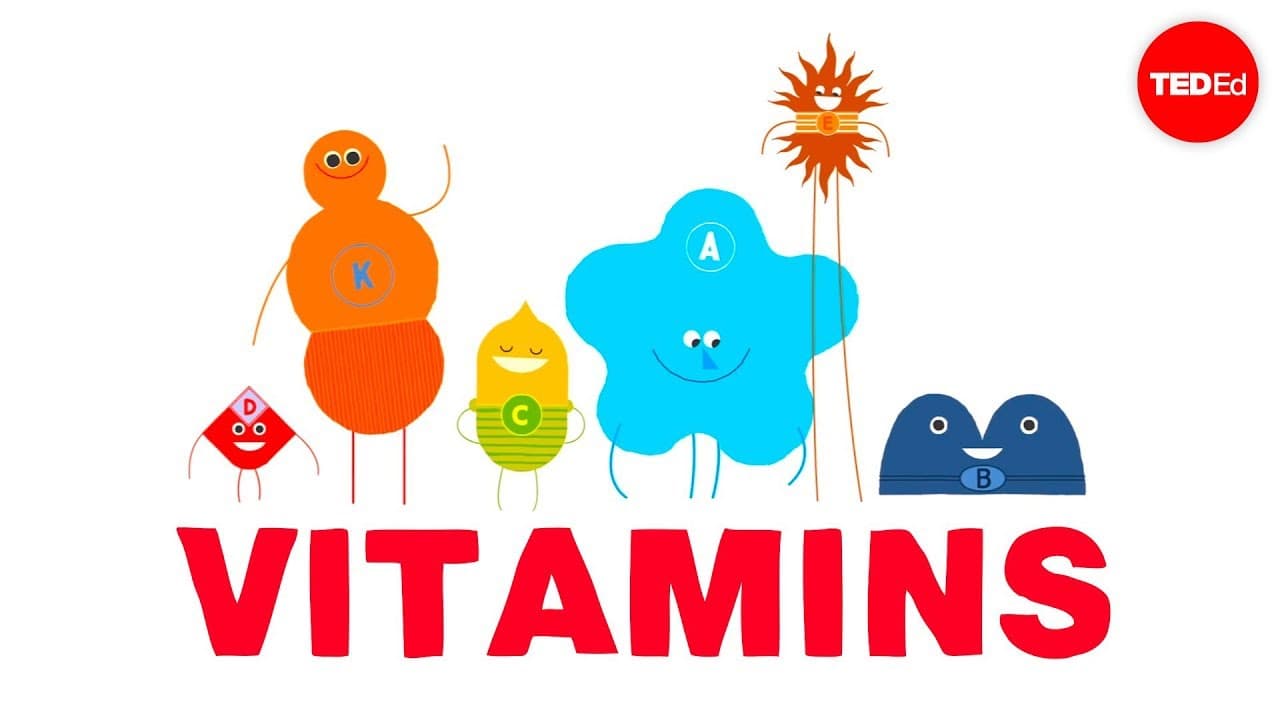
Vitamins are essential organic compounds that the body needs in small amounts to function properly. They serve various roles in the body, such as building muscle and bone, utilizing nutrients, capturing and using energy, and healing wounds. While bacteria, fungi, and plants can produce their own vitamins, our bodies cannot, so we need to obtain them from external sources. Vitamins come in two types: lipid-soluble (dissolved in fat) and water-soluble (dissolved in water). This difference determines how the body transports, stores, and eliminates vitamins.
Questions & Answers
Q: Why are vitamins important for the body?
Vitamins are essential for the body as they play vital roles in various bodily functions. They act as builders, defenders, and maintenance workers, helping in muscle and bone development, nutrient utilization, energy production, and wound healing.
Q: What happened to olden day sailors due to lack of vitamins?
Olden day sailors suffered from scurvy, a disease caused by vitamin C deficiency. The simple antidote to this disease was consuming fruits and vegetables abundant in vitamin C.
Q: How do our bodies obtain vitamins?
Since our bodies cannot produce vitamins on their own, we need to obtain them from external sources such as fruits, vegetables, grains, dairy products, butter, and oils.
Q: What are the two types of vitamins and how do they differ?
The two types of vitamins are lipid-soluble and water-soluble. Lipid-soluble vitamins are dissolved in fat and found in foods like dairy, butter, and oils, while water-soluble vitamins are dissolved in water and found in fruits, vegetables, and grains.
Q: How are water-soluble vitamins transported within the body?
Water-soluble vitamins, such as vitamin C and B Complex vitamins, are dissolved in the watery parts of fruits, vegetables, and grains. They are easily digested and directly taken up by the bloodstream, which is primarily water-based. This allows them to move freely within the body.
Q: How do lipid-soluble vitamins enter the bloodstream?
Lipid-soluble vitamins require a more adventurous route to enter the bloodstream. After being dissolved in fat, they go through the stomach and intestines, where bile breaks up the fat for absorption through the intestinal wall. Proteins act as couriers, attaching to the vitamins and helping transport them into the blood and around the body.
Q: How are water-soluble vitamins eliminated from the body?
Water-soluble vitamins are easily passed out of the body through the kidneys. Since they freely circulate in the bloodstream, they can be readily excreted. This is why most water-soluble vitamins need to be replenished daily through the diet.
Q: How are lipid-soluble vitamins stored in the body?
Lipid-soluble vitamins have the ability to be stored in the liver and fat cells. These parts of the body act as a pantry, storing the vitamins and rationing them out when needed. This allows the body to maintain adequate levels of these vitamins for more extended periods, reducing the need for daily replenishment.
Q: What are the functions of various vitamins?
Vitamin B Complex vitamins act as coenzymes, assisting enzymes in releasing energy from food, while other B vitamins help in utilizing that energy. Vitamin C fights infection, aids in collagen production for tissue formation, bone, and wound healing. Vitamin A helps in making white blood cells, bone formation, and maintaining vision. Vitamin D helps in calcium and phosphorus absorption for bone health. Vitamin E functions as an antioxidant, protecting the body from damage caused by harmful elements. Vitamin K plays a crucial role in blood clotting by aiding in the production of clotting proteins.
Q: What problems can arise from vitamin deficiencies or excess?
Vitamin deficiencies can lead to various problems such as fatigue, nerve damage, heart disorders, and specific diseases like rickets and scurvy. On the other hand, excessive intake of any vitamin can result in toxicity in the body. Therefore, it is essential to maintain a balance and avoid excessive vitamin supplementation.
Takeaways
Vitamins are vital for the proper functioning and health of the body. They come in two types: lipid-soluble and water-soluble, with differences in how they are transported, stored, and eliminated. Water-soluble vitamins are easily absorbed and excreted, requiring daily replenishment through diet. Lipid-soluble vitamins can be stored in the liver and fat cells, reducing the need for daily intake. Each vitamin has unique functions, and deficiencies or excesses can lead to various health problems. Maintaining a balanced approach to vitamin intake is crucial for optimal health.
Read in Other Languages (beta)
Share This Summary 📚
Summarize YouTube Videos and Get Video Transcripts with 1-Click
Try YouTube Summary with ChatGPT & Claude or YouTube Transcript Generator
Explore More Summaries from TED-Ed 📚


Summarize YouTube Videos and Get Video Transcripts with 1-Click
Try YouTube Summary with ChatGPT & Claude or YouTube Transcript Generator