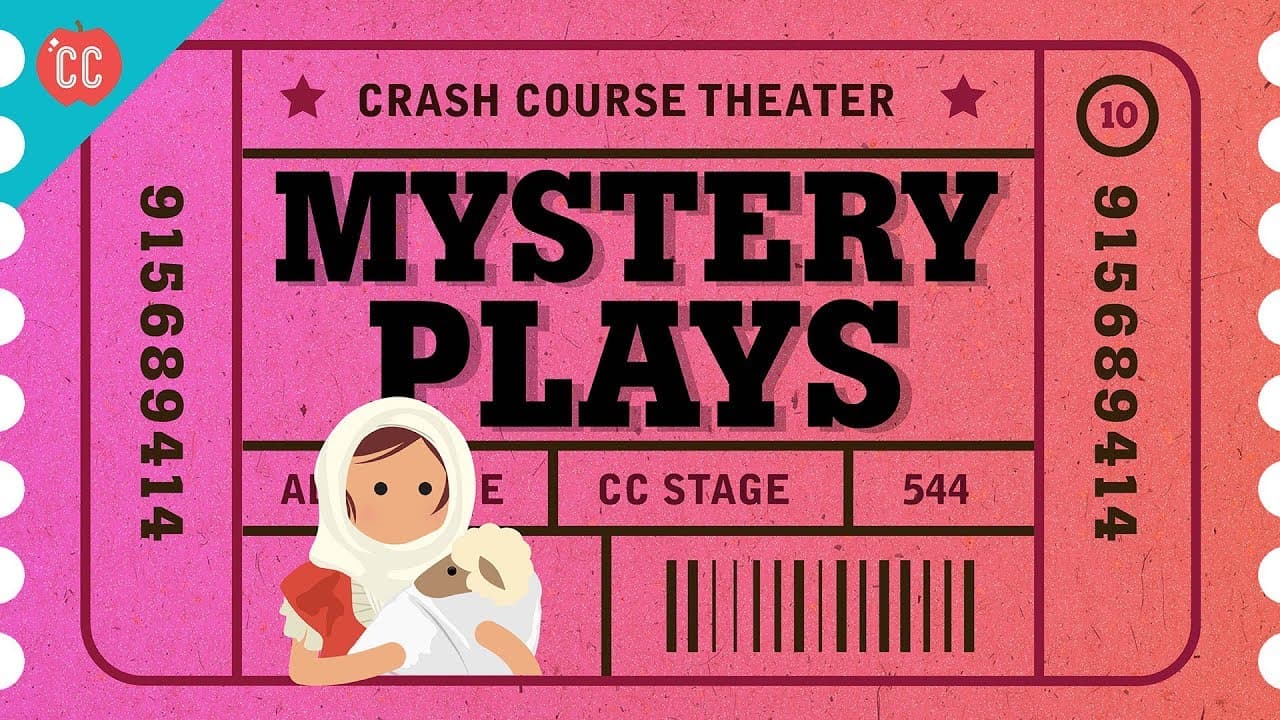
Get Outside and Have a (Mystery) Play: Crash Course Theater #10
TL;DR
Medieval theater moved from church-based liturgical drama to outdoor, secular production after Pope Innocent III barred clergy from performing plays publicly in 1210. Towns and trade guilds then staged mystery and cycle plays that combined scripture, comedy, local culture, and community craftsmanship, paving the way for the Renaissance theatrical explosion. Read on to see how pageant wagons, morality plays, and The Second Shepherd’s Play shaped this transition.
Transcript
Hey there, I’m Mike Rugnetta, this is Crash Course Theater, and today we’re going to circle up our pageant wagons and talk about the theater of the late Middle Ages: mainly mystery plays and morality plays. Judged by contemporary standards, these plays are… awkward. They’re episodic, kind of basic, and pretty chaotic in their mix of comedy, drama, ... Read More
Key Insights
- Mystery and morality plays were pivotal in blending religious and secular life in medieval Europe, involving entire towns in their production and performance.
- The Second Shepherd’s Play, part of the Wakefield Cycle, is a key example of medieval drama blending biblical stories with local vernacular and humor.
- Cycle plays depicted the entire Christian narrative from creation to resurrection, often produced by trade guilds, reflecting their skills and community pride.
- Medieval churches were initially the stage for liturgical dramas, but the grandeur of the church architecture soon proved too limited for the expanding theatrical ambitions.
- Pope Innocent III's 1210 edict moved drama from clerical to secular hands, leading to the development of outdoor performances.
- Cycle plays were eventually banned during the English Reformation due to their Catholic associations, marking a shift in religious and theatrical dynamics.
- Morality plays like 'Everyman' emphasized moral lessons, influencing later Renaissance theater with their focus on personal virtues and the inevitability of death.
- The transition from religious to secular drama was marked by the emergence of plays based on folklore, such as 'The Play of Robin and Marion,' broadening theatrical themes.
Install to Summarize YouTube Videos and Get Transcripts
Explore YouTube Video Summarizer or Get YouTube Transcript Extractor
Questions & Answers
Q: What caused medieval theater to move from religious to secular production?
Liturgical drama became too elaborate for even large Gothic churches, so performances moved outside. In 1210, Pope Innocent III prohibited clergy from performing plays in public, and secular groups took over theatrical production in the early 13th century.
Q: What were mystery plays in medieval theater?
Mystery plays were cycle plays produced by religious, trade, or craft guilds, especially in England. The name came partly from “mystery” being another word for a trade, while the plays themselves dramatized biblical and religious subjects rather than detective stories.
Q: What role did trade guilds play in medieval theater?
Each guild typically staged a biblical episode related to its work, such as shipwrights presenting Noah and the Ark or bakers presenting the Last Supper. Guilds supplied the actors, costumes, and set, loading the production onto a pageant wagon.
Q: What were the main characteristics of cycle plays?
Cycle plays dramatized Christian history from the creation of the world through Christ’s death and resurrection, with some continuing to the Last Judgment. A cycle could contain upwards of forty half-hour plays and was often performed over several days.
Q: How were medieval cycle plays performed?
Guild productions were placed on large carts called pageant wagons. The wagons may have moved through town and stopped at fixed performance points, or audiences may have moved between stationary carts; the transcript notes that scholars are unsure.
Q: Who performed in medieval cycle plays?
Most performers were not professionals. They were generally working-class men and boys, although women participated in some towns, and whole communities contributed to producing and attending the plays.
Q: Why were English cycle plays banned?
English cycles began in the late 1300s and continued into the late 1500s, when the English Reformation brought their performance to an end. Protestants regarded them as too Catholic and objected to graven images, while religious drama became controversial amid religious disputes and wars.
Q: Why is The Second Shepherd’s Play significant?
The Second Shepherd’s Play, written by the Wakefield Master, combines the biblical story of the shepherds visiting baby Jesus with local English speech, humor, and a comic sheep-stealing plot. It exemplifies how medieval drama united scripture with secular, everyday life and helped prepare the way for Renaissance theater.
Summary & Key Takeaways
-
Medieval theater evolved from liturgical dramas performed within churches to secular plays held outdoors, driven by religious edicts and growing public interest. Mystery and morality plays were central to this transition, merging biblical narratives with local culture and humor.
-
Cycle plays, produced by trade guilds, depicted biblical history, showcasing community pride and craftsmanship. This theatrical genre was eventually banned due to religious reformations, but its influence persisted in later theatrical developments.
-
Morality plays like 'Everyman' underscored moral teachings and personal virtue, impacting Renaissance theater. The move from religious to secular drama also saw the rise of folklore-based plays, expanding the thematic scope of medieval European theater.
Read in Other Languages (beta)
Share This Summary 📚
Summarize YouTube Videos and Get Video Transcripts with 1-Click
Try YouTube Summary with ChatGPT & Claude or YouTube Transcript Generator
Explore More Summaries from CrashCourse 📚


Summarize YouTube Videos and Get Video Transcripts with 1-Click
Try YouTube Summary with ChatGPT & Claude or YouTube Transcript Generator