How Did an AI Creator Reach 1M Subscribers?
TL;DR
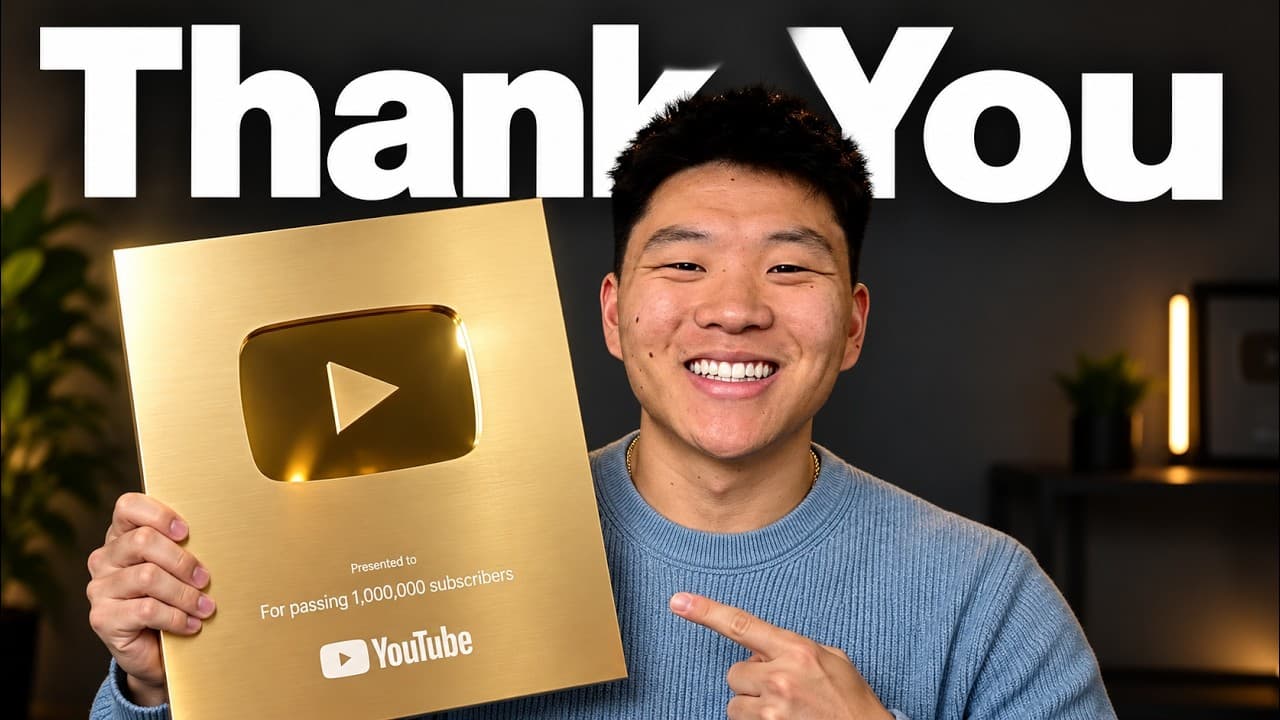
Reaching 1 million subscribers took just under two years of consistently creating educational AI content, learning in public, and responding to the community. The creator credits his parents, friends, viewers, and team for supporting his transition from a stable Goldman Sachs role to full-time content creation and community building.
Transcript
Oh my gosh. Where's that last one? Oh my gosh. Wow. My heart is actually racing. Wow. All right, I got to take a picture of this. You know, my friends asked me if I was going to cry when I hit it. I was like, "No, of course not." No. All jokes aside, this is just a really special day for me. I've got this filter right here set up to be September 19... Read More
Key Insights
- The channel reached 1 million subscribers just under two years after its first video was published on September 19, 2024. The creator describes the moment as surreal because the preceding years included rapid learning, enjoyment, stress, and major personal and professional changes.
- The creator began publishing after graduating from the University of Iowa, moving to Salt Lake City, and starting a full-time position with Goldman Sachs. His work with automation helped him develop a strong interest in making videos and teaching others about AI tools.
- Leaving a stable job required both personal courage and support from the creator's parents. He credits that decision with allowing him to pursue educational content, build a team, and turn daily experimentation with AI and automation tools into work he feels fortunate to do.
- The creator's early production setup consisted of a $30 webcam and no dedicated microphone. He personally made thumbnails and edited videos, even placing a towel beneath his keyboard to reduce the banging sound that viewers could hear when he typed during recordings.
- The team's human contribution is essential to the creator's publishing output. Although AI agents now assist with reviewing comments, generating ideas, and packaging content, he says John and the wider team make the volume of videos possible and should not be replaced by automation.
- The community's practical outcomes provide the creator with meaningful motivation. Messages from members who built something, closed a client, signed a large deal, or obtained a job opportunity make his day and reinforce the value he finds in educational content and direct engagement.
- Expertise is relative because every person has different experiences, passions, and knowledge that can fill another person's gap. The creator reached this conclusion partly after losing a potential client who considered his age, 23 at the time, a reason not to hire his company.
- Imposter syndrome depends partly on the room and the people surrounding an individual. The creator does not believe it completely disappears, but he remains excited because daily work, monthly progress, and conversations with teammates continually give him opportunities to learn.
- More videos from this channel:
- More from this channel: Nate Herk | AI Automation
Install to Summarize YouTube Videos and Get Transcripts
Explore YouTube Video Summarizer or Get YouTube Transcript Extractor
Questions & Answers
Q: How long did it take the creator to reach 1 million subscribers?
The channel reached 1 million subscribers just under two years after the creator posted his first video on September 19, 2024. The description expresses the same period as 720 days. He characterizes those years as fast-moving, stressful, enjoyable, and full of learning, while treating the milestone as a surreal result of sustained publishing and community support.
Q: Why did the creator leave his job at Goldman Sachs?
The creator left his stable Goldman Sachs position after discovering that he loved automation, video production, and education. It took time to build the courage to work independently and secure his parents' support for the decision. He is glad he took the leap because creating educational content and building communities became the most rewarding work he had done.
Q: What equipment did the creator use for his earliest videos?
The creator initially recorded with a $30 webcam and did not have a dedicated microphone. Viewers repeatedly asked him to improve both pieces of equipment. He also kept a towel beneath his keyboard so typing would not produce loud banging sounds during videos. At that stage, he personally remembers creating every thumbnail and editing every upload.
Q: How does the creator use AI agents in his content workflow?
AI agents assist the creator with tasks that include looking through viewer comments, developing ideas, and packaging content. However, he does not present those tools as the primary reason he can publish so many videos. He credits John and the wider team for making that output possible and says their human contribution cannot and should not be replaced by automation.
Q: Who supported the creator while he built the channel?
The creator credits his parents, friends, family, viewers, and the entire UPAI team for supporting his journey. He specifically thanks John for joining first, mentoring him, and helping shape the AI Automation Society brand. He also recognizes community manager Yash, who had watched and actively participated in the community since the channel had around 8,000 subscribers.
Q: Why does community feedback matter to the creator?
Community feedback gives the creator evidence that his educational work contributes to real outcomes. He values hearing that someone used his material to build something, close a client, sign a major deal, or obtain a job opportunity. Supportive and even slightly sarcastic comments motivate him to keep producing, while live events and Q&A sessions help him meet community members directly.
Q: What did losing a potential client teach the creator?
The creator lost a potential deal after approximately the fourth or fifth call because the client believed his company was too young and objected to him being only 23 at the time. Although he understood the concern, the experience reinforced his belief that everyone possesses different knowledge and experience that can help fill gaps for other people.
Q: What does the creator say about expertise and imposter syndrome?
Expertise is relative because people enter conversations with different experiences, passions, strengths, and knowledge gaps. The creator believes anyone can teach something valuable by identifying what they understand well and where that knowledge can help someone else. He also says imposter syndrome may never disappear completely because its intensity changes with the room and the people present.
Summary & Key Takeaways
-
The creator watches his channel reach 1 million subscribers and reacts with visible excitement, noting that his heart rate rose to 93 compared with his usual resting rate of about 54. The milestone arrived just under two years after he published his first educational video about AI agents.
-
After graduating from the University of Iowa and moving to Salt Lake City, the creator worked full time at Goldman Sachs and developed an interest in automation, education, and video production. He eventually gained the confidence and family support needed to leave that stable position and build an independent career.
-
The creator attributes his publishing capacity and community growth to his team, family, friends, and viewers. He remains motivated by stories of members building projects, winning clients, signing deals, and finding job opportunities. His experience also taught him that expertise is relative and continued learning remains essential.
Read in Other Languages (beta)
Share This Summary 📚
Summarize YouTube Videos and Get Video Transcripts with 1-Click
Try YouTube Summary with ChatGPT & Claude or YouTube Transcript Generator
Explore More Summaries from Nate Herk | AI Automation 📚





Summarize YouTube Videos and Get Video Transcripts with 1-Click
Try YouTube Summary with ChatGPT & Claude or YouTube Transcript Generator