How did Oracle go from hot stock to AI debt risk?
TL;DR
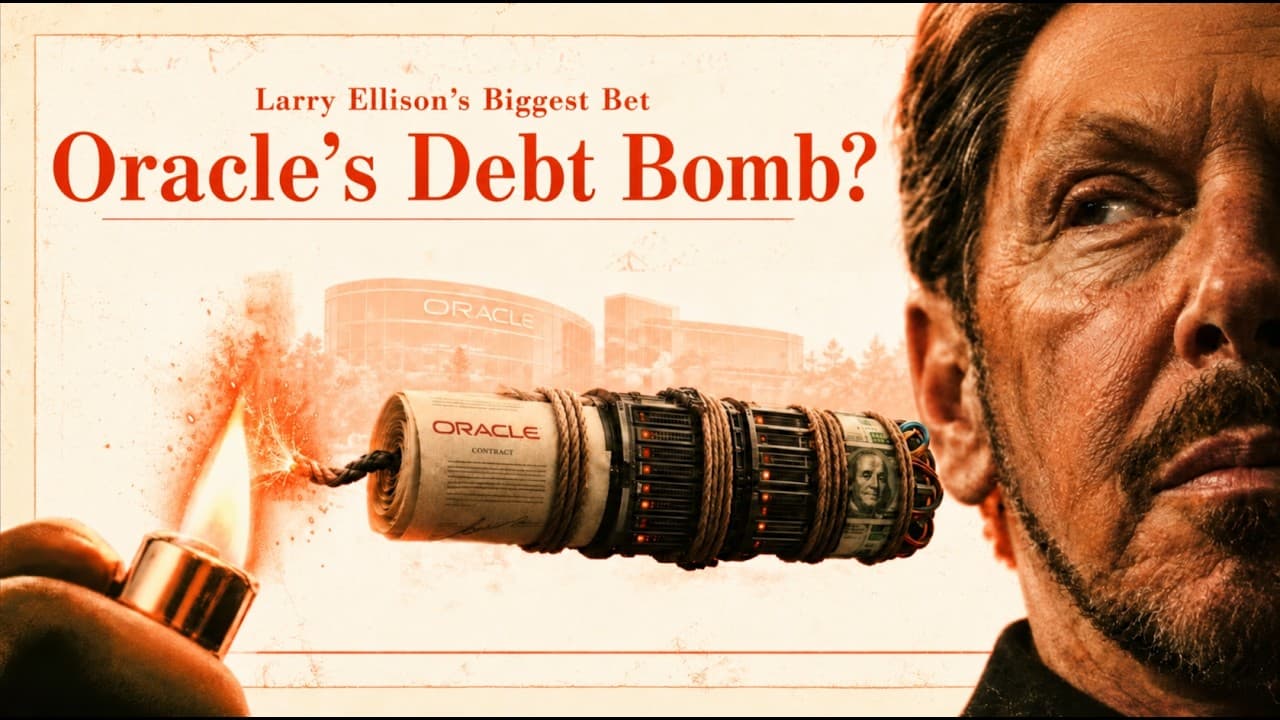
Oracle remained profitable and cash rich, but investors worried about its ability to pay debt due to a massive AI deal with OpenAI. The company rode a cloud computing dynamic that shifted the market, revealing how a $300 billion five year contract could distort risk perceptions while Oracle still earns solid profits.
Transcript
I mean, Oracles is a great business, but I don't think I understand exactly where the Oracle is going. >> Ladies and gentlemen, Oracle stock has crashed by 15% in the last one year and Wall Street is very, very nervous. >> Oracle, >> Oracle, >> Oracle, >> Oracle is your number one loser in the S&P 500. >> Oracle's going to die unless they walk away... Read More
Key Insights
- Oracle is profitable and cash rich, yet its stock faced a sharp drop as debt concerns rose.
- The OpenAI agreement reportedly promises around $60 billion per year, far exceeding Oracle’s current revenue and cash flow.
- Amazon's AWS cloud model disrupted traditional Oracle economics by enabling pay-as-you-go infrastructure rather than upfront hardware.
- Cloud computing created higher margins and altered competitive dynamics, influencing Oracle’s valuation and market narrative.
- Oracle's historical business model relied on selling software while customers owned hardware, a model challenged by cloud computing shifts.
- The 2025 stock surge and temporary wealth increase for Larry Ellison was driven by accounting signals like RPO rather than immediate cash gains.
- RPO (remaining performance obligations) acts as an indicator of future revenue commitments tied to long term contracts.
- The video frames the Oracle story as a lens on the AI hype cycle and the broader AI bubble debate.
Install to Summarize YouTube Videos and Get Transcripts
Explore YouTube Video Summarizer or Get YouTube Transcript Extractor
Questions & Answers
Q: A real search query question about the video (e.g. 'How to...', 'What is...', 'Why does...', 'When should...'). Question 1
What caused Oracle’s stock to crash after being one of the hottest stocks in 2025? The answer lies in market concerns about debt levels and the extraordinary OpenAI contract that allegedly promises around 60 billion dollars per year over five years. This revenue promise far exceeds Oracle’s current revenue and cash flow, creating a perception of outsized risk relative to profits and cash reserves.
Q: Question 2
What is RPO and why is it important in Oracle’s story? RPO stands for remaining performance obligations and represents future revenue from signed contracts not yet earned. Oracle reported 455 billion in RPO, well above expectations, which signaled a huge, long term revenue commitment and influenced investor sentiment about the company’s ability to monetize those commitments.
Q: Question 3
How did cloud computing change Oracle’s business model according to the video? The cloud model allows customers to rent computing power rather than purchase hardware, shifting value away from owning machines toward software and services. This shift disrupted Oracle’s traditional model of selling software to customers who owned and maintained their own infrastructure.
Q: Question 4
Why is the OpenAI deal particularly pivotal in the narrative? The deal is framed as a 300 billion dollar over five years promise from OpenAI to Oracle, implying a revenue stream that could dwarf Oracle’s existing business. The magnitude and structure of this commitment raised questions about risk, profitability, and whether Oracle could sustain debt levels while fulfilling the contract.
Q: Question 5
What role did AWS play in Oracle’s featured history? AWS popularized the pay as you go cloud model, allowing startups and enterprises to scale without heavy upfront investments. This contrasted with Oracle’s earlier reliance on customers buying and running their own servers, illustrating how cloud economics can undermine legacy software and hardware strategies.
Q: Question 6
What does the video imply about Oracle’s profitability versus market valuation? Oracle shows strong profits and cash flow, but investors focused on debt and growth risks associated with AI infrastructure deals. The implication is that profitability alone is no longer sufficient to sustain high valuations when leverage and long term commitments create distortion in risk assessment.
Q: Question 7
How did Oracle’s cloud strategy affect its 2025 performance narrative? The cloud strategy helped the company briefly rebound in valuation and even propelled its stock, yet the underlying concern remained about whether such AI heavy commitments could be serviced alongside existing debt burdens and cash flow realities.
Q: Question 8
What broader lesson does the video claim the Oracle story teaches about the AI era? It suggests that AI hype can inflate expectations and valuations, while actual cash flows and debt capacity determine sustainability. The Oracle case is used to critique whether the lucrative AI narrative can be reconciled with prudent financial management.
Summary & Key Takeaways
-
Oracle was once praised as a cash machine with billions in profits and substantial cash reserves, but stock volatility and debt concerns emerged as AI infrastructure deals loomed large.
-
The OpenAI contract created a looming revenue stream that, on paper, dwarfed Oracle’s current revenue and cash flow, provoking questions about sustainability and leverage.
-
The video traces Oracle’s historical move from hardware to software and cloud, highlighting how cloud economics reshaped valuations and investor sentiment beyond traditional profitability.
Read in Other Languages (beta)
Share This Summary 📚
Summarize YouTube Videos and Get Video Transcripts with 1-Click
Try YouTube Summary with ChatGPT & Claude or YouTube Transcript Generator
Explore More Summaries from Think School 📚






Summarize YouTube Videos and Get Video Transcripts with 1-Click
Try YouTube Summary with ChatGPT & Claude or YouTube Transcript Generator