How to build agentic AI systems with LangGraph
TL;DR
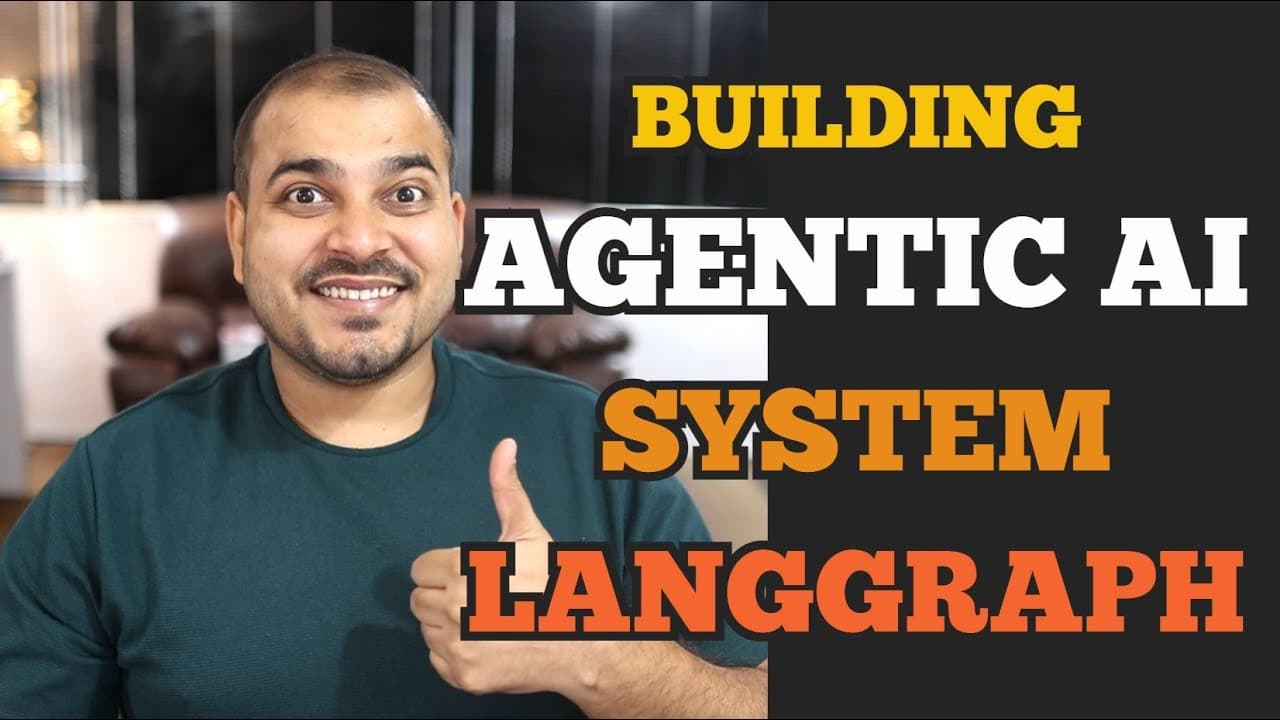
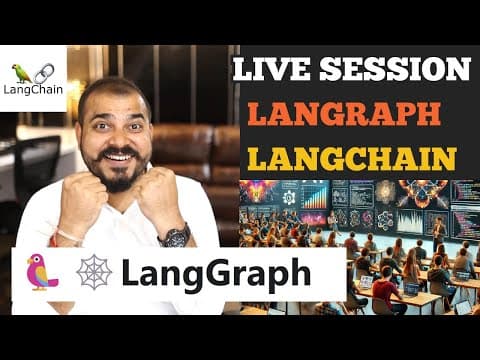
LangGraph is used to build agentic AI systems by creating graphs of workflows with nodes and edges, and the process is supported by Langraph Studio and Langsmith for debugging and tracking metrics. The series covers Python prerequisites, data validation with PyIC, and how to implement end-to-end workflows and human in the loop. The sessions are planned for two weeks with free access and daily live timings at 8 PM IST.
Transcript
Hello all, my name is Krishna and welcome to my YouTube channel. So guys, as you all know, every month we do take some number of live sessions with respect to all the trending topics that are uh you know trending specifically in the data analytics field. Uh we started with Python, we started with agentic AI, uh we started with various frameworks li... Read More
Key Insights
- LangGraph enables building agentic AI systems as graphs with nodes and edges for flexible execution.
- Langraph Studio is essential for debugging and Langsmith provides metrics and monitoring for the agentic workflows.
- A Python prerequisite is required, and PyIC data validation will be discussed as part of the initial topics.
- The series will cover differences between AI agents and agentic AI systems to avoid common misconceptions.
- Workflows can be automated end-to-end using LangGraph, reducing human intervention in repetitive tasks.
- Human in the loop will be discussed as a feedback mechanism to improve automated workflows.
- Use cases include blog generation from YouTube videos, illustrating how LangGraph can automate content pipelines.
- The live sessions are free and scheduled over two weeks with 1 to 2 hour durations.
- More videos from this channel:
- More from this channel: Krish Naik
Install to Summarize YouTube Videos and Get Transcripts
Explore YouTube Video Summarizer or Get YouTube Transcript Extractor
Questions & Answers
Q: What is LangGraph and why is it important for agentic AI systems?
LangGraph is a framework built on top of LangChain that enables developers to create agent workflows as graphs with nodes and edges for flexible and controllable execution. It empowers building complex, stateful multi-agent applications that can automate workflows. Understanding LangGraph helps in designing scalable, traceable, and reusable agentic AI systems that can handle diverse tasks with minimal manual intervention.
Q: What prerequisites are needed before starting the series?
The series lists Python as a prerequisite, stressing the need to be proficient in Python programming. Participants should be comfortable with basic data handling and scripting to implement the discussed data validation techniques with PyIC and to build and test LangGraph workflows. Preparing a development setup with Python will help attendees follow along smoothly.
Q: What is the difference between AI agents and agentic AI systems?
The speaker emphasizes that AI agents and agentic AI systems are not the same. An AI agent typically acts autonomously to perform tasks, while agentic AI systems integrate multiple agents and workflows to automate broader, more complex operations. Understanding this distinction helps in designing systems that can manage interconnected tasks with appropriate coordination and oversight.
Q: What topics will the live sessions cover first?
The initial topics include data validation using PyIC implemented in Python, followed by an introduction to LangGraph and Langsmith, which will help track metrics and debug workflows. The sessions will then cover building various workflows with LangGraph, and later, constructing different kinds of RAGs using vector databases in the cloud.
Q: How will Langraph Studio be used in the series?
Langraph Studio will be used to debug and manage the agentic AI workflows created with LangGraph. It provides a visual interface to monitor the graph of tasks, inspect intermediate results, and ensure that each node behaves as intended. This helps learners gain hands-on experience with practical debugging and workflow management.
Q: What is Langsmith used for in the context of this series?
Langsmith is used to track metrics and monitor the behavior of agentic AI systems built with LangGraph. It allows developers to observe performance, debug issues, and understand how data flows through the representative graphs. This monitoring capability is essential for maintaining robust and reliable automated workflows.
Q: Will there be practical examples and assignments?
Yes, the series promises practical use cases and assignments. Attendees will see real implementations such as automating blog generation from YouTube videos, and they will be given exercises to apply the concepts learned. This hands-on approach is designed to reinforce understanding and help learners build working agentic AI pipelines.
Q: Are the live sessions free and how long will the series run?
All sessions are described as free, with the plan set to run for two weeks. Each session is expected to last one to two hours, offering intensive, interactive learning. Breaks are included between sessions to allow learners time to practice and reflect on what they have learned.
Summary & Key Takeaways
-
This video outlines a free two week live series on building agentic AI systems using LangGraph, Langraph Studio, and Langsmith, starting with Python prerequisites and data validation. It emphasizes differentiating AI agents from agentic AI and showcases practical workflows and human in the loop concepts.
-
The speaker demonstrates real use cases such as automatically generating blogs from YouTube videos and using LangGraph to automate workflows without human intervention, while highlighting the importance of tracking, debugging, and versioning in Langraph Studio.
-
The agenda includes introductions to LangGraph basics, workflows, vector databases, and end-to-end rag building, all aimed at giving learners hands-on experience and a clear path to building scalable agentic AI systems.
Read in Other Languages (beta)
Share This Summary 📚
Summarize YouTube Videos and Get Video Transcripts with 1-Click
Try YouTube Summary with ChatGPT & Claude or YouTube Transcript Generator
Explore More Summaries from Krish Naik 📚
Summarize YouTube Videos and Get Video Transcripts with 1-Click
Try YouTube Summary with ChatGPT & Claude or YouTube Transcript Generator