How Do Pathogens Enter the Body and Cause Disease?
TL;DR
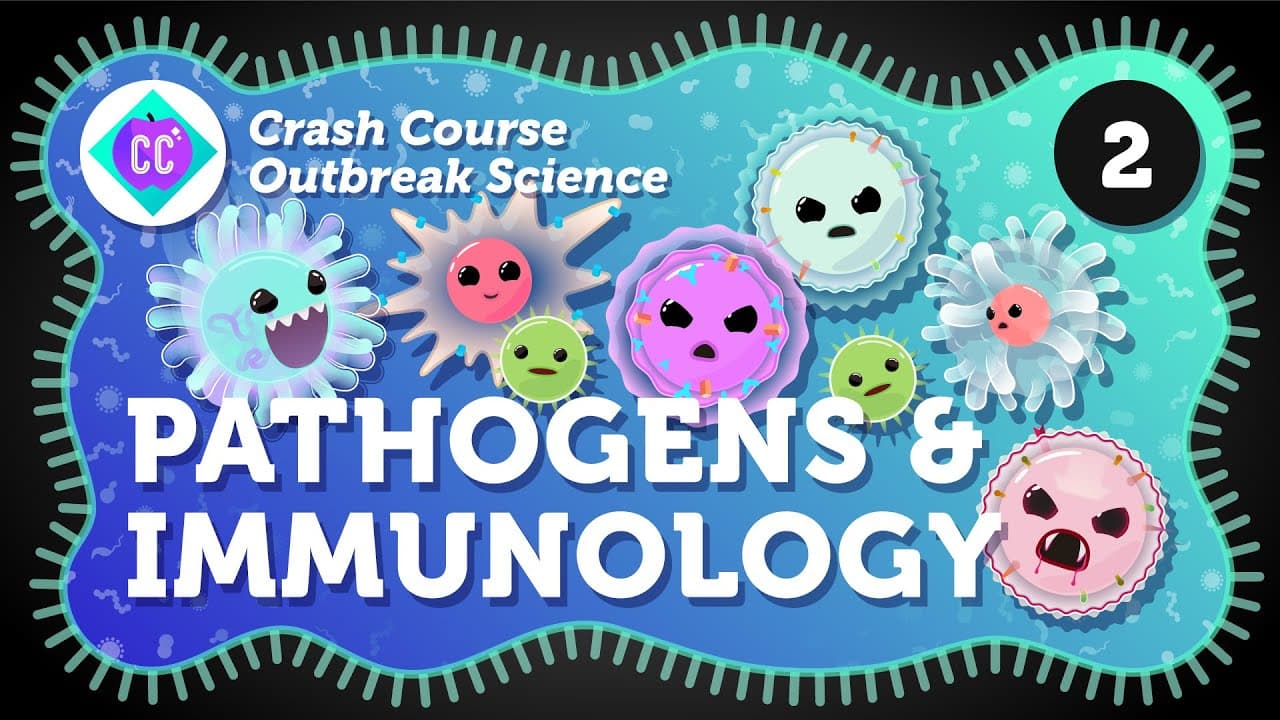
Pathogens, including viruses, bacteria, protozoa, fungi, and prions, enter the body through various routes like skin openings, mucous membranes, and bites from infected animals. The body defends itself using physical barriers and an immune system that includes innate and adaptive responses, with memory cells allowing faster reactions to previously encountered pathogens.
Transcript
Your body is a fortress, crafted through millions of years of evolution. And I don’t mean just your fists or your teeth. The little things like your skin, tear ducts and even the hairs in your nostrils are all designed to defend you. That’s because they’re protecting you from even tinier things: pathogens, the microscopic organisms that mak... Read More
Key Insights
- 🧡 Pathogens are diverse, ranging from viruses to fungi and parasitic worms.
- ❓ The human body has physical barriers and an immune system to defend against pathogens.
- ❓ The innate immune system provides a nonspecific defense, while the adaptive immune system offers a specific response.
- 👻 Immunological memory allows our body to recognize and respond faster to previously encountered pathogens.
- 👊 Allergies and autoimmune disorders are examples of the immune system either overreacting or attacking healthy cells.
Install to Summarize YouTube Videos and Get Transcripts
Explore YouTube Video Summarizer or Get YouTube Transcript Extractor
Questions & Answers
Q: What are the different types of pathogens that can make us sick?
Pathogens include viruses, bacteria, protozoa, fungi, parasitic worms, and prions. Each type of pathogen has unique characteristics and can cause specific diseases.
Q: How do viruses infect our cells and cause diseases?
Viruses inject their genetic material into host cells and take over their functions to multiply. By disrupting the workings of our organs, viruses can make us sick.
Q: What is the role of physical barriers in our body's defense system?
Physical barriers like skin, mucus, and tears prevent pathogens from entering our bodies. They trap and remove pathogens, reducing the risk of infections.
Q: How does the adaptive immune system provide a specific defense against pathogens?
The adaptive immune system uses B-cells and T-cells to recognize and target specific pathogens. B-cells produce antibodies that bind to pathogens, while T-cells destroy infected cells.
Summary & Key Takeaways
-
Pathogens, such as viruses, bacteria, protozoa, fungi, parasitic worms, and prions, can cause a variety of diseases and infections.
-
The human body has physical barriers like skin, mucus, and tears that prevent pathogens from entering. If they manage to enter, the innate immune system consisting of cells like macrophages and neutrophils attacks and destroys the pathogens.
-
The adaptive immune system, with specialized cells like B-cells and T-cells, provides a specific defense against pathogens and creates immunological memory.
Read in Other Languages (beta)
Share This Summary 📚
Summarize YouTube Videos and Get Video Transcripts with 1-Click
Try YouTube Summary with ChatGPT & Claude or YouTube Transcript Generator
Explore More Summaries from CrashCourse 📚





Summarize YouTube Videos and Get Video Transcripts with 1-Click
Try YouTube Summary with ChatGPT & Claude or YouTube Transcript Generator