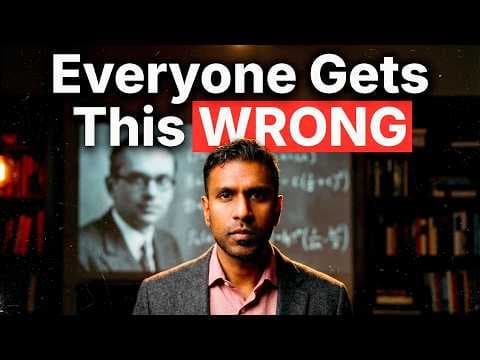
How relativity explains consciousness with Nir Lahav
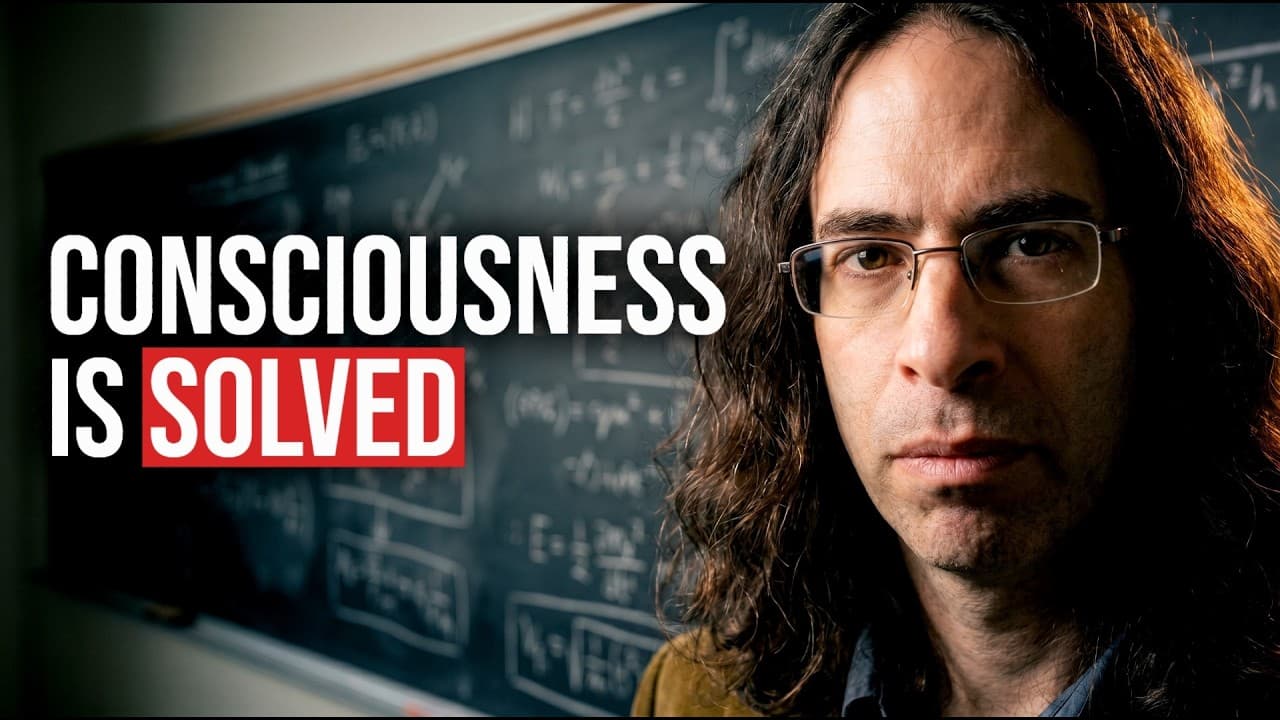
TL;DR
Consciousness is described as a genuine physical property that appears only within a cognitive system’s internal simulation, not merely as brain Computations. The hard problem is framed as an explanatory gap between neural patterns and subjective experience, requiring more than computations to account for how experiences like happiness or seeing a glass arise. This view challenges a purely brain based view of consciousness.
Transcript
The default assumption for most people in the West is that the brain generates consciousness. So something brainy, neurological happens, neurons are firing, and then consciousness pops out like steam from a kettle. Now you think this is not just wrong, you think it's confused. Before we get technical, what's the short version of what you ... Read More
Key Insights
- Consciousness is treated as a physical property that manifests from within a cognitive system, not solely from brain computations.
- The explanatory gap between neural states and subjective experience is central to the hard problem of consciousness.
- Neural patterns are public, while conscious experience is private and not reducible to brain states.
- The brain can generate many neural patterns, but these do not directly translate into the felt experience.
- The presentation argues that considering only computations is insufficient to explain consciousness.
- A distinction is drawn between the representations in the brain and the actual experience of phenomena like a glass or happiness.
- The analogy of a computer screen is used to illustrate why neural representations do not equal conscious experience.
- Relativity is used as a framework to understand consciousness as a physical property that depends on internal simulation.
- More videos from this channel:
- More from this channel: Curt Jaimungal
Install to Summarize YouTube Videos and Get Transcripts
Explore YouTube Video Summarizer or Get YouTube Transcript Extractor
Questions & Answers
Q: How does Nir Lahav differentiate between brain computations and consciousness?
Lahav argues that the brain can perform many computations and generate neural patterns, yet these patterns do not automatically equate to conscious experience. The actual experience has qualities that are private and not publicly observable, while neural states are public. This gap implies that computations alone cannot fully account for consciousness and that a physical property arising within internal simulation is needed.
Q: What is the explanatory gap in Lahav’s view of consciousness?
The explanatory gap refers to the mismatch between measurable neural states and subjective experiences. Lahav notes that even if we know all the neural correlates of happiness or seeing a glass, we still do not know what it feels like to experience them. This gap shows that brain activity alone cannot explain consciousness.
Q: Why does Lahav invoke relativity in his theory of consciousness?
Relativity provides a framework for understanding consciousness as a physical property that is detected from within a cognitive system. Lahav uses this concept to explain how consciousness can be a real, internal property that emerges from the system’s own simulation, rather than being reducible to external brain data alone.
Q: How does Lahav describe the private nature of conscious experience?
Lahav emphasizes that conscious experience possesses private, qualitative aspects that are not publicly accessible. While neural patterns can be observed by others, the felt experience, such as happiness or the sensation of a glass, remains subjective and cannot be fully captured by external neural measurements.
Q: What is the role of dualism in Lahav’s explanation of consciousness?
Lahav notes that common sense often treats consciousness as separate from matter, a dualistic view. He argues against this by showing how physical processes correlate with conscious content, but still contends that computation alone cannot account for the exact experience, suggesting a physical basis that is richer than computation.
Q: How does Lahav respond to the computational view of the brain?
Lahav concedes that the brain performs computations, but insists that computation is not sufficient to generate consciousness. The explanatory gap remains because neural computations do not explain why or how subjective experiences emerge, indicating that additional physical properties are involved beyond computation.
Q: What analogy is used to illustrate the difference between neural representations and experience?
The analogy of a computer showing images on a screen is discussed to illustrate that neural representations can produce outputs without capturing the actual conscious experience. This helps explain why a brain merely computing patterns cannot be equated with the felt quality of experiences.
Q: What overall conclusion does Lahav advocate regarding the nature of consciousness?
The overall conclusion is that consciousness is a genuine physical property that emerges from within a cognitive system, influenced by internal simulation and not reducible to brain computations alone. This view positions consciousness as something real yet not fully captured by external neural data, requiring concepts beyond computation to bridge the explanatory gap.
Summary & Key Takeaways
-
The video argues that consciousness is a physical property that emerges from within a cognitive system, not just brain computations.
-
It emphasizes the explanatory gap between neural states and subjective experience and argues that neural activity alone cannot fully explain consciousness.
-
The discussion contrasts first person experiences with public neural patterns, suggesting a need for concepts beyond computation to bridge them.
Read in Other Languages (beta)
Share This Summary 📚
Summarize YouTube Videos and Get Video Transcripts with 1-Click
Try YouTube Summary with ChatGPT & Claude or YouTube Transcript Generator
Explore More Summaries from Curt Jaimungal 📚

Summarize YouTube Videos and Get Video Transcripts with 1-Click
Try YouTube Summary with ChatGPT & Claude or YouTube Transcript Generator