Which Grocery Bag Is the Most Environmentally Friendly?
TL;DR
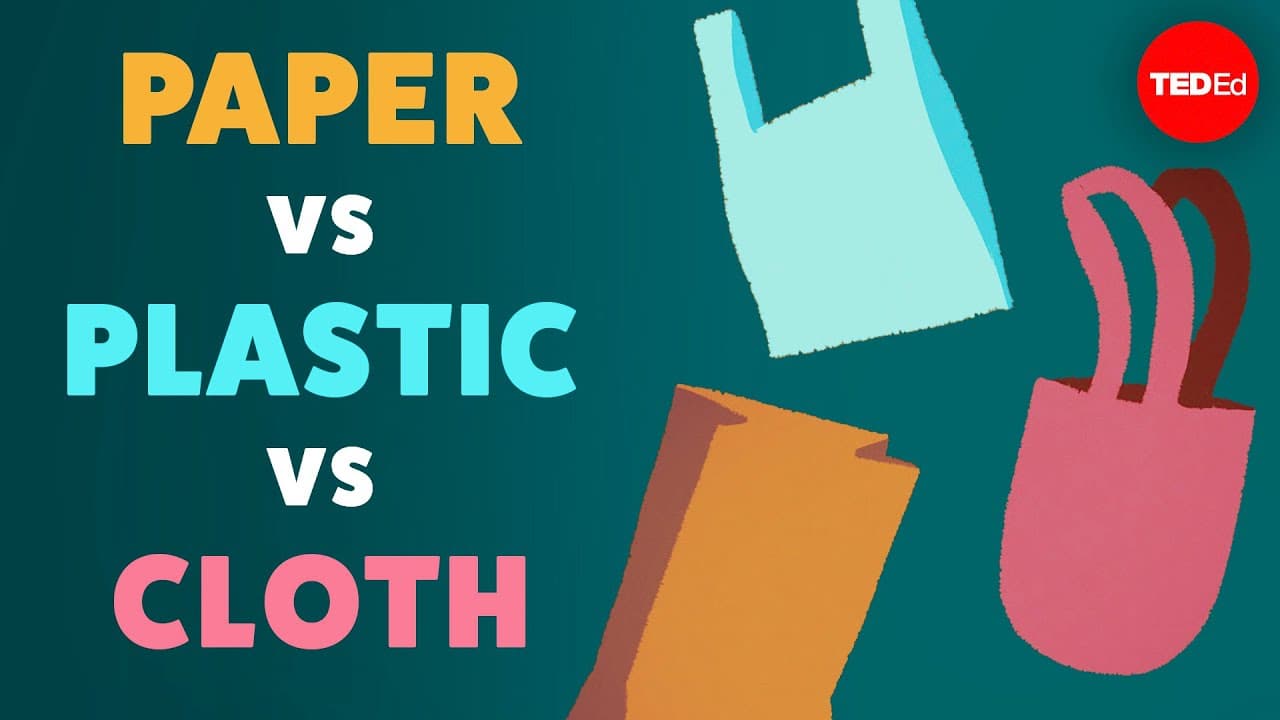
The most environmentally friendly grocery bags are durable, reusable ones made from tough plastics, as they have a lower carbon footprint than paper or cotton bags. Despite plastic bags contributing 1.6 kg of CO2, their impact can be mitigated through reuse and recycling. Ultimately, cloth totes are best when reused extensively, while paper bags are less sustainable if not reused.
Transcript
You’ve filled up your cart and made it to the front of the grocery line when you’re confronted with yet another choice: what kind of bag should you use? If you’ve seen the images of plastic bags strewn across the ocean, it might seem obvious that plastic is bad for the environment. Surely a paper bag or a cotton tote would be the better option. ... Read More
Key Insights
- 🥖 Plastic bags have a lower carbon footprint than paper or cotton bags, but their environmental impact is determined by reuse and recycling.
- 🥖 Reusing paper bags multiple times can make them more environmentally friendly than single-use plastic bags.
- ✋ Cotton totes have a high carbon footprint but can be effectively offset by long-term reuse.
- ♻️ HDPE bags can be recycled, but limited recycling infrastructure hinders efficient recycling worldwide.
- ❤️🩹 Cotton totes are difficult to break down and process, making them less likely to end up in landfills.
- 🥳 Partially broken down plastic bags can persist in ecosystems for centuries, while cotton degrades in months and paper in 90 days.
Install to Summarize YouTube Videos and Get Transcripts
Explore YouTube Video Summarizer or Get YouTube Transcript Extractor
Questions & Answers
Q: Which material has the lowest carbon footprint for bags?
Plastic bags made of high-density polyethylene (HDPE) have the lowest carbon footprint, contributing an estimated 1.6 kg of carbon dioxide to the atmosphere.
Q: How does the production of paper bags impact the environment?
Paper bags are made from wood pulp, and the process of removing trees from their ecosystems results in a carbon footprint of about 5.5 kg of carbon dioxide per bag.
Q: Why are cotton totes less environmentally friendly?
Growing cotton is an energy and water-intensive process, causing cotton totes to emit an estimated 272 kg of carbon dioxide during production. However, they are often reused for long periods, reducing their environmental impact.
Q: What bag is the most likely to be reused?
Durable cloth totes are the most likely to be reused, while evidence shows that paper bags are quickly discarded due to their tendency to tear.
Summary & Key Takeaways
-
Plastic bags are made from high-density polyethylene (HDPE) and have a carbon footprint similar to that of a car driving 6 kilometers.
-
Paper bags are responsible for about 5.5 kg of carbon dioxide due to the carbon cost of removing trees.
-
Cotton totes emit an estimated 272 kg of carbon dioxide during production.
-
Reuse and recycling significantly reduce the environmental impact of bags, with cloth totes being the most likely to be reused.
-
HDPE bags can be recycled, but many countries lack the infrastructure to efficiently do so. Cotton totes are difficult to breakdown, but they are least likely to end up in landfills.
-
HDPE bags are not degradable and can circulate in ecosystems for centuries, while cotton degrades in months and paper breaks down in 90 days.
Read in Other Languages (beta)
Share This Summary 📚
Summarize YouTube Videos and Get Video Transcripts with 1-Click
Try YouTube Summary with ChatGPT & Claude or YouTube Transcript Generator
Explore More Summaries from TED-Ed 📚






Summarize YouTube Videos and Get Video Transcripts with 1-Click
Try YouTube Summary with ChatGPT & Claude or YouTube Transcript Generator