How to Grow on YouTube by Repeating What Works
TL;DR
Repeat proven video topics and angles to attract new viewers instead of making follow-ups that mainly serve existing subscribers. Then connect that consistent content to a simple two-layer sales funnel, using YouTube for discovery and a product, service, course, or subscription for conversion, so each view has value beyond advertising revenue.
Transcript
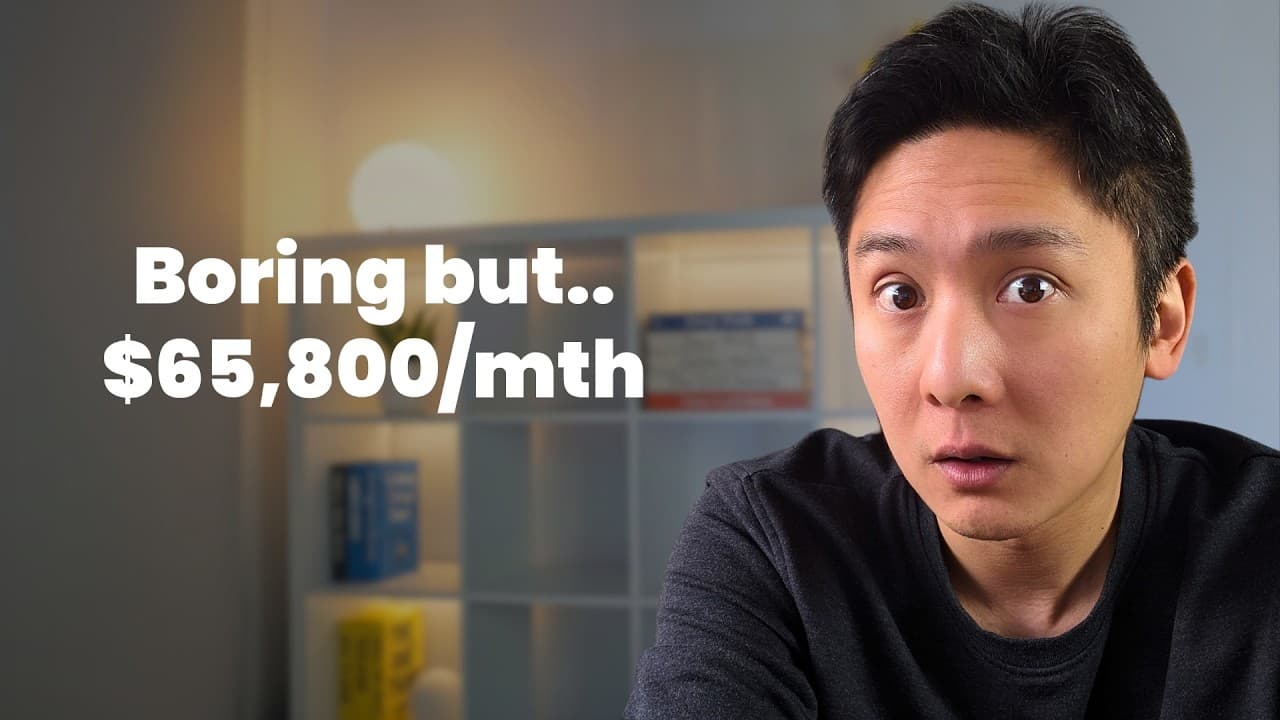
This is Romero and he's making at least $65,000 a month using the most boring strategy on YouTube I've ever seen. He just repeats the same type of content over and over. Same niche, same angle, same boring videos, and the algorithm rewards him for it. Now, Romero happens to be in my niche, so he's technically my competitor. And you probably know th... Read More
Key Insights
- Repeating proven content is presented as the main way to keep a channel's views and subscriber count growing. Instead of abandoning a successful topic after one upload, creators can reuse its niche, audience, and central promise in multiple independently understandable videos.
- New viewers are the intended audience for each YouTube upload in this strategy. A follow-up that depends on an earlier video may interest existing subscribers, but its title and context can be unclear or unappealing to people encountering the channel for the first time.
- Audience consistency helps YouTube understand who a video is for. Creators can undermine that clarity when their desire for novelty causes them to change the target audience, topic foundation, or promise from one upload to the next.
- A two-layer sales funnel uses YouTube as the discovery layer and an owned offer as the conversion layer. The second layer can be a Patreon subscription, course, product, or service that gives interested viewers a way to pay for additional value.
- Advertising views alone are portrayed as limited in value, with the transcript conservatively suggesting $10 per 1,000 views before stating that the real return might be only $1. The recommended response is to increase each view's potential value through an offer.
- A 0.1% conversion rate would produce one customer per 1,000 views, according to the video's example. Using the same assumption, 10,000 views could produce 10 conversions and 100,000 views could produce 100 conversions as audience reach expands.
- Romero's content foundation combines faceless YouTube channels with the promise of easier income through AI and automation. Repeated videos attract viewers interested in that specific proposition, demonstrate what his system can achieve, and direct qualified prospects toward his paid school.
- Repetition does not require low-quality production or identical lessons. The analyzed channel is described as having good editing, effective angles, and useful information, even when its videos share a familiar foundation, showing that consistency and worthwhile execution can coexist.
- More videos from this channel:
- More from this channel: Kevin Chee
Install to Summarize YouTube Videos and Get Transcripts
Explore YouTube Video Summarizer or Get YouTube Transcript Extractor
Questions & Answers
Q: How can repeating successful topics help a YouTube channel grow?
Repeating successful topics lets a channel keep addressing the same audience with a proven promise. Each upload can attract new viewers who are interested in that subject, while consistent positioning helps YouTube understand who should receive the video. The strategy is not to duplicate a video exactly, but to reuse the niche, foundation, and effective angle while preserving useful information and good production quality.
Q: Why should YouTube videos target new viewers instead of only subscribers?
YouTube is presented as the discovery layer of the strategy, so each upload should make sense to someone who has never watched the channel. A video designed mainly as a follow-up may depend on previous context and appeal only to part of the existing subscriber base. An independently understandable video with a proven topic can reach a much larger group of potential viewers, subscribers, and customers.
Q: What is the problem with making follow-up videos on YouTube?
A follow-up video can fail when viewers must watch an earlier upload to understand why the new one matters. The transcript contrasts an initial video about having 4,000 watch hours without monetization with a later video about monetization taking too long. Because the second topic functions like sales follow-up, it may nurture existing viewers rather than attract a fresh audience from across YouTube.
Q: How does a simple YouTube sales funnel work?
A simple funnel has two layers. YouTube is the first layer, where broadly accessible videos attract new viewers who fit a clearly defined target audience. The second layer is a paid offer, such as a Patreon subscription, course, product, or service. Each video demonstrates the creator's capabilities and gives interested viewers an opportunity to move from free content to additional paid value.
Q: How does Romero reportedly make about $65,000 per month?
Romero reportedly publishes repeated content about faceless YouTube channels, easy income, AI, and automation, then directs interested viewers to his school. At the time described in the transcript, the school had about 1,400 members paying $47 per month. That membership model is presented as producing roughly $65,000 monthly, with YouTube supplying a continuing stream of potential customers.
Q: What conversion rate does the strategy use as an example?
The transcript uses a 0.1% conversion rate as an illustrative assumption, meaning one conversion for every 1,000 views. Under that example, 10,000 views would lead to 10 conversions, while 100,000 views would lead to 100 conversions. The point is that even a low percentage can become meaningful when repeated videos consistently bring qualified new viewers into the funnel.
Q: Does repetitive YouTube content have to be low quality?
Repetitive content does not have to be poorly made or devoid of new value. Romero's videos are described as having good editing, strong angles, and information the narrator still finds useful, despite sharing the same general foundation. The repetition concerns the target audience, core subject, and promise, while the execution can remain polished and each upload can offer something worth watching.
Q: Why can creativity become a blocker for YouTube creators?
Creativity can become a blocker when a creator's desire to make every upload different causes the channel to target a new audience each time. That inconsistency can make it harder for YouTube to identify the appropriate viewers and harder for the channel to repeat prior success. The proposed solution is to protect quality and creativity within a stable niche, audience, and proven content foundation.
Summary & Key Takeaways
-
The channel studied repeatedly publishes videos about profitable faceless YouTube channels, using angles centered on easy income, AI, and automation. Although subscribers may find the themes familiar, each video can reach new viewers who already care about the core promise, helping the platform identify a consistent target audience.
-
Creators often treat each upload as a continuation for current subscribers, but that can make later videos less appealing or understandable to newcomers. The proposed alternative is to make every upload independently relevant to the same target audience, repeating successful foundations while maintaining strong editing, useful information, and a compelling angle.
-
YouTube forms the first layer of a simple sales funnel by attracting new viewers. A course, service, product, or subscription forms the second layer where viewers can become customers. Romero reportedly directs viewers to a school with about 1,400 members paying $47 monthly, producing roughly $65,000 in monthly revenue.
Read in Other Languages (beta)
Share This Summary 📚
Summarize YouTube Videos and Get Video Transcripts with 1-Click
Try YouTube Summary with ChatGPT & Claude or YouTube Transcript Generator
Explore More Summaries from Kevin Chee 📚






Summarize YouTube Videos and Get Video Transcripts with 1-Click
Try YouTube Summary with ChatGPT & Claude or YouTube Transcript Generator