Why Does YouTube Growth Burn Creators Out?
TL;DR
Sustainable YouTube growth requires accepting that algorithmic distribution is unpredictable, adapting to platform changes, and staying clear about why the channel exists. Viral videos can accelerate growth, but chasing them, comparing results with competitors, following supposed shortcuts, and producing every format YouTube favors can create stress, dependence, and repeated burnout.
Transcript
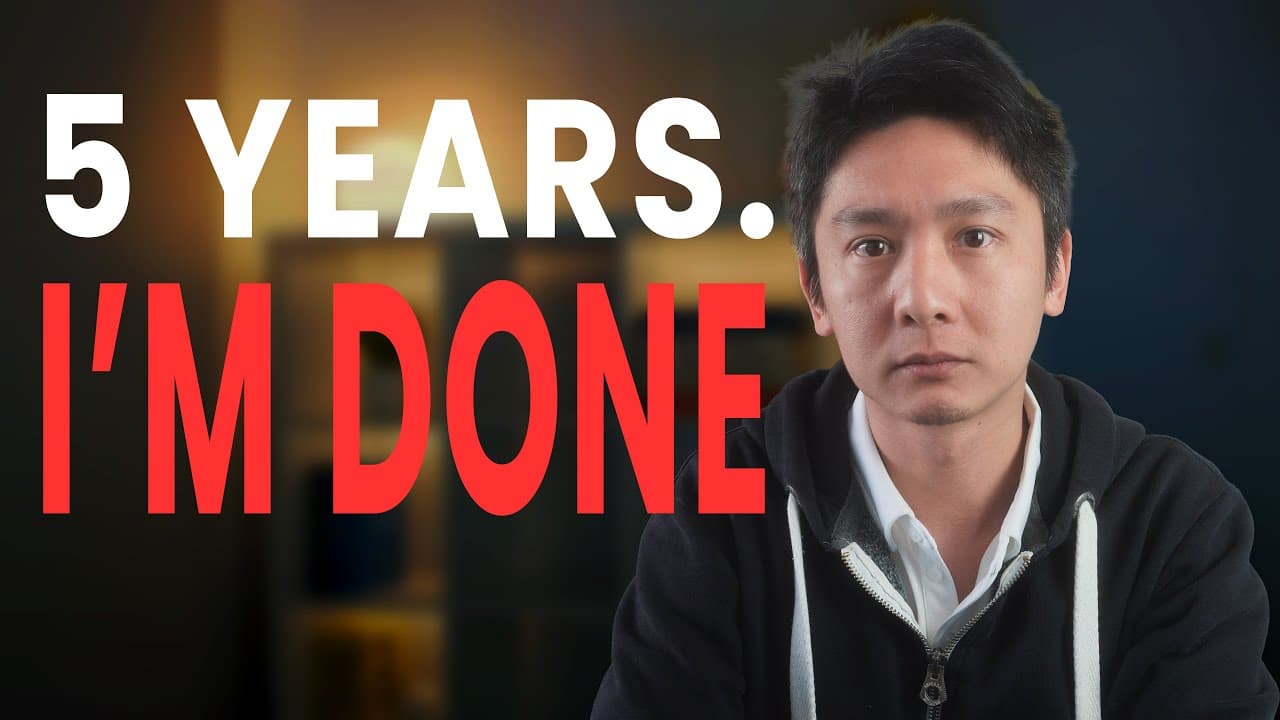
So, YouTube recently posted this to me on my YouTube dashboard and yes, I didn't know I have been posting long form videos on YouTube for 5 years. But to be honest, it feels really demotivating to be reminded of that. So, thank you YouTube because after 5 years, I don't feel like I achieved what I wanted to achieve on YouTube. I want to share somet... Read More
Key Insights
- YouTube personalization can intensify creator comparison because researching competitors teaches the platform to recommend more channels from the same niche. Seeing similar creators receive stronger results may then cause creators to question their own work, feel overlooked, and consider giving up.
- Viral videos can propel a channel's growth, according to the creator's experience. Three semiviral uploads were largely responsible for advancing his channel, yet he found no dependable formula that explained why those videos succeeded or proved that repeating them would reproduce the outcome.
- Visible channel success can conceal unsuccessful experiments. A creator could publish 100 videos, remove the 99 that failed, and leave one viral upload visible, creating the impression of reliable expertise that may later be used to promote a course or other offer.
- The YouTube algorithm produces sharply different outcomes for apparently similar videos. The creator compares uploads about AI automation, N8N, and Agent Kit with similar thumbnails, noting that one received 48 first-day views while another reached 145,000 views in four days.
- The first 48 hours may influence wider distribution, based on a theory discussed by the creator. Under that theory, YouTube initially shows a new upload to subscribers during the first 24 hours, then considers expanding it to new viewers during the following 24 hours.
- YouTube growth advice often becomes outdated because media conditions change continually. The creator says roughly 90% of the tactics he tested did not work for him, or had worked only for the person promoting them during an earlier period.
- Early coverage of a current topic can increase the chance of virality, but a trend cannot be timed reliably. The creator therefore treats YouTube like a business that must keep changing and adapting instead of relying permanently on one shortcut, format, or growth method.
- Platform dependence increases creators' workloads when YouTube changes direction. The creator believes competition with TikTok has encouraged YouTube to favor Shorts, requiring creators to combine short-form and long-form production even when long-form work already consumes substantial time and effort.
Install to Summarize YouTube Videos and Get Transcripts
Explore YouTube Video Summarizer or Get YouTube Transcript Extractor
Questions & Answers
Q: Why can YouTube make content creators feel discouraged?
YouTube can make creators feel discouraged because its personalization system recommends more content resembling what they research. When a creator studies competitors, the home feed may become filled with similar channels receiving more views and subscribers. That repeated comparison can make the creator question the quality of their own work, wonder why the algorithm is not promoting them, and lose motivation.
Q: Do creators need viral videos to grow a YouTube channel?
Viral or semiviral videos can substantially accelerate channel growth, based on the creator's five-year experience. He says three semiviral videos were responsible for pushing his channel to its current position. However, he found no magic formula behind those successes and rejects the assumption that simply repeating the same type of upload will necessarily produce another viral result.
Q: Why can a successful YouTube channel create a misleading impression?
A successful-looking channel may hide the volume of unsuccessful work behind one visible hit. The creator gives the example of someone making 100 videos, getting one viral result, and removing the other 99. Viewers could then believe that the person consistently understands virality, even though the public channel no longer shows the many attempts that failed.
Q: How does the YouTube algorithm affect similar videos differently?
The creator says videos with closely matched subjects, titles, and thumbnails can receive dramatically different distribution. He compares videos concerning AI automation, N8N, and Agent Kit, observing that one received only 48 views during its first day while another gained 145,000 views in four days. He sees this difference as evidence that creators cannot reliably predict algorithmic promotion.
Q: What happens during the first 48 hours after a YouTube upload?
A theory discussed in the video says YouTube may show a new upload to existing subscribers during the first 24 hours. If those viewers watch and create traction, the algorithm may consider presenting it to a broader audience during the next 24 hours. The creator calls this explanation hypothetical and notes that nobody actually knows precisely how the algorithm makes its decisions.
Q: Why do YouTube growth hacks often fail for other creators?
YouTube growth hacks may fail because media conditions change continually, and a tactic that worked for one creator at one time may no longer work later. The creator says he tested claims with an open mind, but roughly 90% did not work for him. The surrounding volume of shortcuts and secret formulas also makes credible guidance difficult to identify.
Q: How can creators improve their chances of going viral on YouTube?
The creator found that being among the first channels to cover a current topic can provide a higher chance of going viral. However, creators can anticipate what might become relevant without reliably timing a trend. His broader recommendation is to treat the channel like a business, remain adaptable, and avoid assuming that any single tactic will continue working as the media environment changes.
Q: Why does the creator believe YouTubers need to make Shorts?
The creator believes YouTube's competition with TikTok has led the platform to favor Shorts over long-form uploads. In his view, channels that refuse to adopt Shorts risk receiving less promotion because they are not following the platform's direction. He also believes YouTube is increasingly blending Shorts with its long-form advantage, which creates additional production work for creators.
Summary & Key Takeaways
-
After five years of publishing long-form videos, the creator feels that his channel has not achieved what he originally wanted. His experience highlights the emotional cost of competitor research, algorithm dependence, viral ambitions, conflicting growth advice, platform changes, expanding production demands, and consistency that repeatedly leads to burnout.
-
Three semiviral videos drove much of the channel's growth, but the creator found no reliable formula behind their success. He warns that visible success can hide failed or deleted uploads, while similar videos may receive radically different results. Constantly searching for an explanation can therefore make every new publication emotionally exhausting.
-
The creator argues that YouTube should be approached like a changing business, even when creators describe it as a hobby. Current topics can offer stronger viral potential when covered early, but trends cannot be timed reliably. Creators must adapt while deciding whether greater workloads, including Shorts, still support their original purpose.
Read in Other Languages (beta)
Share This Summary 📚
Summarize YouTube Videos and Get Video Transcripts with 1-Click
Try YouTube Summary with ChatGPT & Claude or YouTube Transcript Generator
Explore More Summaries from Kevin Chee 📚
Summarize YouTube Videos and Get Video Transcripts with 1-Click
Try YouTube Summary with ChatGPT & Claude or YouTube Transcript Generator