How Does YouTube Decide Which Videos to Push?
TL;DR
YouTube may distribute a video only after it can identify the topic and suitable audience, so a high click-through rate alone does not guarantee more impressions. Across six uploads, lower-CTR videos sometimes outperformed higher-CTR videos, and some gained momentum after 48 hours. Clear titles, spoken content, descriptions, and keywords may help YouTube classify and recommend each upload.
Transcript
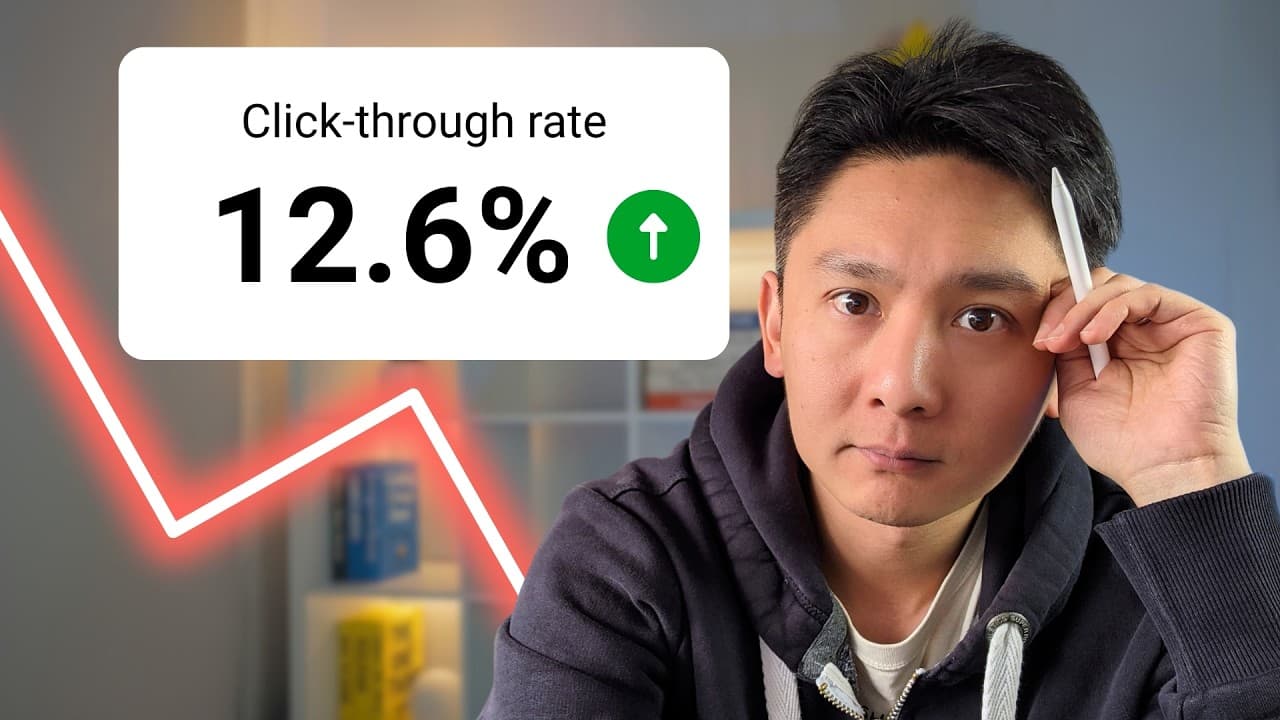
Every YouTube expert will tell you the same thing. High CTR means more views, nail your thumbnail, gets the clicks, and YouTube will push your video. I ran 6 weeks of data proving that's not the whole story. Because if CTR is king, why did my video with the highest CTR die completely? While a video with half that CTR got pushed to over 1,400 views.... Read More
Key Insights
- A high click-through rate did not guarantee wider distribution across the six-video experiment. Some uploads with comparatively strong CTR figures stopped growing, while the upload with the lowest CTR during its first 24 hours later received more impressions and exceeded 1,400 views.
- A new upload was not necessarily dead after its first 24 hours. Two videos initially appeared to underperform but continued growing, and the creator observed that YouTube may wait as long as 48 hours before giving an upload a noticeable increase in impressions.
- The first tested video recorded a 2.2% CTR, an average view duration of 3 minutes and 17 seconds, and 457 views during its first 14 hours. Two days later, it had surpassed 1,400 views even though its CTR and average view duration remained low.
- Steady daily growth was considered healthier than a sudden spike followed by a plateau. The second tested upload had only 600 views on its first day, but it passed 1,000 views after two days and continued growing instead of stopping abruptly.
- Three consecutive uploads failed to receive a meaningful push despite using different thumbnails and producing different CTR figures. The creator considered some of their metrics reasonably good, which made it difficult to explain their weak distribution through thumbnail performance or CTR alone.
- A 4.4% CTR was not a definitive failure threshold in the test. One video started at 5.1%, fell to 4.4% on its second day, and later passed 1,000 views with a 4.2% CTR, showing that its growth continued as the rate declined.
- Topic clarity was the creator's main proposed explanation for inconsistent distribution. The creator inferred that YouTube could identify the first video's subject and intended viewers more easily, allowing the system to increase impressions even though the title and thumbnail produced a low CTR.
- Metadata and spoken content were presented as signals that may help YouTube understand an upload. The creator ranked the title as most important, followed by the video's transcribed speech, then its description and keywords, while also emphasizing clear structure and an obvious, straightforward topic.
- More videos from this channel:
- More from this channel: Kevin Chee
Install to Summarize YouTube Videos and Get Transcripts
Explore YouTube Video Summarizer or Get YouTube Transcript Extractor
Questions & Answers
Q: Does a high YouTube CTR guarantee more views?
A high YouTube click-through rate did not guarantee more views in the six-video experiment. One upload with a relatively high CTR was not pushed, while another with the lowest CTR during its first 24 hours eventually exceeded 1,400 views. The results suggest that CTR can affect clicks but does not, by itself, ensure that YouTube will provide more impressions.
Q: How long should creators wait before judging a new video?
Creators may need to wait as long as 48 hours before deciding that a new upload has failed, based on this experiment. Several videos looked weak during their first day but gained additional impressions afterward. The first tested upload had only 457 views in its first 14 hours, yet it surpassed 1,400 views two days after publication.
Q: Why can a low-CTR video still get pushed by YouTube?
The creator's proposed explanation is that YouTube may push a low-CTR video when it clearly understands the video's topic and intended audience. In the test, the lowest-CTR upload later received more impressions than several videos with stronger metrics. This is an interpretation of the observed results, and the creator planned another experiment to test whether clearer topic signals improve distribution.
Q: What information may help YouTube understand a video?
The creator believes that the title provides the strongest topic signal, followed by the words spoken in the video because YouTube transcribes them. The description and keywords may provide further clarification. Under this explanation, a straightforward title, clearly stated subject, and coherent video structure help the algorithm determine which viewers are appropriate for the upload.
Q: What happened to the first video in the six-week test?
The first video began with a 2.2% CTR, an average view duration of 3 minutes and 17 seconds, and 457 views during its first 14 hours. Although those results appeared weak, YouTube later supplied more impressions. After two days, the video had exceeded 1,400 views even though its CTR and average view duration were still low.
Q: Can a YouTube video keep growing as its CTR falls?
A tested video continued growing even as its click-through rate declined. It began with a 5.1% CTR and more than 500 views in its first 24 hours. On the second day it reached 856 views as CTR fell to 4.4%, then surpassed 1,000 views while CTR dropped further to 4.2%. The declining rate did not stop its growth.
Q: How many tested videos reached more than 1,000 views?
Three of the six tested videos exceeded 1,000 views, which the creator considered a successful result. The videos did not all follow the same path: some looked unsuccessful during their first day before receiving more impressions, while three consecutive uploads failed to gain a comparable push despite having different thumbnails, CTR figures, and otherwise acceptable-looking metrics.
Q: Should creators focus only on thumbnails and CTR?
Creators should not focus only on thumbnails and CTR, according to the conclusion drawn from this test. Thumbnail quality can still influence whether viewers click, but the six uploads showed that stronger CTR did not consistently lead to broader distribution. The creator recommends making the topic obvious through the title, spoken script, structure, description, and keywords so YouTube can identify the intended audience.
Summary & Key Takeaways
-
The six-video test challenged the idea that click-through rate is the main factor determining distribution. The upload with the lowest early CTR eventually exceeded 1,400 views after YouTube increased its impressions, while some videos with stronger metrics received no comparable push. High CTR therefore did not consistently predict performance in this experiment.
-
Three of the six tested videos surpassed 1,000 views. Some appeared weak during their first day but grew during the following day, suggesting that creators should not declare an upload unsuccessful within its first 24 hours. The creator concluded that waiting as long as 48 hours can reveal whether YouTube will expand distribution.
-
The proposed explanation is that YouTube must understand a video's subject and intended audience before distributing it effectively. The creator believes the title carries the most weight, followed by transcribed speech, then the description and keywords. Clear structure and an obvious topic may therefore matter alongside thumbnails, CTR, and viewing duration.
Read in Other Languages (beta)
Share This Summary 📚
Summarize YouTube Videos and Get Video Transcripts with 1-Click
Try YouTube Summary with ChatGPT & Claude or YouTube Transcript Generator
Explore More Summaries from Kevin Chee 📚





Summarize YouTube Videos and Get Video Transcripts with 1-Click
Try YouTube Summary with ChatGPT & Claude or YouTube Transcript Generator