How Does Presence Free You from Ego Identity?
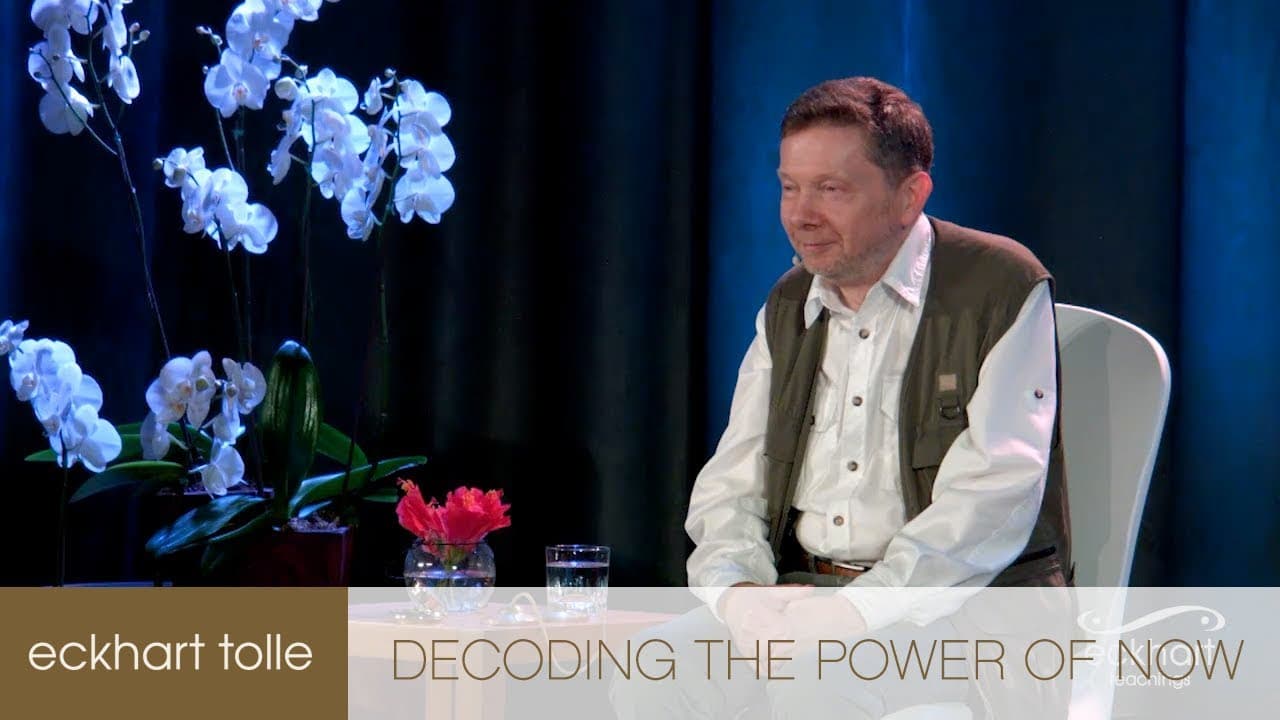
TL;DR
Presence frees you from relying on possessions, status, abilities, appearance, or personal stories to define who you are. By recognizing yourself as the awareness beneath the personal identity, you can face loss with greater depth, appreciate others without comparison, and allow creative action to arise without turning achievements into sources of ego.
Transcript
I had an encounter not long after I experienced the awakening I was in a waiting room somewhere and this huge guy came in the core compared to him i justed this puny little guy sitting there and he planted himself in front of me go and and obviously enjoying his power I don't remember what he wanted he wanted something and I could sense the that se... Read More
Key Insights
- Presence is an inherent, noncomparative power that does not require physical intimidation, argument, or psychological defense. Tolle illustrates this with an encounter in which a threatening man became disconcerted because his attempt to dominate met no resistance or competition.
- The power of now is the power of presence, and presence is identified with the deepest dimension of the self. This self is not the personal identity but an expression of the universal consciousness that underlies temporary phenomena.
- Egoic identity is commonly built from appearance, strength, possessions, abilities, recognition, work, and social status. These external supports are transient, so depending on them for self-esteem makes a person's sense of identity vulnerable to change and loss.
- Major loss can create an opening for spiritual awakening by removing the roles or abilities that previously defined a person. The ego may instead construct another mental narrative, so suffering creates the potential for deepening but does not guarantee transformation.
- Old age is an opportunity to discover identity beyond professional titles, physical abilities, social position, and personal history. Retirement and proximity to death can direct attention toward the deeper presence that remains when familiar sources of identity weaken or disappear.
- Presence removes the need for a conceptual story that explains who a person is. Consciousness becomes aware of itself directly, allowing identity to rest in awareness rather than in repeated thoughts about past achievements, disappointments, roles, or future ambitions.
- Genuine appreciation becomes possible when identity is no longer based on comparison. A person can admire another's beauty, talent, achievements, or possessions without feeling diminished, because those external qualities do not determine the value of the observing self.
- Creative expression can flow from presence without becoming a source of egoic identity. Tolle describes creation as bringing into external form something already present at a deeper, undifferentiated level, like composers who experienced complete music arising from a place of depth.
- Related book: The Power of Now
- Export your Kindle highlights to Glasp: How to Download Highlights and Notes from Kindle
- More videos about this book:
- More from this channel: Eckhart Tolle
- More videos with Eckhart Tolle:
Install to Summarize YouTube Videos and Get Transcripts
Explore YouTube Video Summarizer or Get YouTube Transcript Extractor
Questions & Answers
Q: What is the power of now according to Eckhart Tolle?
The power of now is the inherent power of presence. Presence is consciousness becoming aware of itself, beneath the personal identity and its mental stories. Tolle connects this awareness with the universal consciousness underlying all temporary phenomena. Its power is noncomparative, so it does not depend on status, strength, possessions, recognition, or superiority over another person.
Q: How can presence reduce conflict with an intimidating person?
Presence can reduce conflict by removing the impulse to defend a personal identity or compete for dominance. Tolle recounts remaining present while a physically intimidating man tried to assert power over him. Because there was no defensive reaction or competition, the man became disconcerted and lost momentum. The example presents calm awareness as a form of power independent of physical size.
Q: Why does losing status or ability sometimes trigger spiritual awakening?
Losing status or ability can dismantle a person's familiar source of identity. Someone who defines the self through athletic skill, professional standing, appearance, possessions, or recognition may suffer intensely when that foundation disappears. The loss can force attention toward a deeper essence beneath those conditions, although the ego may avoid this shift by quickly constructing another identity and narrative.
Q: How does ego build a personal identity?
Ego builds personal identity from concepts and external conditions, including good looks, physical strength, possessions, abilities, recognition, work, and social status. It then maintains that identity through an internal story about one's life. Because these conditions change, the resulting self-image remains unstable and may feel threatened by loss or by another person's superior qualities or achievements.
Q: Why can old age become an opportunity for spiritual transformation?
Old age can weaken many external foundations of identity, including physical ability, professional titles, work, and social status. Retirement and proximity to death may therefore raise the question of who remains when those roles disappear. Tolle describes this period as a major opportunity to move beyond a conceptual self and recognize the deeper presence that is not dependent on temporary conditions.
Q: How does presence help people appreciate others without jealousy?
Presence allows appreciation without turning another person's qualities into a judgment about one's own worth. A person can admire beauty, talent, strength, achievement, or even a well-made possession without feeling diminished. Ego tends to compare and may criticize someone to repair an injured self-image, while presence recognizes that another person's external gifts do not subtract anything from one's deeper identity.
Q: What is the relationship between presence and creativity?
Creativity can arise through presence when a person becomes receptive to what consciousness may express through them. Tolle suggests that an external creation is a differentiated form of something already present at a deeper, formless level. He refers to composers who experienced music as arriving fully created from a place of depth, with their task being to bring it into form.
Q: Can success and creative achievement exist without ego?
Success and creative achievement can exist without becoming the basis of personal identity. Tolle says some highly creative people do not develop ego around their creations and may continue creating from that modest, unpossessive state. The important distinction is whether someone treats the work as proof of personal superiority or allows it to emerge through presence without claiming identity from it.
Summary & Key Takeaways
-
The power of now is the inherent power of presence, understood as consciousness becoming aware of itself. This presence is deeper than the personal self and does not depend on comparison, defense, or a mental narrative. Recognizing it reveals an identity that remains beneath temporary roles, possessions, abilities, and social recognition.
-
People commonly build identity from appearance, physical strength, possessions, professional roles, abilities, recognition, and status. Losing these supports can cause severe suffering, but it may also create an opportunity for spiritual awakening. Old age, retirement, declining abilities, and proximity to death can similarly invite a movement toward deeper awareness.
-
Living from presence makes genuine appreciation and creativity possible without egoic comparison. Another person's beauty, strength, achievement, or possessions need not diminish anyone else. Creative work can also emerge from a deeper source, as though it already exists in an undifferentiated form and is brought into expression through the creator.
Read in Other Languages (beta)
Share This Summary 📚
Summarize YouTube Videos and Get Video Transcripts with 1-Click
Try YouTube Summary with ChatGPT & Claude or YouTube Transcript Generator
Explore More Summaries from Eckhart Tolle 📚
Summarize YouTube Videos and Get Video Transcripts with 1-Click
Try YouTube Summary with ChatGPT & Claude or YouTube Transcript Generator