What Are the Basic Concepts of Microeconomics?
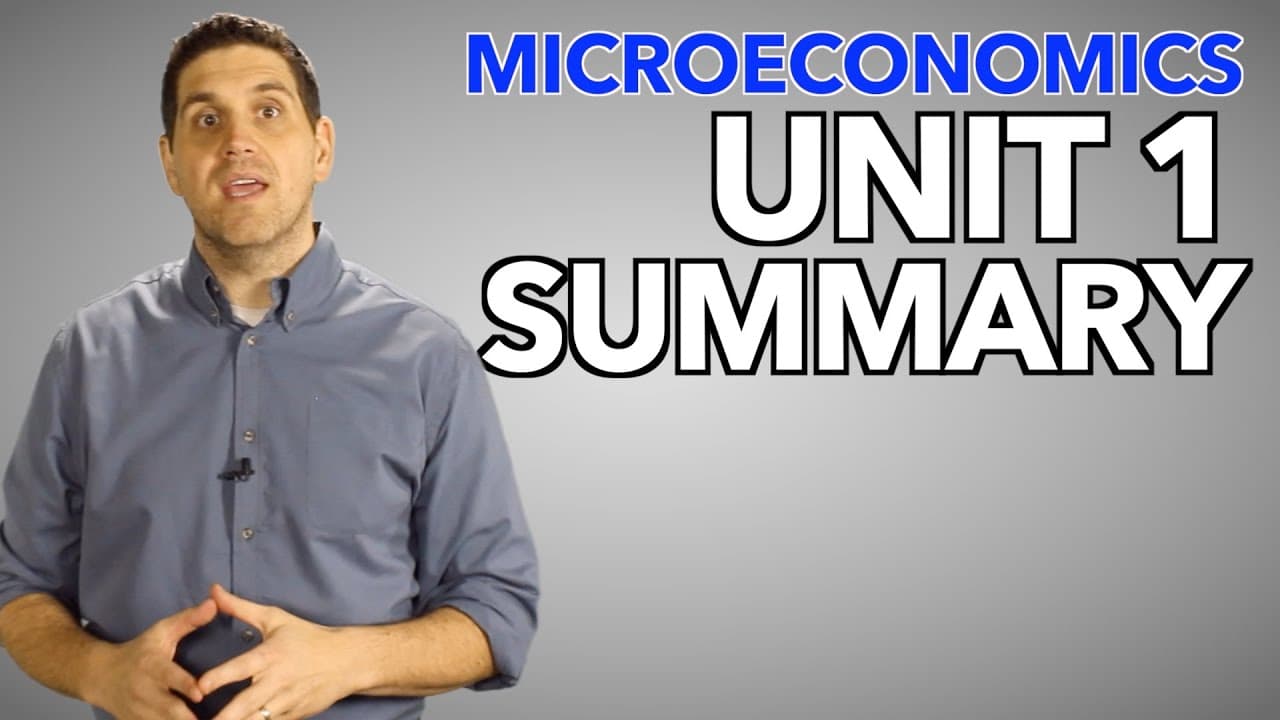
TL;DR
Economics studies how individuals and societies make choices because wants are unlimited while resources are limited. Every choice involves trade-offs and an opportunity cost, while incentives, self-interest, and comparisons of additional benefits and costs influence decisions. Economic systems differ mainly in whether governments or individuals control resources and answer what, how, and for whom to produce.
Transcript
hey econ students this is Jacob Clifford welcome to the microeconomics unit one summary video in this video series I'm going to cover all the key graphs and all the key concepts for each unit but I'm going pretty quick so jump on board and let's go now we're going to jump into unit one basic economic Concepts now if you've watched this video before... Read More
Key Insights
- Economics is the science of scarcity, which means it examines how individuals and societies handle unlimited wants with limited resources. Scarcity makes choices unavoidable and establishes why allocating resources effectively is a central economic problem.
- Opportunity cost is the most desirable alternative given up when a choice is made. It differs from trade-offs, which include all forgone alternatives, and it can involve time, relationships, activities, or other opportunities rather than only money.
- Microeconomics is the study of smaller economic units, including individuals, firms, and governments. Macroeconomics takes a broader view by examining the entire economy through inflation, unemployment, gross domestic product, recessions, and possible government responses.
- Economic decision-making is based on five assumptions: resources are scarce, every choice has a cost, people respond to incentives, people act in their own self-interest, and decisions are made by comparing additional benefits with additional costs. Graphs can also help explain economic activity.
- Investment in economics is the purchase of machines, tools, and capital by a business to improve its operations. Capital goods help produce other goods, while consumer goods are made for direct consumption, such as pizza.
- Human capital is the knowledge and skills required to produce goods and services. It can improve over time, as illustrated by a doctor attending school to develop the abilities needed to perform specialized work.
- The four factors of production are land, labor, capital, and, according to some classifications, entrepreneurship. These resources are used to produce goods such as computers, tables, and cell phones, while ownership of resources helps determine a society's economic system.
- The invisible hand is the idea that social goals can be served as individuals pursue their own goals. In a free market, businesses must produce things people want, while competition and self-interest help direct resources, although monopolies and externalities can create situations where this process does not work.
Install to Summarize YouTube Videos and Get Transcripts
Explore YouTube Video Summarizer or Get YouTube Transcript Extractor
Questions & Answers
Q: What is scarcity in economics?
Scarcity is the condition created by unlimited wants and limited resources. Because people and societies cannot have everything they want, they must make choices about how resources will be used. Economics studies how individuals, businesses, governments, and entire societies manage this problem. Scarcity also means every decision has a cost because choosing one option requires giving up other possibilities.
Q: What is the difference between trade-offs and opportunity cost?
Trade-offs are all the alternatives given up when a decision is made, while opportunity cost is specifically the most desirable alternative forgone. Watching an economics lesson, for example, may involve giving up sleep, time with friends, or another activity. Only the best unavailable alternative is the opportunity cost. Neither concept is limited to dollars because time and other opportunities can also be sacrificed.
Q: How are microeconomics and macroeconomics different?
Microeconomics studies smaller economic units and their decisions, including individuals, firms, and governments. Macroeconomics examines the larger picture of the entire economy. Its subjects include inflation, unemployment, gross domestic product, recessions, the overall condition of the economy, and questions about whether or how governments should respond when economic activity declines.
Q: What assumptions guide basic economic reasoning?
Basic economic reasoning begins with the assumptions that all resources are scarce and every choice has a cost. It also assumes that people respond to incentives and act in their own self-interest. Decisions are made by weighing additional benefits against additional costs. Economic activity can also be represented with graphs, although graphs do not explain life or the economy perfectly.
Q: What do investment, capital goods, and human capital mean in economics?
Investment in economics occurs when a business purchases machines, tools, and capital to improve its operations. Capital goods are tools and machines used to produce other products, such as blenders, ovens, and knives used by a pizza company. Human capital is the knowledge and skills needed for production, and people can develop it over time through activities such as attending school.
Q: What are the factors of production?
The factors of production are the resources used to create goods and services. They are categorized as land, labor, capital, and, in some classifications, entrepreneurship. These inputs are present in products such as computers, tables, and cell phones. Who owns and controls these productive resources helps determine the kind of economic system operating within a society.
Q: What questions must every economic system answer?
Every economic system must answer three main questions: what goods and services should be produced, how those goods and services should be produced, and who will consume them. The way a society answers these questions determines its method for producing and distributing goods and services. The central distinction is whether the government or individuals make the relevant resource-allocation decisions.
Q: How do centrally planned and free market economies differ?
A centrally planned economy places resources under government ownership and control, with the government directing production and even determining where workers can work. A free market economy allows individuals to decide what to produce, how to produce it, and who receives it. Competition and self-interest regulate the free market, while the invisible hand describes how individual goals may help meet social goals.
Summary & Key Takeaways
-
Scarcity is the foundation of economics because unlimited wants must be satisfied with limited resources. This mismatch forces individuals, businesses, governments, and societies to make choices. Every decision includes trade-offs, while opportunity cost identifies the most desirable alternative that was given up when one particular option was selected.
-
Microeconomics examines decisions made by smaller economic units, including individuals, firms, and governments. Macroeconomics instead considers the entire economy through subjects such as inflation, unemployment, gross domestic product, and recessions. Economic reasoning assumes that resources are scarce, choices have costs, people respond to incentives, and decisions compare additional benefits with additional costs.
-
Economic systems determine how societies produce and distribute goods and services by answering what to produce, how to produce it, and who consumes it. Centrally planned economies rely on government control of resources, while free market economies rely on individual decisions, competition, self-interest, and the coordinating influence described as the invisible hand.
Read in Other Languages (beta)
Share This Summary 📚
Summarize YouTube Videos and Get Video Transcripts with 1-Click
Try YouTube Summary with ChatGPT & Claude or YouTube Transcript Generator
Explore More Summaries from Jacob Clifford 📚
Summarize YouTube Videos and Get Video Transcripts with 1-Click
Try YouTube Summary with ChatGPT & Claude or YouTube Transcript Generator