How to master Unit 1 Basic Economic Concepts

TL;DR
Scarcity forces tradeoffs and the PPC shows resource allocation limits. The video covers five big concepts in microeconomics, explains four factors of production, and contrasts micro vs macro economics. It also emphasizes using the Unit 1 study guide to practice and prepare for quizzes and exams.
Transcript
Hey econ students this is Jacob Clifford. Welcome to the microeconomics unit one summary video [music]. In these summary videos I quickly explain all the concepts you need for your next quiz, unit exam, or your final exam. Basically everything you need to get an A in your class. But I'm going to be going quick. I am going to be using the AP cur... Read More
Key Insights
- Scarcity is the central issue that forces choice and tradeoffs in all economic agents.
- The five big picture concepts are scarcity, economic systems, PPC, comparative advantage, and marginal analysis.
- The four factors of production are land, labor, capital, and entrepreneurship.
- Microeconomics studies individual and firm decisions while macroeconomics covers the whole economy, including policies and inflation.
- The production possibilities curve shows tradeoffs and feasible production combinations.
- Comparative advantage enables specialization and trade based on lower opportunity costs.
- Marginal analysis weighs additional benefits against additional costs for decisions.
- A study guide accompanies the video to reinforce concepts and aid exam preparation.
Install to Summarize YouTube Videos and Get Transcripts
Explore YouTube Video Summarizer or Get YouTube Transcript Extractor
Questions & Answers
Q: What is the core idea that drives all economic choices?
The core idea is scarcity, which means resources are limited while wants are unlimited, forcing individuals, businesses, and governments to make intentional choices about what to produce, how to produce, and for whom to produce. This concept underpins decision making across different levels of the economy and leads to opportunity costs.
Q: What are the five big picture concepts introduced in Unit 1?
The five big picture concepts are scarcity and choice, the structure of an economy or economic system, the production possibilities curve which shows feasible production combinations, comparative advantage enabling specialization and trade, and marginal analysis which weighs additional benefits against additional costs for decisions. These ideas form the foundation of microeconomics.
Q: What are the four factors of production described?
The four factors of production are land, which includes natural resources; labor, the human effort used in production; capital, which includes physical capital like tools and machines and human capital like knowledge and training; and entrepreneurship, the risk taker who organizes resources and drives production.
Q: How is microeconomics different from macroeconomics according to the video?
Microeconomics studies the decisions of individuals and firms, including costs of production and different markets, and the effects of regulations. Macroeconomics looks at larger scale outcomes such as growth, unemployment, inflation, and aggregate policies. Together they explain how the economy functions at both small and large levels.
Q: What is the production possibilities curve used to illustrate?
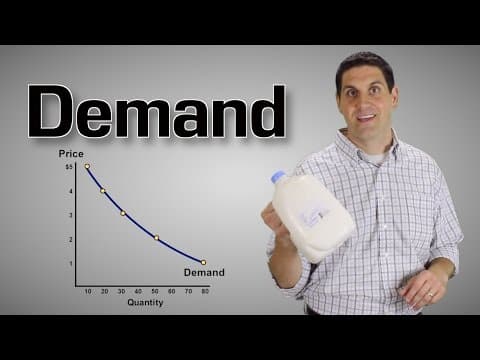
The production possibilities curve illustrates the different combinations of two goods that can be produced using all resources efficiently. It shows the tradeoffs and opportunity costs involved in choosing one production mix over another and helps explain why resources should be allocated where they are most productive.
Q: What does comparative advantage enable in an economy?
Comparative advantage enables countries or entities to specialize in producing goods where they have the lowest opportunity cost, leading to increased efficiency and the possibility of beneficial trade. This principle explains why even if one producer is better at everything, trade can still make both parties better off.
Q: Why is marginal analysis important in economics?
Marginal analysis is important because it helps decision makers weigh the additional benefits and costs of a choice. By comparing the incremental gains to the incremental costs, individuals and institutions can determine whether a small change in output or behavior will improve overall welfare or efficiency.
Q: What is the recommended study practice emphasized in the video?
The video emphasizes actively practicing with graphs and calculations and using the Unit 1 study guide that accompanies the video. It asks students to pause, download, print, and fill out the guide before resuming, reinforcing concepts and improving readiness for upcoming quizzes and exams.
Summary & Key Takeaways
-
The video introduces scarcity as a core driver of choice, and links it to how individuals, firms, and governments must decide which options to pursue. It emphasizes that resources are limited while wants are unlimited, setting the stage for economic analysis.
-
Five big ideas are presented: scarcity, the economic system, the PPC, comparative advantage, and marginal analysis, establishing the foundation for later topics and graphing.
-
It explains four factors of production, differentiates micro and macro economics, and stresses the importance of practice with the study guide to improve understanding and exam readiness.
Read in Other Languages (beta)
Share This Summary 📚
Summarize YouTube Videos and Get Video Transcripts with 1-Click
Try YouTube Summary with ChatGPT & Claude or YouTube Transcript Generator
Explore More Summaries from Jacob Clifford 📚




Summarize YouTube Videos and Get Video Transcripts with 1-Click
Try YouTube Summary with ChatGPT & Claude or YouTube Transcript Generator