What Can Scientific Advertising Teach Marketers?
TL;DR
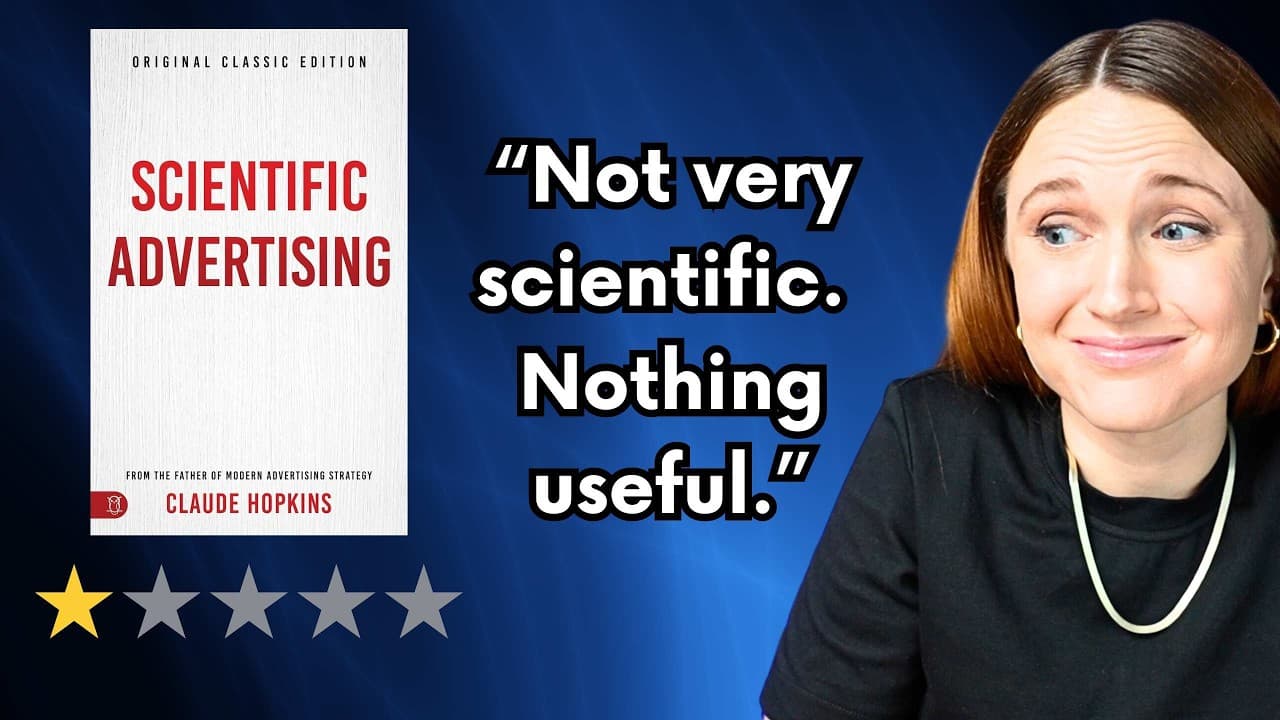
Claude Hopkins’ most useful lesson is to research products deeply, identify specific reasons to buy, and test advertising before expanding it. His campaigns for Pepsodent, Schlitz beer, and puffed rice show how existing desires, manufacturing details, free trials, convenience, and unexpected product facts can turn ordinary features into persuasive messages.
Transcript
I read this book twice last week and I'm going to be honest I didn't really get what I wanted from it what's up marketers welcome to the first session of advertising book club maybe we'll do this thing more often or if this video is a total flop also be sure to stay to the end of the video where I show you the video that I'm going to be reading for... Read More
Key Insights
- Claude Hopkins’ reason-why advertising gives buyers concrete reasons to purchase a product and prefer it over competing products or alternative uses. He believed advertising should make money and should supply practical arguments that help salespeople sell the product directly.
- Test campaigns reduce advertising risk by evaluating messages before they receive wider distribution. Hopkins practiced this approach through mail-order advertising, while modern brands can test messaging through Meta ads before adapting successful ideas for larger placements such as billboards or commercials.
- Deep product research can reveal persuasive language in unexpected sources. Hopkins found the phrase “the film” in a dental textbook and used it to describe what Pepsodent removed, connecting an unfamiliar brushing habit with the existing desire to appear more beautiful.
- Pepsodent’s campaign paired an existing beauty motive with a free 10-day offer. Demand reportedly exploded within three weeks, and within a decade, 75% of Americans had Pepsodent in their medicine cabinets, making it America’s bestselling toothpaste for more than 30 years.
- Schlitz advertising made purity credible by showing how the beer was manufactured. Competing brands also discussed purity, but Hopkins distinguished the product through specific production details, demonstrating that explaining the process can be more persuasive than repeating an unsupported superiority claim.
- Puffed rice advertising turned the manufacturing process into what the reviewer calls hidden remarkability. The campaign used the “guns of peace” headline, then supported that curiosity with nutritional benefits and the practical convenience of serving the product either hot or cold.
- Historical context can shape which advertising angle feels appropriate. The puffed rice advertisement first ran in 1930, only months after the Great Depression began, and the reviewer interprets its positive headline, convenience claims, and reassuring tone as intentional responses to contemporary uneasiness.
- Scientific Advertising is more useful when readers already have advertising context and experience. The reviewer says beginners may miss its lessons because it provides limited visual examples and practical guidance, recommending Hopkins’ actual advertisements as a clearer starting point than the book alone.
- More videos from this channel:
- More from this channel: Dara Denney
Install to Summarize YouTube Videos and Get Transcripts
Explore YouTube Video Summarizer or Get YouTube Transcript Extractor
Questions & Answers
Q: What is reason-why advertising according to Claude Hopkins?
Reason-why advertising gives people concrete reasons to buy a product and explains why it is preferable to competing products or alternative uses. Hopkins treated commercial performance as the essential standard, so an advertisement needed to make money. He also believed effective advertising should provide useful arguments that help a salesperson on the ground sell the product directly.
Q: How did Claude Hopkins use test campaigns in advertising?
Claude Hopkins used test campaigns primarily through mail-order advertising, which the reviewer describes as his bread and butter. The central idea is to test advertisements and messages before committing to broader campaigns. A modern parallel is testing messaging through Meta ads, then using successful concepts in larger advertisements such as billboards or commercials.
Q: How did the Pepsodent campaign encourage toothbrushing?
The Pepsodent campaign linked toothbrushing to an existing desire for beauty instead of presenting toothpaste only as a hygiene product. Hopkins found the phrase “the film” in a dental textbook and described brushing as removing that film from teeth. He combined this memorable cue with an irresistible offer that let people try the product free for 10 days.
Q: What results did the Pepsodent advertising campaign achieve?
The transcript says demand for Pepsodent exploded within three weeks after the campaign launched. Within a decade, 75% of Americans reportedly had Pepsodent in their medicine cabinets. The brand then remained America’s bestselling toothpaste for more than 30 years. These results followed a campaign built around beauty, removing “the film,” and a free 10-day trial.
Q: Why was the Schlitz beer advertising persuasive?
The Schlitz campaign did more than claim that the beer was pure. Hopkins showed how the beer was manufactured, giving readers specific process details that supported the purity message. Other brands discussed purity too, but they were not presenting the same behind-the-scenes explanation. The example shows how revealing production methods can make an otherwise common claim more credible and distinctive.
Q: What made the puffed rice advertisement remarkable?
The puffed rice campaign grew from Hopkins observing how the product was made during a manufacturing plant tour. He turned that unusual process into a curiosity-driven “guns of peace” headline, then added practical support by discussing nutritional benefits and the option to serve the cereal hot or cold. The manufacturing process supplied the hidden remarkability behind the campaign.
Q: Why does product research matter in advertising?
Product research can uncover specific facts, phrases, processes, and everyday cues that become persuasive advertising ideas. Hopkins found useful language in a dental textbook, built Schlitz messaging around manufacturing, and discovered the puffed rice angle during a plant tour. The reviewer recommends studying a product’s purpose, manufacturing process, and possible place within customers’ existing daily routines.
Q: Should beginners read Scientific Advertising first?
The reviewer does not recommend Scientific Advertising as a beginner’s first advertising book without a substantial disclaimer. Although the book presents advertising as a discipline based on principles, its lessons can feel surface-level without experience, visual examples, or campaign context. Beginners may learn more initially by studying Hopkins’ actual advertisements, then reading the book after gaining practical context.
Summary & Key Takeaways
-
Claude Hopkins developed reason-why advertising, which gives customers concrete reasons to choose a product over competitors or alternative uses. He also promoted test campaigns through mail-order advertising. His broader standard was commercial: an advertisement should make money and provide arguments that help salespeople sell the product directly to customers.
-
Hopkins’ campaigns drew persuasive ideas from intensive product research. Pepsodent connected toothbrushing with beauty and offered a free 10-day trial. Schlitz advertising described how the beer was manufactured instead of merely claiming purity. Puffed rice advertising transformed an unusual production process into a remarkable headline while also emphasizing nutrition and convenience.
-
The reviewer rated Scientific Advertising 1.5 out of five for beginners because its lessons seem surface-level without context, examples, or practical experience. The book reads more like a manifesto or manual than a modern textbook. New advertisers may understand Hopkins better by examining his finished advertisements before returning to his written principles.
Read in Other Languages (beta)
Share This Summary 📚
Summarize YouTube Videos and Get Video Transcripts with 1-Click
Try YouTube Summary with ChatGPT & Claude or YouTube Transcript Generator
Explore More Summaries from Dara Denney 📚
Summarize YouTube Videos and Get Video Transcripts with 1-Click
Try YouTube Summary with ChatGPT & Claude or YouTube Transcript Generator