How to Create Effective AI Static Ads Quickly
TL;DR
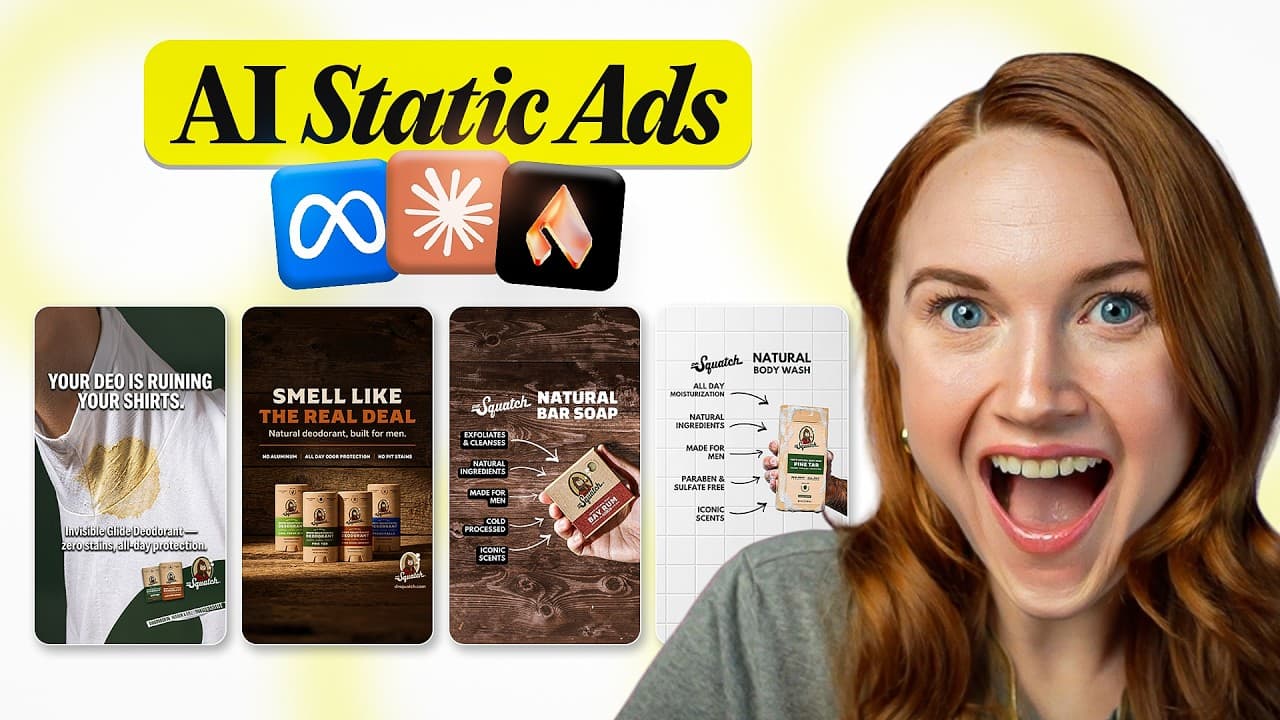
Create effective AI static ads quickly by defining one specific goal, choosing a precise audience persona, selecting the format, and matching the message to the audience’s awareness level before designing. Establish a clear hierarchy led by the headline or key visual, then use AI tools such as Super Scale to generate and refine variations. Read on for the principles, formats, and testing process behind stronger static ads.
Transcript
In the past 10 years working in marketing in paid social, I've personally worked on tens of thousands of static ads for brands like Laura Geller, Wandering Bear Coffee, and Nuts.com. And several of these ads have actually gone on to make hundreds of thousands of dollars in revenue. And in some cases, like this, millions. And then there's ads like t... Read More
Key Insights
- Static ads are not just for retargeting; they can engage cold audiences if messaging aligns with audience awareness levels.
- Understanding your target persona is crucial for crafting effective ad messaging and visuals.
- Clear, specific headlines and visuals that capture attention are essential for successful static ads.
- Visual hierarchy in ad design ensures the most important message is conveyed first, enhancing comprehension.
- AI tools like Super Scale can automate ad creation, leveraging brand data and competitor analysis for optimized results.
- Static ads should focus on core desires and outcomes rather than just product features to attract attention.
- Formats like educational infographics and transformation visuals are effective for top-of-funnel engagement.
- Iterative testing and refinement of ad creatives based on AI-generated insights can significantly improve ad performance.
Install to Summarize YouTube Videos and Get Transcripts
Explore YouTube Video Summarizer or Get YouTube Transcript Extractor
Questions & Answers
Q: How can you create effective AI static ads quickly?
Start by defining four strategic elements: one specific goal, a precise persona, the ad format, and the audience’s level of awareness. Then build a clear visual hierarchy and use an AI tool such as Super Scale to analyze brand and competitor data, generate variations, and refine the creative.
Q: Can static ads work for cold audiences?
Yes. Static ads can reach cold audiences when the message reflects their marketing-awareness level and uses the vocabulary of a clearly defined persona. The creator says this approach can produce scalable creative rather than limiting image ads to retargeting.
Q: What should you decide before writing static-ad copy?
Choose the ad’s single goal, such as presenting an offer, educating the audience, or targeting someone who is problem-aware. Also define the persona, select the format, and match the creative to a specific awareness level; trying to make one ad perform multiple jobs is a common mistake.
Q: Why does a precise target persona matter for static ads?
The persona determines the vocabulary, proof, and objection handling used in the ad. A broad category such as “small business owners” is insufficient; the strategy should identify the type of owner, their stage, and their objection.
Q: What role does visual hierarchy play in static-ad design?
Visual hierarchy controls what the viewer notices first. The headline generally leads and performs the targeting, followed by the product or key visual and then supporting elements; nine times out of 10, the focal point is either the initial headline or the visual.
Q: What is the one-second comprehension test for a static ad?
The test asks whether a stranger can quickly understand what is being sold or what message is being communicated. If the creative is unclear, that signals it should be removed or revised because clarity should take priority over creativity.
Q: Which static-ad formats are effective for top-of-funnel engagement?
Educational infographics and transformation visuals are effective top-of-funnel formats. The existing guidance also identifies bold headliner ads and comparison formats such as “us versus them” as useful ways to capture attention and communicate a focused message.
Q: How can AI tools such as Super Scale improve static ads?
Super Scale can use brand and competitor analysis to help generate optimized ad creatives and creative diversity. Marketers can then test and refine the resulting variations using AI-generated insights, improving the campaign through iteration.
Summary & Key Takeaways
-
Static ads can effectively reach both cold and retargeted audiences by aligning messaging with audience awareness levels. Understanding your target persona is crucial for crafting effective ad content. Use AI tools like Super Scale to streamline ad creation, leveraging brand and competitor data for optimized results.
-
Clear, specific headlines and attention-grabbing visuals are essential for successful static ads. Visual hierarchy ensures the key message is conveyed first, enhancing comprehension. Formats like educational infographics and transformation visuals are particularly effective for top-of-funnel engagement.
-
AI tools can automate and enhance ad creation by conducting brand and competitor analysis, generating creative diversity, and refining ad elements. Iterative testing and refinement based on AI insights can significantly improve ad performance, making static ads a powerful tool in marketing strategies.
Read in Other Languages (beta)
Share This Summary 📚
Summarize YouTube Videos and Get Video Transcripts with 1-Click
Try YouTube Summary with ChatGPT & Claude or YouTube Transcript Generator
Explore More Summaries from Dara Denney 📚


Summarize YouTube Videos and Get Video Transcripts with 1-Click
Try YouTube Summary with ChatGPT & Claude or YouTube Transcript Generator