What Do Native Cultures Have in Common?: Ep 6 of Crash Course Native American History
TL;DR
Native cultures are diverse, but many share traditions centered on humor, reciprocity, kinship, community, and respect for nature. Laughter is considered “good medicine,” while practices such as the honorable harvest and potlatches emphasize sustainability, generosity, and collective well-being. Read on to see how artifacts, sacred clowns, the Haudenosaunee Confederacy, and Native-led shows reveal these interconnected values.
Transcript
What do you see when you picture findings at an archaeological dig? Jewelry? Pottery? Tools? That’s all true, but, at Native American sites, we’ve also discovered dice made from animal bones and pottery shards. Sticks with pockets and leather-covered balls used for games of—you guessed it—stickball. Ancient nerf-guns. [record scratch] Well, sort o... Read More
Key Insights
- Native American sites reveal artifacts like dice, pottery shards, and game tools, showcasing the importance of fun in their culture.
- Humor is a significant part of Native culture, often dark and satirical, and is considered 'good medicine' for healing and bonding.
- Native humor challenges stereotypes by portraying Natives as complex individuals, countering media's stoic and serious depictions.
- Shows like 'Reservation Dogs' and 'Rutherford Falls' highlight Native comedic traditions, offering authentic representations of Native life.
- Reciprocity is a core Native value, emphasizing interdependence between people and nature, fostering peace and trade among tribes.
- The Haudenosaunee Confederacy exemplifies Native interdependence, uniting tribes under the Great Law of Peace for mutual strength.
- The 'honorable harvest' tradition reflects Native respect for nature, promoting sustainable resource use and gratitude towards the Earth.
- Potlatches and kinship systems illustrate Native generosity and community focus, emphasizing collective well-being over individual gain.
Install to Summarize YouTube Videos and Get Transcripts
Explore YouTube Video Summarizer or Get YouTube Transcript Extractor
Questions & Answers
Q: What do Native cultures have in common?
Native peoples have different tribal affiliations and traditions, but many cultures share an emphasis on humor, reciprocity, kinship, community, and respect for nature. These values connect Native peoples with their ancestors while supporting cooperation and collective well-being.
Q: What do archaeological findings reveal about Native American culture?
Native American sites contain objects made for fun, including animal-bone dice, pottery shards, stickball equipment, and child-sized weapons used as toys. Games involving these objects could teach cooperation and conflict resolution while helping children build relationships.
Q: Why is humor important in Native cultures?
Many Native peoples regard laughter as “good medicine” that promotes the well-being of mind, body, or spirit. Humor also creates community, strengthens bonds, builds resilience, and helps people cope with colonization and persecution.
Q: What are Koshares, and what role do they serve?
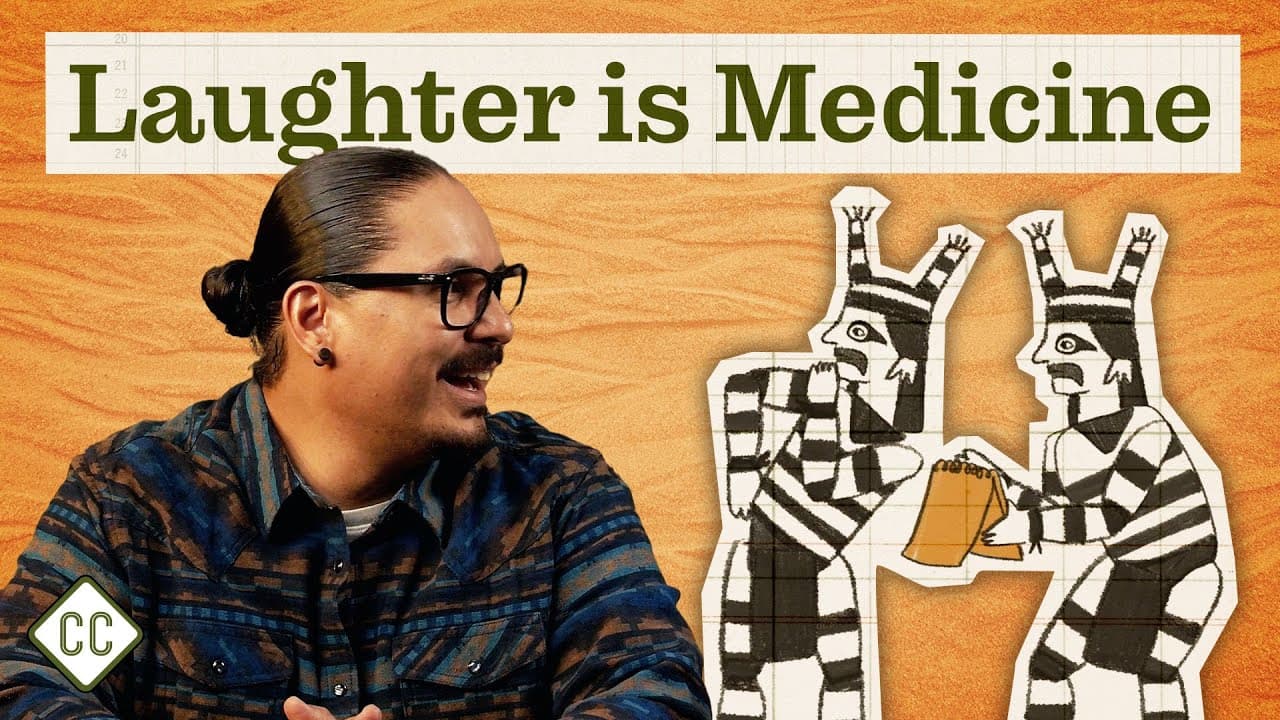
Koshares are sacred clowns featured in some Pueblo ceremonies. Painted black and white, they act out behaviors such as gluttony or laziness to show the community what not to do, and they are also believed to have natural powers such as bringing rain.
Q: How does Native humor challenge stereotypes and reclaim power?
Dark, satirical, cheeky, and provocative humor counters depictions of Native people as uniformly stoic, violent, or humorless. Dallas Goldtooth describes laughter and joy as tools for fueling action and taking some power back from oppressive hierarchies.
Q: How do Reservation Dogs and Rutherford Falls represent Native humor?
Reservation Dogs and Rutherford Falls were made by or with the help of Indigenous creators. Their comedy draws from lived Native experiences, bringing Native comedic traditions to wider audiences and offering more nuanced representations of Native life.
Q: What does reciprocity mean in Native cultures?
Reciprocity emphasizes interdependence among people, tribes, and nature. It supports cooperation, peace, sustainable resource use, and gratitude, as illustrated by the Haudenosaunee Confederacy and the honorable harvest tradition.
Q: How do potlatches and kinship systems support Native communities?
Potlatches redistribute wealth, honor relationships, and reinforce generosity and collective well-being. Kinship systems likewise place family and community at the center, with practices such as teasing among relatives helping maintain harmony and balance.
Summary & Key Takeaways
-
Native American archaeological sites reveal artifacts that emphasize the cultural importance of fun and games, connecting past and present generations. Humor plays a crucial role in Native culture, serving as a tool for healing, bonding, and challenging stereotypes that depict Natives as stoic and humorless.
-
Native humor, often dark and satirical, is showcased in modern media through shows like 'Reservation Dogs,' providing authentic representations of Native life. Reciprocity is a fundamental value in Native cultures, promoting interdependence and cooperation among tribes and with nature, as demonstrated by the Haudenosaunee Confederacy.
-
Traditions like the 'honorable harvest' and potlatches reflect Native respect for nature and community, emphasizing sustainable resource use and collective well-being. Kinship systems further illustrate the importance of community, with humor playing a role in maintaining harmony and balance within tribes.
Read in Other Languages (beta)
Share This Summary 📚
Summarize YouTube Videos and Get Video Transcripts with 1-Click
Try YouTube Summary with ChatGPT & Claude or YouTube Transcript Generator
Explore More Summaries from CrashCourse 📚






Summarize YouTube Videos and Get Video Transcripts with 1-Click
Try YouTube Summary with ChatGPT & Claude or YouTube Transcript Generator