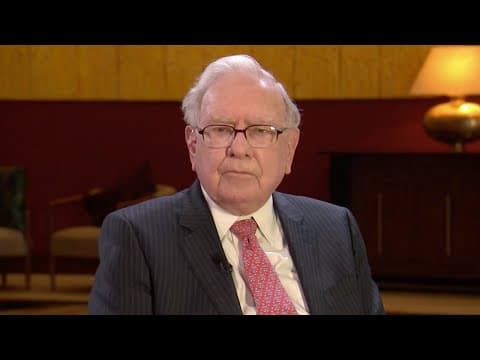
Warren Buffett On Energy, Climate Change & Education | May 4, 2015
TL;DR
Buffett argues that Clayton Homes has a strong incentive to make responsible loans because it keeps the mortgages and loses money when borrowers default. He points to lender-choice disclosures, regulatory examinations, and loan modifications as safeguards, while acknowledging that manufactured-home borrowers often face insecure employment, weaker credit, and a genuine risk of foreclosure.
Transcript
warren buffett is joining us this morning after the 50th anniversary of berkshire hathaway and warren what'd you think of the weekend it couldn't it couldn't have gone better i mean we had record crowds we had record sales we all have everybody had a lot of fun i mean i didn't see anything with smiles and uh i didn't have anything to do with it eve... Read More
Key Insights
- Clayton Homes keeps the loans it originates, according to Buffett, so a default creates losses for both the homeowner and the company. He presents this retained risk as a strong financial incentive to avoid placing customers into homes they cannot reasonably afford.
- The mortgage-origination model matters because lenders may behave differently when they retain credit risk. Buffett contrasts Clayton’s approach with originators that quickly sold or securitized loans, collected fees, and avoided direct financial losses when borrowers later failed to repay.
- Manufactured-home borrowers often have weaker credit scores and less secure employment, according to Buffett. He acknowledges that lending to this population creates a meaningful foreclosure risk, but argues that refusing every uncertain applicant would deny many people an opportunity to own a home.
- Borrowers are told to compare more than one lender, according to the loan form Buffett presents. The form lists available financing sources and requires customers to confirm that retail employees did not recommend, steer, refer, or otherwise influence their selection of lenders.
- Regulatory examinations are a central part of Buffett’s defense of Clayton Homes. He says state regulators repeatedly reviewed the company and found relatively limited penalties, presenting that record as broader evidence about operations than a small collection of disputed borrower cases.
- Individual allegations cannot be resolved solely through company-wide practices or aggregate records. Buffett says he does not know the details of the cases cited in the critical article, while maintaining that the company’s disclosures and lender-selection procedures are written clearly for borrowers.
- Loan modifications can provide relief when Clayton borrowers encounter financial trouble. Buffett says the company sometimes changes loan terms or otherwise works with customers, which aligns with its interest in preventing foreclosure because repossession and loan failure generally cause the lender significant losses.
- Privacy rules limit Clayton’s ability to publicly rebut borrower accounts with complete case histories. Buffett argues that a lender may possess relevant information about refinancing, payment problems, or assistance provided but still be prohibited from disclosing those details in response to public criticism.
Install to Summarize YouTube Videos and Get Transcripts
Explore YouTube Video Summarizer or Get YouTube Transcript Extractor
Questions & Answers
Q: Why does Clayton Homes keep the mortgages it originates?
Clayton Homes keeps its mortgages so it remains financially exposed to their performance, according to Buffett. When a borrower defaults, the homeowner can lose the property and Clayton generally loses significant money as the lender. Buffett argues that this shared downside gives the company a direct incentive to make sound loans instead of collecting an origination fee and transferring the risk to outside investors.
Q: How does retaining a mortgage affect responsible lending?
Retaining a mortgage makes the lender bear the consequences if the borrower cannot repay. Buffett says this creates what he calls a strong motivation to make good loans, because Clayton cannot simply earn a fee and leave another investor with the loss. The company’s financial interest is therefore tied to the borrower’s continued ability to make payments and remain in the home.
Q: How can Clayton Homes borrowers compare mortgage lenders?
Clayton borrowers receive a form recommending that they select more than one lender and compare offers. Buffett says the company also displays a lender board at each retail operation with available terms. Customers may consider Clayton-affiliated financing, local banks, credit unions, and other listed sources, then confirm in writing that an employee did not steer or influence their lender choice.
Q: Why do some manufactured-home loans end in foreclosure?
Buffett says manufactured-home lending often serves people with weaker credit scores, insecure employment, and limited financial resilience. If a borrower loses a job, that person may be unable to continue making payments and may lose the home. He argues that some defaults are unavoidable when credit is extended beyond only the safest applicants, but lending still gives many customers access to homeownership.
Q: Does Clayton Homes lose money when a borrower defaults?
Buffett says Clayton generally loses significant money when one of its retained loans goes bad. Although a manufactured home can be repossessed and resold, he rejects the suggestion that this normally protects the company from loss. This exposure supports his argument that Clayton has no financial interest in approving a borrower who is unlikely to maintain the required payments.
Q: How did Buffett respond to allegations of predatory lending?
Buffett defended Clayton by emphasizing that it retains loans, gives borrowers written lender choices, undergoes state regulatory examinations, and sometimes modifies troubled mortgages. He also noted that he did not know the details of the individual cases described in the critical article. His response therefore relied mainly on company-wide incentives, procedures, complaint experience, and regulatory history rather than case-specific rebuttals.
Q: Why could Buffett not answer every borrower complaint publicly?
Buffett says privacy requirements prevent Clayton from publicly identifying borrowers or disclosing everything contained in individual loan files. That limitation can make it difficult to answer a public allegation with details about refinancing, payment history, modifications, or other relevant circumstances. He uses an earlier televised lending dispute to illustrate how undisclosed facts may materially change the apparent story.
Q: When does Clayton Homes modify a troubled mortgage?
Buffett says Clayton provides modifications in some cases when borrowers get into trouble, although the transcript does not establish a universal rule or specific eligibility requirements. Because Clayton retains the mortgage and generally loses money after default, the company has a practical reason to help a viable borrower continue paying rather than proceed directly toward foreclosure and repossession.
Summary
Warren Buffett, Chairman and CEO of Berkshire Hathaway, discusses various topics including Clayton Holmes' lending practices, Berkshire Hathaway's big four investments, Watson and IBM, and the current state of the market.
Questions & Answers
Q: What did Warren Buffett think of the 50th anniversary of Berkshire Hathaway?
Buffett thinks the weekend couldn't have gone better, with record crowds, record sales, and everyone having a lot of fun.
Q: Did Buffett get a final number of how many people attended the anniversary event?
There's no way to get an exact number, but it was a record with more than 40,000 attendees.
Q: What was the most newsworthy topic from the shareholder questions?
The most newsworthy topic was Clayton Holmes and an article about predatory lending practices and exorbitant fees.
Q: Does Clayton Holmes issue predatory loans?
Buffett believes Clayton does something unusual in lending money by keeping the loan and incurring the loss if it goes bad. He explains that during the 2007-2008 housing bubble, one of the causes was lenders immediately selling the loans without any consequences if it went bad. He states that Clayton follows a responsible policy by keeping loans and having strong motivation to make good loans.
Q: Did Clayton Holmes offer a bait and switch on mortgage rates?
While Buffett doesn't know about specific cases, he emphasizes that their loan application and lender boards make it clear that buyers have a wide choice of lenders and recommends comparing offers. He also mentions that they handle modifications for those in trouble with their loan.
Q: Are the allegations against Clayton Holmes as portrayed in the article accurate?
Buffett refers to the large number of loans and mortgages involved and states that not every case can be controlled, but they have clear loan forms and lender boards. While some people may not fully understand the loan process, he believes the clarity of the loan application and lender information reduces misunderstandings.
Q: Is it true that 3% of Clayton Holmes loans go bad annually?
Buffett explains that the 3% foreclosure rate is not the same as the annual rate of loans going bad. He mentions that any foreclosure rate increases with time, but their foreclosure rates for people with poor FICO scores and less secure jobs are considerably lower than other mortgages during the housing bubble.
Q: Do homes financed by Clayton Holmes get repossessed and resold like cars?
Yes, homes can be repossessed, and when that happens, they generally lose significant money, with around 40% of the mortgage balance being the average loss.
Q: How does Warren Buffett feel about IBM's long-term prospects?
Buffett believes IBM will earn more money in ten years and have a smaller number of shares. He feels that buying IBM stock has been beneficial and that they are well positioned to solve the problems of their large customers like Wells Fargo and American Express.
Q: Why did Buffett change his approach to investing in technology companies with IBM?
While Buffett doesn't have as much technical knowledge about IBM compared to other companies, he learns about their plans and competitive products through conversations with other CEOs. He has confidence in IBM's future, especially in the hybrid cloud space, and likes their capital structure.
Q: What does Buffett think about company stock buybacks?
Buffett believes that stock buybacks can be either extremely smart or extremely dumb, depending on the price paid compared to the stock's worth. He emphasizes that buying back stock should be done when it is selling for less than its intrinsic value and when it benefits the continuing shareholders.
Q: How does Buffett view the market currently?
Buffett states that the market is on the high side of valuation compared to normal interest rates. However, if low interest rates continue for the next ten years, stocks will become extremely cheap. He acknowledges that stocks are cheaper than bonds currently, but the future value of stocks will depend on interest rate normalization.
Takeaways
Warren Buffett reflects on the success of the 50th anniversary of Berkshire Hathaway's annual meeting and the positive outcome with record crowds and sales. He addresses the accusations against Clayton Holmes regarding predatory lending practices and emphasizes their responsible lending policy of keeping loans. Buffett discusses IBM's long-term prospects and the value of stock buybacks when done intelligently. He concludes by stating that the market is currently on the high side of valuation but acknowledges the influence of interest rates on stock value.
Summary & Key Takeaways
-
Buffett describes Berkshire Hathaway’s anniversary gathering as a record event with large crowds, strong sales, and a positive atmosphere. The substantive discussion then turns to shareholder concerns about Clayton Homes, particularly allegations that its manufactured-home financing involved predatory practices, excessive charges, pressure on borrowers, and misleading changes between initially discussed and final loan terms.
-
Buffett’s main defense is that Clayton retains its mortgages instead of immediately selling or securitizing them. Because both Clayton and the homeowner lose when a loan fails, he says the company has a financial reason to evaluate borrowers responsibly. He contrasts this structure with originators who collect fees while transferring the default risk elsewhere.
-
Buffett also emphasizes borrower disclosures, competing lender options, regulatory reviews, and Clayton’s willingness to modify some troubled loans. He acknowledges that customers often have weaker credit and less secure jobs, making foreclosures unavoidable. However, he says privacy restrictions prevent the company from publicly answering individual stories with complete loan-level information and context.
Read in Other Languages (beta)
Share This Summary 📚
Summarize YouTube Videos and Get Video Transcripts with 1-Click
Try YouTube Summary with ChatGPT & Claude or YouTube Transcript Generator
Explore More Summaries from Investor Archive 📚


Summarize YouTube Videos and Get Video Transcripts with 1-Click
Try YouTube Summary with ChatGPT & Claude or YouTube Transcript Generator