10 Best YouTube Videos on How the Brain Works

Sep 15, 2026
16 min read
44 views
Last updated: September 2026
This is a ten-video sequence about how the brain changes, learns, interprets information, and produces conscious experience. It is ordered as a path rather than a ranking, and it is for anyone who wants an accessible route from neuroplasticity to the relationship between brain and mind.
The full set runs about three hours and nineteen minutes. Its enduring entries include TEDx Talks on neuroplasticity, Vsauce on isolation and short-term memory, and TED on conscious reality.
The videos on this list, in the order to watch them, are:
What is Neuroplasticity and How Does It Work? (TEDx Talks)
How Does Our Brain Count Numbers? (Vsauce)
How Does Sugar Impact Your Brain and Why Is It Addictive? (TED-Ed)
How Does Practice Improve Brain Function and Skill Mastery? (TED-Ed)
What Can We Learn from Studying the Human Brain? (MIT OpenCourseWare)
Your brain hallucinates your conscious reality | Anil Seth | TED (TED)
Total: 10 videos, 199 minutes of watch time (3 hours 19 minutes), and 195.4M combined views.
1. What is Neuroplasticity and How Does It Work?
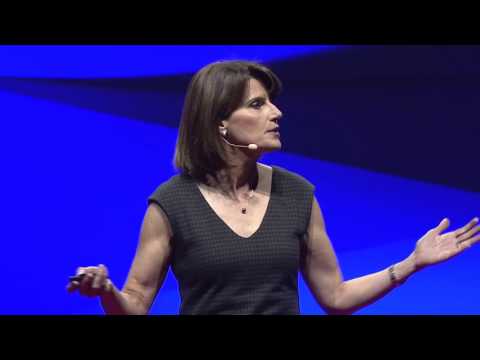
"After watching this, your brain will not be the same | Lara Boyd | TEDxVancouver" · TEDx Talks · 14 min · 39M views · 2015
In short: Neuroplasticity lets the brain adapt through chemical, structural, and functional changes driven by learning, practice, and behavior.
Start with neuroplasticity because it supplies the mechanism that the rest of the sequence keeps testing. TEDx Talks explains that the brain is not fixed: practice, learning, behavior, and recovery can reorganize it through chemical, structural, and functional change. That foundation makes the later videos on isolation, memory, food, practice, and consciousness easier to connect. The central argument is that what people repeatedly do can alter how the brain supports learning and memory.
The video separates plasticity into three forms rather than treating brain change as one vague process. Chemical changes can increase signaling, structural changes can support long-term memory, and functional changes can shift how regions operate. Stroke recovery supplies the practical case: stimulating plasticity can help the brain reorganize, compensate for damaged areas, and develop new neural pathways. The amount of practice required can be large, and the right intervention may differ because each person's brain is unique.
Key takeaways
Neuroplasticity allows the brain to change and adapt through practice and learning.
Chemical, structural, and functional changes all support the brain's plasticity.
Behavior and habits can harness plasticity for positive or negative outcomes.
Stroke recovery can be aided by stimulating reorganization and new neural pathways.
Watch on YouTube · Read the summary and Q&A
2. What Happens to Your Brain During Isolation?
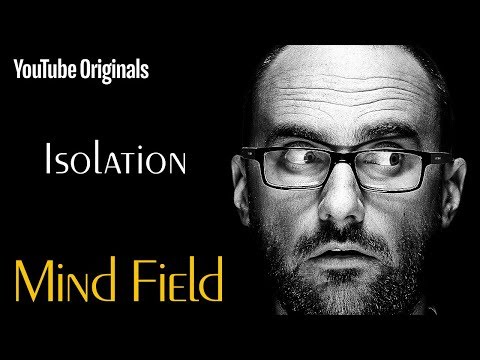
"Isolation - Mind Field (Ep 1)" · Vsauce · 35 min · 33M views · 2017
In short: A brain deprived of stimulation and social contact can lose track of time, decline cognitively, and generate hallucinations or disorientation.
After seeing how behavior can change the brain, this episode asks what happens when ordinary input disappears. Vsauce treats boredom as an emotion that pushes people away from low-stimulus situations and toward greater challenges, then examines the heavier consequences of sensory and social isolation. It argues that the brain thrives on stimulation and variety, while prolonged deprivation can disturb sleep, cognition, mood, and orientation. The sequence moves here to show that plasticity also makes the brain vulnerable to its environment.
The central experiment places a person in a 10-by-10-foot room for three days with no windows, phone, books, writing materials, or timekeeping devices. The transcript says psychologists associate fewer than three days in such a room with brain damage. Other experiments show how strongly people resist boredom, including choosing physical pain over an absence of engagement. Counting, exercising, and revisiting memories become ways to create stimulation, while disrupted circadian rhythms make time itself harder to judge.
Key takeaways
Boredom pushes people away from situations with too little stimulation.
People may choose physical pain rather than remain without engagement.
Isolation can disrupt circadian rhythms and contribute to cognitive decline.
Counting, exercise, and reflection on memories can provide self-stimulation during isolation.
Watch on YouTube · Read the summary and Q&A
3. Why Do Chimpanzees Outperform Humans in Memory?

"The Cognitive Tradeoff Hypothesis" · Vsauce · 24 min · 20M views · 2018
In short: Chimpanzees' superior short-term visual memory may reflect a cognitive tradeoff in which humans gained language while losing some detailed recall.
The third video shifts from an immediate environmental effect to a possible evolutionary tradeoff. Vsauce shows that cognition is not a single scale on which humans simply rank above other species. Chimpanzees can outperform people on short-term number-memory tasks, while humans excel at language, abstract thought, and communication. The Cognitive Tradeoff Hypothesis links those differences, proposing that the human need to use symbols and teach others for survival may have reduced a form of detailed short-term memory.
At Kyoto University's Primate Research Institute, chimpanzees were trained on computer tasks that briefly display numbers before hiding them. Participants then had to indicate where each number had appeared, and the chimpanzees recalled the locations with an ease that humans struggled to match. Professor Tetsuro Matsuzawa's hypothesis connects that result to early life on the savanna, where cooperation, imagined strategies, assigned roles, and communication across time could have favored language over precise visual recall.
Key takeaways
Chimpanzees outperform humans on tasks that require memorizing number locations.
Human language may have developed at the cost of detailed short-term memory.
The Cognitive Tradeoff Hypothesis links symbols and teaching to early human survival.
Different cognitive paths do not make one species simply superior to another.
Watch on YouTube · Read the summary and Q&A
4. How Does Our Brain Count Numbers?
"1,2,3,4,5,6,7,8,9,10,11,12,13,14,15,16,17,18,19,20,21,22,23,24,25,26,27,28,29,30,31,32,33,34,35..." · Vsauce · 9 min · 19M views · 2015
In short: The brain recognizes a few objects instantly, estimates larger groups approximately, and often represents quantity through proportions on a logarithmic scale.
Once the memory comparison establishes that different minds handle information differently, the sequence turns to a familiar human ability: counting. Vsauce argues that the brain does more than add one item after another. It can subitize a small group without explicit counting, compare larger quantities through an approximate number system, and perceive some dimensions logarithmically. These mechanisms explain why proportional differences can be easier to notice than equal absolute differences across very different scales.
The examples make those mechanisms measurable. People can usually recognize about four or fewer objects in a picture at a glance. For larger quantities, the approximate number system is about 15% accurate, making 100 versus 115 or 1,000 versus 1,150 distinguishable comparisons. Loudness also follows a logarithmic pattern: the video says producing a sound perceived as twice as loud requires ten times as many boomboxes. Jeremy Harper supplies the additive extreme by counting to one million over three months.
Key takeaways
Subitizing lets the brain recognize about four or fewer objects without counting.
The approximate number system compares larger quantities with about 15% accuracy.
The brain often represents the world logarithmically, emphasizing proportional differences.
Jeremy Harper reached one million after counting throughout his waking hours for three months.
Watch on YouTube · Read the summary and Q&A
5. How Does Food Impact Your Brain Health and Mood?
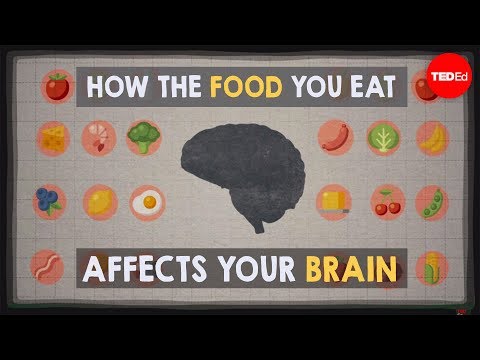
"How the food you eat affects your brain - Mia Nacamulli" · TED-Ed · 5 min · 19M views · 2016
In short: Fats, amino acids, micronutrients, and carbohydrates influence the brain's structure, energy, neurotransmitters, mood, and cognitive function.
The first four videos describe change, deprivation, memory, and numerical processing. This fifth step turns those ideas toward a daily input: food. TED-Ed explains that the brain's nutritional components do different jobs rather than contributing interchangeable calories. Fats help form and maintain cell membranes, proteins and amino acids influence neurotransmitters, micronutrients support brain function, and carbohydrates provide glucose. The argument is practical but specific: dietary balance affects energy, attention, mood, development, and cognitive health.
The video begins with a concrete thought experiment: remove all moisture from the brain and most of its remaining weight would be fats, with proteins, amino acids, micronutrients, and glucose also present. Omega-3 and omega-6 fats are important for cell membranes, while trans and saturated fats may be harmful. Fruits and vegetables supply antioxidants that protect against free radicals. Glucose is the brain's primary energy source, but high-glycemic foods can create rapid spikes and drops that affect mood and attention.
Key takeaways
Omega-3 and omega-6 fats are important for brain health and cell membranes.
Proteins and amino acids affect neurotransmitters, mood, behavior, and cognition.
Antioxidants from fruits and vegetables help protect the brain from free radicals.
High-glycemic carbohydrates can cause glucose spikes and drops that affect attention and mood.
Watch on YouTube · Read the summary and Q&A
6. How Does Sugar Impact Your Brain and Why Is It Addictive?
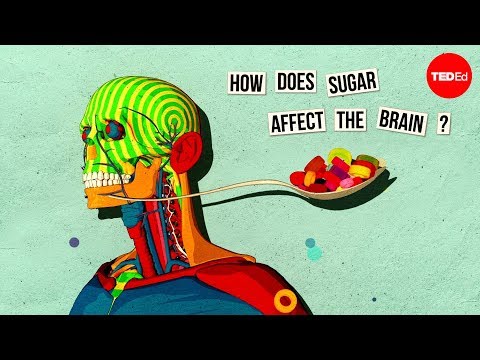
"How sugar affects the brain - Nicole Avena" · TED-Ed · 5 min · 16M views · 2014
In short: Sugar activates dopamine in the brain's reward system, so repeated overconsumption can produce cravings, increased tolerance, and loss of control.
Food establishes that nutrients can shape mood and cognition; sugar narrows the lens to one reward pathway. TED-Ed follows the signal from taste receptors on the tongue to dopamine release in the brain. That release creates pleasure and reinforces the desire to consume sugar again. The video distinguishes ordinary enjoyment from repeated overconsumption, arguing that excessive stimulation of the reward system can lead to cravings, increased tolerance, and loss of control resembling addictive behavior, though sugar's influence is milder than that of drugs.
The opening uses warm cookies, candies, cakes, and ice cream to make the craving recognizable before naming its mechanism. Sugar is not one ingredient but a class of carbohydrate molecules, including glucose, fructose, sucrose, maltose, lactose, dextrose, and starch. When those foods activate taste receptors, the resulting dopamine response reinforces future desire. A varied diet helps regulate food-related dopamine responses, while understanding this loop can help explain why repeated overconsumption is harder to control than an occasional serving.
Key takeaways
Sugar activates tongue receptors that send signals to the brain.
Dopamine release in the reward system reinforces the desire for more sugar.
Repeated overconsumption can cause cravings, increased tolerance, and loss of control.
Sugar affects dopamine in a way that resembles drugs, but at a milder rate.
Watch on YouTube · Read the summary and Q&A
7. How Does Practice Improve Brain Function and Skill Mastery?
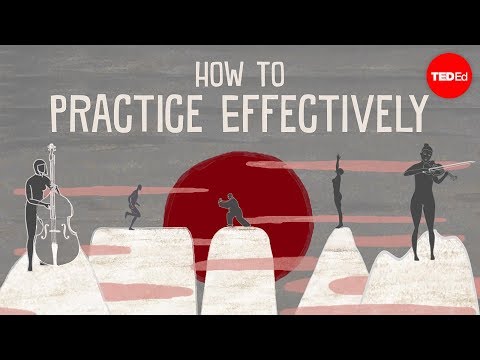
"How to practice effectively...for just about anything - Annie Bosler and Don Greene" · TED-Ed · 5 min · 13M views · 2017
In short: Focused repetition increases myelin around neural pathways, helping movements become faster, easier, and more efficient.
After two videos about what enters the brain through diet and reward, the sequence returns to deliberate behavior. This TED-Ed lesson gives the opening account of neuroplasticity a specific mechanism for skill learning. Practice repeats an action with the goal of improvement, and the resulting change occurs in neural pathways rather than in a muscle's memory. The argument also separates mere hours from effective work: mastery depends on the quality, focus, and difficulty of practice as well as its quantity.
The brain contains grey matter that processes information and white matter composed of fatty tissue and nerve fibers. Practice increases layers of myelin around axons in that white matter, improving insulation and allowing signals to travel more efficiently. That process supports skills such as performing a pirouette, playing an instrument, or throwing a baseball. The lesson recommends minimizing distractions, starting slowly, increasing speed gradually, using frequent repetitions with breaks, targeting weaknesses, and mentally rehearsing physical motions in vivid detail.
Key takeaways
Practice increases myelin in white matter and improves neural efficiency.
Improved performance comes from myelinated neural pathways, not memory inside muscles.
Both the quantity and quality of practice contribute to mastery.
Focus, gradual speed, repeated work, breaks, and mental rehearsal make practice more effective.
Watch on YouTube · Read the summary and Q&A
8. What Happens When Your Brain Is Split in Two?

"You Are Two" · CGP Grey · 5 min · 13M views · 2016
In short: Separating the brain's hemispheres reveals that each can process information independently even when only the left can explain actions in speech.
Practice shows how pathways become more efficient; this video asks what becomes visible when a major connection is cut. CGP Grey describes the brain as two hemispheres that divide visual and motor work, with each side controlling the opposite side of the body. Normally they coordinate through a wire of nerves, but surgeries once used to treat epilepsy disconnected them. The resulting behavior challenges the idea of one simple decision-maker and prepares the sequence for its final questions about mind, self, and consciousness.
Split-brain patients could appear unchanged while tests exposed different abilities in each hemisphere. The left hemisphere contains the speech center and dominates verbal reports. The right cannot speak, yet it can understand certain stimuli, complete complex tasks, and control actions. When the right initiates an action, the speaking left may supply a plausible but incorrect explanation afterward. The example shows why a fluent account of a choice does not necessarily reveal where that choice began or how the whole brain produced it.
Key takeaways
The left and right hemispheres divide visual, motor, and other functions.
A nerve connection normally lets the two hemispheres coordinate their work.
The left hemisphere dominates speech after split-brain surgery.
The mute right hemisphere can still understand stimuli and perform complex tasks.
Watch on YouTube · Read the summary and Q&A
9. What Can We Learn from Studying the Human Brain?

"1. Introduction to the Human Brain" · MIT OpenCourseWare · 80 min · 11M views · 2021
In short: Studying how mental functions are implemented in the brain connects physical mechanisms to perception, cognition, identity, and the limits of knowledge.
After a series of focused cases, MIT OpenCourseWare broadens the frame. This introduction asks how the physical brain implements the mind and organizes the mental functions already encountered across the list. It covers perception, recognition, language, navigation, numerical cognition, music, and theory of mind. Its place near the end turns separate examples into a field of study, arguing that examining the organ responsible for consciousness and mental processes also helps people understand themselves and evaluate the limits of human knowledge.
The course combines cognitive science with measurements of brain activity. Psychophysics and perceptual illusions test how mental functions behave, while functional MRI helps researchers study their brain basis. More specific topics include color, shape, motion, faces, places, bodies, and language understanding. The field is described as advancing too rapidly for a single textbook, so students read current research papers and reviews instead. Advances in deep neural networks approach human-level performance, but the lesson says the human brain still has much to teach.
Key takeaways
The course studies how perception, language, cognition, and other mental functions are implemented in the brain.
Psychophysics, perceptual illusions, and functional MRI offer different ways to investigate brain function.
Studying the brain helps explain consciousness, identity, and the limits of human knowledge.
Current papers and review articles replace a textbook because the field is rapidly advancing.
Watch on YouTube · Read the summary and Q&A
10. Your brain hallucinates your conscious reality | Anil Seth | TED
"undefined" · TED · 17 min · 11M views · 2017
In short: Conscious reality is the brain's controlled hallucination, built by combining sensory evidence with predictions about the world and the body.
The sequence closes with consciousness because it gathers the earlier themes of plasticity, input, perception, and divided processing into a theory of experience. TED presents the brain as a prediction engine: it combines incoming sensory signals with prior expectations to generate what a person perceives. The same process constructs the experience of being a unified self by estimating what is and is not the body. Consciousness is therefore linked to being alive and experiencing the world, not treated as another name for intelligence.
Anil Seth begins with anesthesia, describing total oblivion during an operation and asking how conscious experience returns. The explanation points to the combined activity of billions of neurons and to interoceptive signals from the body's organs, which help the brain regulate the body and sustain survival. Understanding these mechanisms could let psychiatry and neurology address underlying causes rather than only symptoms of conditions such as depression and schizophrenia. The video also considers artificial consciousness unlikely because consciousness is tied to biological life, not intelligence alone.
Key takeaways
The brain combines sensory signals with prior expectations to predict conscious reality.
The experience of a unified self depends on the brain's estimate of the body.
Consciousness and intelligence are different, with consciousness tied more closely to being alive.
Understanding consciousness could help psychiatry and neurology target underlying mechanisms.
Watch on YouTube · Read the summary and Q&A
Frequently asked questions
What are the best YouTube videos on how the brain works?
Three useful starting points are “What is Neuroplasticity and How Does It Work?” from TEDx Talks, “What Happens to Your Brain During Isolation?” from Vsauce, and “Your brain hallucinates your conscious reality | Anil Seth | TED” from TED. Together they cover how the brain changes, what deprivation does to it, and how prediction shapes conscious experience.
How long does it take to watch all ten videos?
The full sequence takes 199 minutes, or 3 hours 19 minutes. The individual videos range from four five-minute explanations by TED-Ed and CGP Grey to the 80-minute MIT OpenCourseWare introduction. That spread makes it possible to watch the short lessons separately and save the course-length overview for a longer session.
What is neuroplasticity, and how does it help learning?
Neuroplasticity is the brain's ability to change and adapt through learning, practice, and behavior. It involves chemical changes in signaling, structural changes that support longer-term memory, and functional changes in how brain regions operate. Repetition and challenge can strengthen learning, although the needed dose of practice is large and can differ from one person to another.
Why can chimpanzees outperform humans in short-term memory?
In computer tests, chimpanzees recalled the locations of briefly displayed numbers more easily than humans. The Cognitive Tradeoff Hypothesis proposes that humans exchanged some detailed short-term memory for language, abstract thought, and communication. Early survival may have favored symbols, teaching, cooperation, imagined strategies, and the ability to refer to things across time.
Why can repeated sugar consumption become hard to control?
Sugar activates taste receptors and triggers dopamine release in the brain's reward system. That pleasurable response reinforces the desire to consume sugar again. Occasional consumption is unlikely to cause addiction, but repeated overconsumption can overstimulate the system and contribute to cravings, increased tolerance, and loss of control resembling addictive behavior.
What do split-brain patients reveal about decision-making?
After the hemispheres are disconnected, the speaking left hemisphere may give a plausible but incorrect reason for an action initiated by the mute right hemisphere. The right can still understand some stimuli and act without verbal communication. This suggests that a person's spoken explanation can be a retrospective justification rather than a complete account of how a decision began.
How does the brain turn practice into better performance?
Practice increases layers of myelin around axons in the brain's white matter. Better insulation makes neural pathways faster and more efficient, producing the effect commonly called muscle memory even though the change is in the nervous system. Effective practice also depends on focus, work on weaknesses, gradual increases in speed, repetition with breaks, and mental rehearsal.
Which video should I watch first?
Start with “What is Neuroplasticity and How Does It Work?” because it explains the brain's ability to reorganize through chemical, structural, and functional change. That mechanism gives you a foundation for the later videos on the effects of isolation, the development of memory and language, nutrition, repeated practice, and conscious experience.
Are the older videos still worth watching?
Yes. The oldest entries, TED-Ed on sugar from 2014 and TEDx Talks on neuroplasticity plus Vsauce on counting from 2015, explain the same core mechanisms that organize this sequence. Their accounts of dopamine, plasticity, subitizing, approximate number sense, and logarithmic perception still provide the conceptual steps used by the newer videos here.
How to use this list
Watch the videos in order: begin with how the brain changes, see what happens when stimulation disappears, compare memory across species, and then move through number sense, nutrition, reward, and practice before turning to divided hemispheres, research methods, and consciousness. If you only have twenty minutes, start with TEDx Talks on neuroplasticity, since its 14-minute account supplies the mechanism behind the sequence. If you want the single video that gives the broadest course-level map, choose MIT OpenCourseWare's 80-minute introduction to the human brain.
Related lists
💡 Want summaries and transcripts for any YouTube video? Try YouTube Summary with ChatGPT & Claude.