Your brain hallucinates your conscious reality | Anil Seth | TED
TL;DR
Consciousness is a controlled hallucination generated by the brain, and understanding its mechanisms can revolutionize psychiatry, challenge the idea of uploading consciousness to machines, and deepen our connection with the natural world.
Transcript
Just over a year ago, for the third time in my life, I ceased to exist. I was having a small operation, and my brain was filling with anesthetic. I remember a sense of detachment and falling apart and a coldness. And then I was back, drowsy and disoriented, but definitely there. Now, when you wake from a deep sleep, you might feel confused about th... Read More
Key Insights
- 🔮 Anesthesia induces a state of total oblivion, raising the question of how consciousness arises and what it means for our experiences of the world and ourselves.
- 🧠 Consciousness is generated by the combined activity of billions of neurons in our brains, and it is unique to each individual.
- 🧩 Consciousness and intelligence are not the same thing - consciousness is more closely tied to the nature of being alive and experiencing the world.
- 🔬 In the past 25 years, there has been extensive scientific research on consciousness, with multidisciplinary teams working to understand its mechanisms.
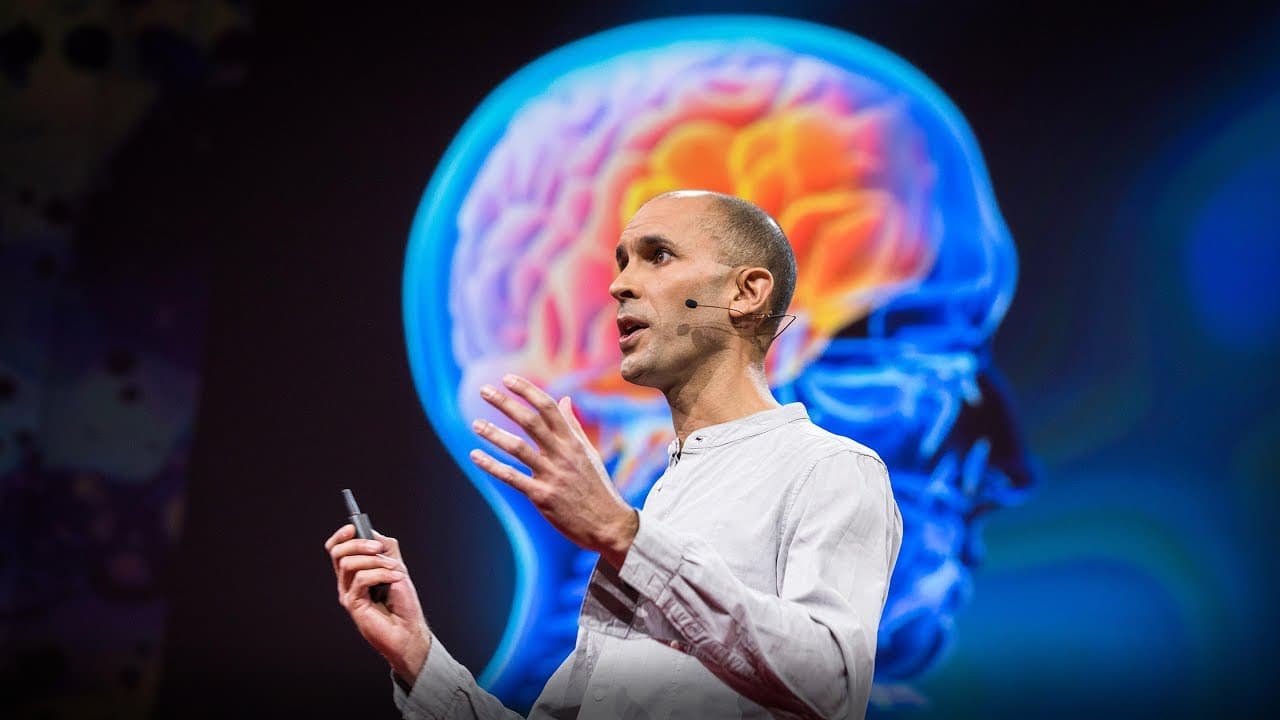
- 🌍 The brain acts as a prediction engine, actively generating our perception of the world based on prior expectations and sensory signals, which suggests that perception is a controlled hallucination.
- 🌈 Our sense of self is also a controlled hallucination, as the brain constructs our experience of being a unified person, which can vary and be altered.
- 🖐️ Our experiences of having a body and perceiving it from within are grounded in the brain's best guesses and the interoceptive signals from our organs, highlighting the importance of maintaining bodily regulation and survival.
- 🌌 Consciousness is not limited to human beings and can vary across species, and our understanding of consciousness should further our appreciation of the wonders of the natural world.
Install to Summarize YouTube Videos and Get Transcripts
Explore YouTube Video Summarizer or Get YouTube Transcript Extractor
Questions & Answers
Q: How does the brain's prediction mechanism shape our perception of the world and ourselves?
The brain predicts what's out there in the world by combining sensory signals with prior expectations, resulting in our perception being a controlled hallucination. Similarly, our perception of ourselves is also a controlled hallucination based on the brain's best guess about what is and what is not our body.
Q: What are the implications of understanding consciousness in terms of mental health?
Understanding the mechanisms of consciousness can lead to significant advancements in psychiatry and neurology as it allows us to target the underlying causes rather than just treating the symptoms of conditions like depression and schizophrenia.
Q: Can consciousness be replicated in artificial intelligence?
According to the research discussed, consciousness is not solely dependent on intelligence but is deeply connected to our biological nature as living organisms. Therefore, replicating consciousness in artificial intelligence is considered unlikely.
Q: How does our perception of ourselves extend beyond our physical bodies?
Our perception of ourselves is not limited to our physical bodies but includes experiences of perceiving the world from a first-person point of view and intentions to act. These aspects of selfhood can come apart and give rise to various experiences of being a self.
Q: How does our perception of the internal state of our bodies play a role in consciousness?
Sensory signals from our internal organs contribute to our perception of the internal state of our bodies, known as interoception. This perception is critical for regulating and maintaining physiological variables required for survival.
Q: What are the similarities and differences between perception of the world and perception of ourselves?
Both our perception of the world and ourselves are controlled hallucinations generated by the brain. However, our perception of the world relies more on perception of external objects as causes of sensations, while our perception of ourselves focuses on control and regulation of our internal state.
Q: What are the implications of the understanding that our consciousness is just one possible way of being conscious?
Recognizing that our consciousness is just one variant among many highlights the diversity of conscious experiences. It also deepens our appreciation for the natural world and our interconnectedness with other living creatures. The understanding that our individual self and worlds are shaped by shared biological mechanisms can foster a sense of wonder and belonging.
Summary & Key Takeaways
-
Consciousness is one of the greatest mysteries in science and philosophy, and understanding how it happens is crucial since it is what defines our individual experiences and existence.
-
The brain acts as a prediction engine, generating our perception of the world by combining sensory signals with prior expectations or beliefs about the world.
-
Our conscious experience of being a self is also a controlled hallucination and depends on the brain's best guess about what is and what is not our body.
Read in Other Languages (beta)
Share This Summary 📚
Summarize YouTube Videos and Get Video Transcripts with 1-Click
Try YouTube Summary with ChatGPT & Claude or YouTube Transcript Generator
Explore More Summaries from TED 📚


Summarize YouTube Videos and Get Video Transcripts with 1-Click
Try YouTube Summary with ChatGPT & Claude or YouTube Transcript Generator