Are China and the US doomed to conflict? | Kevin Rudd
TL;DR
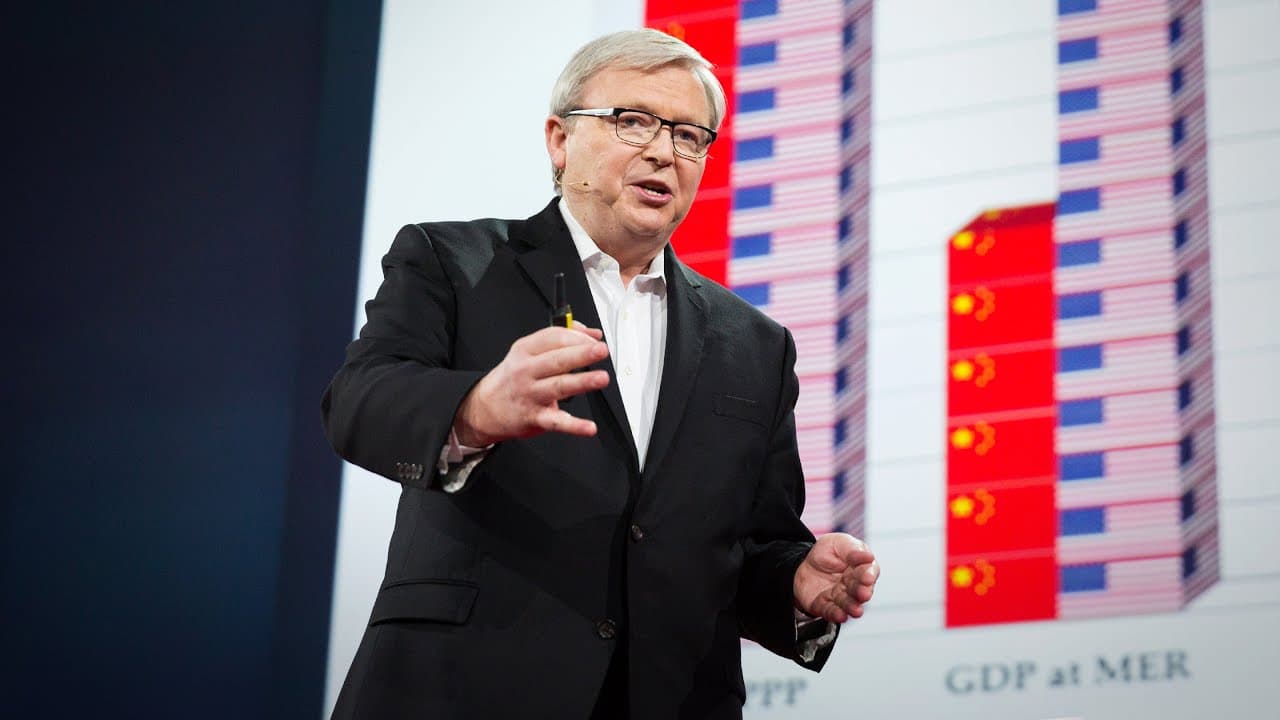
China and the US are not necessarily doomed to conflict: Kevin Rudd argues that constructive realism and a common purpose can support a peaceful, mutually prosperous future. China is already the largest trading, exporting, and manufacturing nation, while its growing power raises profound questions of war and peace. Read on to understand the tensions, global stakes, and areas where cooperation remains possible.
Transcript
G'day, my name's Kevin. I'm from Australia. I'm here to help. (Laughter) Tonight, I want to talk about a tale of two cities. One of those cities is called Washington, and the other is called Beijing. Because how these two capitals shape their future and the future of the United States and the future of China doesn't just affect those two countries,... Read More
Key Insights
- 🌍 The future of the United States and China affects all of us in various ways, including the environment, job market, political systems, and global peace.
- 🇨🇳 China has become a major global power and will likely surpass the US as the largest economy in the world in the coming years.
- 🇺🇸 If China becomes the world's largest economy, it will be the first time in centuries that a non-English speaking, non-Western, non-liberal democratic country holds this position.
- 🌍 The rise of China and its potential clash with the US creates a Thucydides Trap, where the fear and competition between rising and established powers can lead to war.
- 🇨🇳 China feels historically humiliated by the West and believes that the US wishes to undermine its political system.
- 🇺🇸 The US views China as a strategic rival that cheats on intellectual property rights and poses a threat to global order.
- 🤝 Constructive realism and a common purpose can form the basis of a peaceful and mutually prosperous future between the US and China.
- 🌍 Bridging the gap between the two countries requires both practical contributions from policymakers and individuals engaging in cross-cultural conversations.
Install to Summarize YouTube Videos and Get Transcripts
Explore YouTube Video Summarizer or Get YouTube Transcript Extractor
Questions & Answers
Q: Are China and the US doomed to conflict?
Kevin Rudd argues that conflict is not unavoidable. He proposes constructive realism and a common purpose as the basis for managing disagreements diplomatically and building a peaceful, mutually prosperous future.
Q: What is constructive realism in US-China relations?
Constructive realism means acknowledging genuine disagreements between China and the United States and managing them through diplomatic means to avoid conflict. It also calls for constructive engagement in areas where the countries can cooperate, including climate change and regional institutions in Asia.
Q: Why do US-China relations matter to the rest of the world?
The relationship affects the air people breathe, the water they drink, ocean quality, jobs, languages, and political systems. Rudd says it also bears directly on the great questions of war and peace.
Q: How significant is China’s economic rise?
China is projected to become the world’s largest economy over the decade ahead, whether measured by purchasing power parity or market exchange rates. It is already the largest trading nation, exporting nation, and manufacturing nation.
Q: What would be historically unusual about China becoming the largest economy?
It would be the first time since George III was on the throne of England that the world’s largest economy was a non-English-speaking country. It would also be a non-Western and non-liberal-democratic country.
Q: How do China and the United States view each other?
China feels historically humiliated by the West and believes the United States wants to undermine its political system. The United States views China as a strategic rival, raises concerns about intellectual property rights, and fears its effect on the global order.
Q: What global environmental role does China play?
China is the world’s biggest emitter of carbon, with the United States second. Because the two countries also influence water, oceans, and other shared concerns, their relationship has consequences beyond their borders.
Q: How can China and the United States build a common future?
They can realistically identify their disagreements, manage those disputes diplomatically, and develop cooperation where their interests overlap. Rudd highlights climate change, regional institutions in Asia, political will, and cross-cultural conversation as parts of that effort.
Summary
In this video, Kevin Rudd discusses the implications of the future relationship between the United States and China. He talks about how these two countries shape their futures and how it affects the rest of the world. He highlights the rise of China as a global power and the need for both countries to find a common ground for peace and prosperity.
Questions & Answers
Q: What did Napoleon predict about China?
Napoleon predicted that when China awakes, the world will shake. He recognized China's potential to become a major global power.
Q: How does China's rise as a global power affect the world?
China's rise as a global power affects the world in many ways. It impacts the economy, environment, politics, and even the languages we speak. It has the potential to change the global order and the balance of power.
Q: What is the significance of China becoming the world's largest economy?
If China becomes the world's largest economy, it will be the first time a non-English speaking, non-Western, and non-liberal democratic country holds this position. This shift in power will have far-reaching implications for global politics and the future of the world.
Q: How is China viewed by the West?
China has a long history of feeling humiliated by the West. It believes that the West has treated it unfairly and does not accept the legitimacy of its political system. There is also a perception that the West is arrogant and hypocritical.
Q: How does the US view China?
The US believes that China cheats on intellectual property rights and engages in cyberattacks. It also sees China's political system as fundamentally flawed and fears that China will establish a sphere of influence in the Asia-Pacific region and seek to change the rules of the global order.
Q: Is war between the US and China inevitable?
There is a concept called the Thucydides Trap, which suggests that war is inevitable when a rising power challenges an established power. History shows that in many cases, conflicts have arisen in such situations. However, it is possible to avoid war through constructive engagement and conflict management.
Q: How can the US and China forge a common future?
To forge a common future, the US and China need to be realistic about their differences and manage them through diplomatic means. They should also focus on areas of common interest and work together on issues such as climate change. Building regional and global institutions for cooperation is also crucial.
Q: How can individuals contribute to improving US-China relations?
Individuals can contribute to improving US-China relations by engaging in conversations with people from both countries and trying to understand their perspectives. Small actions like these can have a significant impact on building bridges and fostering mutual understanding.
Q: What is the importance of addressing both the head and heart in improving relations?
While policy frameworks and diplomacy are essential, addressing the emotional and historical baggage is equally important. By acknowledging past grievances and showing empathy, it is possible to create a new beginning and reimagine a future of mutual respect and collaboration.
Q: What is the dream for all humankind?
Rudd suggests that it is time to think about a dream for all humankind, where people from different countries and backgrounds come together for a common purpose. By doing so, we can change the way we think about each other and work towards a future driven by peace and prosperity.
Takeaways
The relationship between the United States and China is a crucial one that will shape the future of the world. It is important to understand the historical and emotional baggage that both countries carry and address them with empathy. Constructive engagement, conflict management, and cooperation on common issues are key to forging a peaceful and prosperous future. Individually, we can contribute to improving relations by engaging in conversations and seeking to understand different perspectives. Ultimately, by envisioning a dream for all humankind, we can work towards a world where peace and collaboration prevail.
Summary & Key Takeaways
-
The speaker discusses the relationship between the US and China and how it affects the rest of the world
-
He highlights the growing power of China and the potential challenges that may arise as a result
-
He proposes a framework of constructive realism for a common purpose as a way to create a peaceful and mutually prosperous future between the two countries.
Read in Other Languages (beta)
Share This Summary 📚
Summarize YouTube Videos and Get Video Transcripts with 1-Click
Try YouTube Summary with ChatGPT & Claude or YouTube Transcript Generator
Explore More Summaries from TED 📚



Summarize YouTube Videos and Get Video Transcripts with 1-Click
Try YouTube Summary with ChatGPT & Claude or YouTube Transcript Generator