10 Best Vsauce Videos of All Time

Sep 15, 2026
16 min read
41 views
Last updated: September 2026
This is a ten-video Vsauce sequence, ordered as a path rather than a ranking. It is for curious viewers who want to move from experiments on belief to mathematical paradoxes, questions about Earth and space, and the limits of perception.
The full set runs just under three hours. It brings together enduring Vsauce videos such as "The Banach–Tarski Paradox," "What If Everyone JUMPED At Once?," and "Is Your Red The Same as My Red?"
The videos on this list, in the order to watch them, are:
Is the Earth Really Flat or Round? (Vsauce)
What Are Coincidences and Why Do They Fascinate Us? (Vsauce)
How Does Earth Move Through Space? (Vsauce)
Total: 10 videos, 174 minutes of watch time (2 hours 54 minutes), and 395.2M combined views.
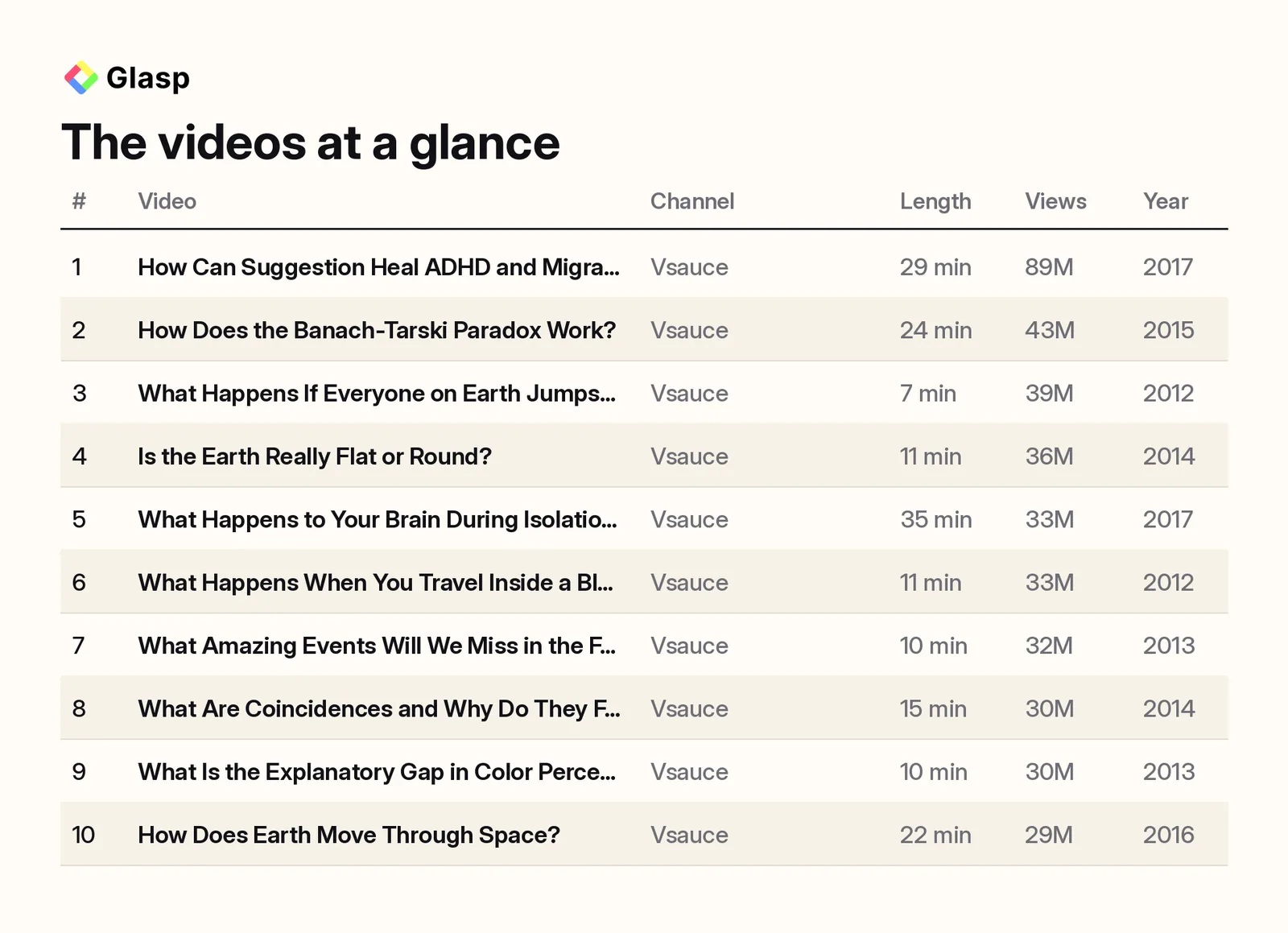
1. How Can Suggestion Heal ADHD and Migraines?

"The Power of Suggestion" · Vsauce · 29 min · 89M views · 2017
In short: Belief in a treatment can activate real healing responses even when the apparent medical technology is not operating.
Start here because the sequence first asks how strongly belief can shape a physical result. Vsauce follows research at McGill University that used a deactivated MRI scanner to study suggestion and placebo effects in children and adults. The treatment did not come from the machine itself. It came from participants' belief that the scanner would help, showing how expectation can influence anxiety, concentration, migraines, ADHD, and skin conditions.
The setting made that belief unusually concrete. McGill has more than 40,000 students from 150 countries, 1,700 professors, 300 programs of study, and 12 Nobel Prize winners. Within that scientific environment, children were told the scanner could aid their healing while their parents knew it was inactive. Participants reported less anxiety and better confidence, and symptoms including skin picking, migraines, and ADHD decreased.
Key takeaways
McGill researchers used a deactivated MRI machine to test suggestion and placebo effects on ADHD, migraines, and skin disorders.
The color, form, and delivery method of a placebo can change how effective it is.
Children in the study reported greater confidence and less anxiety, alongside reductions in several symptoms.
Cultural belief in the power of neuroscience can strengthen the effect of suggestion.
Watch on YouTube · Read the summary and Q&A
2. How Does the Banach-Tarski Paradox Work?
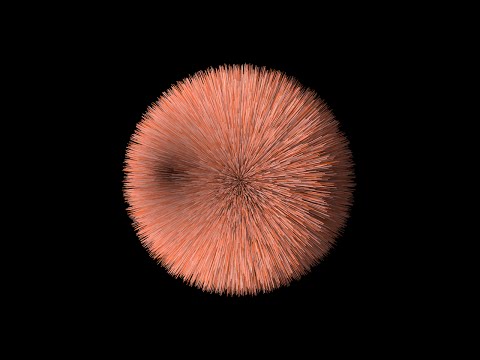
"The Banach–Tarski Paradox" · Vsauce · 24 min · 43M views · 2015
In short: In mathematics, an object can be divided into finitely many pieces and rearranged into two copies, but physical constraints prevent the result in reality.
After seeing belief produce a real effect around an inactive machine, the sequence turns to an idea that is valid in mathematics but cannot be reproduced physically. The Banach-Tarski paradox says that an object can be separated into pieces and rearranged into two identical copies of the original. Its dependence on infinity challenges ordinary assumptions about objects and opens the larger question of how mathematical truth relates to physical reality.
Vsauce begins with a four-by-eight chocolate bar that appears to yield an extra square after it is cut and rearranged. That demonstration is an illusion: the animation hides small changes in the height of the squares. Banach-Tarski is different because its result is mathematically valid, yet real objects cannot be measured or divided with infinite detail, and completing such a construction would run into limits of measurement and time.
Key takeaways
The chocolate-bar demonstration only appears to create extra chocolate because the rearrangement conceals changes in the pieces' height.
Infinity is a concept describing the size of something unending, not an ordinary number.
Countable infinity, represented by natural numbers, is smaller than the uncountable infinity represented by real numbers.
Banach-Tarski is mathematically valid, but physical limits make a real-world construction impossible.
Watch on YouTube · Read the summary and Q&A
3. What Happens If Everyone on Earth Jumps at Once?
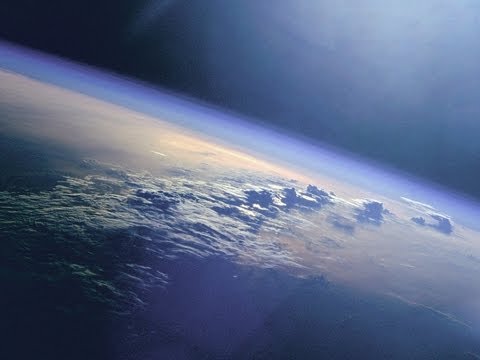
"What If Everyone JUMPED At Once?" · Vsauce · 7 min · 39M views · 2012
In short: A simultaneous jump by everyone on Earth would barely move the planet and would not meaningfully change its rotation or cause an earthquake.
The third video brings the gap between mathematical possibility and physical scale back to Earth. It asks whether coordinating every person into one jump could affect the planet's rotation, position, or seismic activity. Redistributing mass can alter a rotating object's speed, as an ice skater demonstrates, but humanity is too small relative to Earth for the change to be noticeable. The question becomes a compact lesson in scale.
Earth rotates at more than 1,000 miles per hour at the equator, yet the combined jump would move it only one-hundredth the width of a hydrogen atom before it returned to its original position. It would not produce an earthquake; doing so would require millions more people than currently live on Earth. Even a jump by everyone in China would release energy equivalent to 500 tons of TNT, still minuscule beside Earth's mass.
Key takeaways
Moving mass closer to Earth's center can affect its rotation, but the result would be too small to notice.
A jump by the entire human population would shift Earth by only one-hundredth the width of a hydrogen atom.
The collective jump would not create significant seismic activity or meaningfully alter Earth's rotation.
Causing an earthquake through a collective jump would require millions more people than currently live on Earth.
Watch on YouTube · Read the summary and Q&A
4. Is the Earth Really Flat or Round?
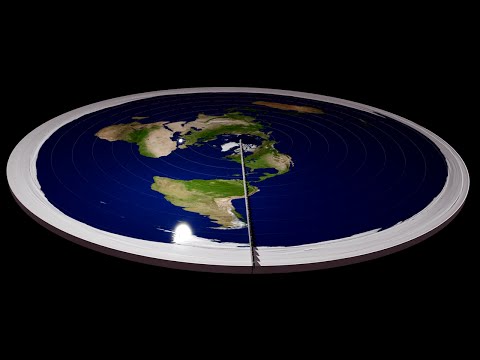
"Is Earth Actually Flat?" · Vsauce · 11 min · 36M views · 2014
In short: Evidence from gravity, eclipses, time zones, bridges, and historical measurement supports a round Earth, while flat-Earth claims require ad hoc explanations.
Once the previous video establishes Earth's overwhelming scale, this one asks how its shape can be known without relying on a view from space. Vsauce starts with the true but misleading fact that Kansas is flatter than a pancake, then tests what gravity and daily experience would be like on a disk-shaped world. The argument shifts the sequence from a hypothetical calculation to the evidence that distinguishes an explanation from a patchwork of exceptions.
On a flat disk, gravity would pull increasingly toward the center as someone approached the edge, making travel feel like climbing a steeper hill rather than creating a place to fall off. On the actual Earth, the Verrazano-Narrows Bridge's towers are farther apart at the top because of the planet's curvature. Eratosthenes measured Earth's roundness long before space travel, while circumnavigation, time zones, and Earth's round eclipse shadow add further evidence.
Key takeaways
Measurements show that Kansas is flatter than a pancake, but that comparison does not make Earth flat.
Gravity on a disk Earth would pull people toward the center and make movement toward the edge feel increasingly uphill.
The towers of the Verrazano-Narrows Bridge are farther apart at the top because Earth curves beneath them.
Circumnavigation, time zones, and Earth's round shadow during a lunar eclipse contradict a flat-Earth model.
Watch on YouTube · Read the summary and Q&A
5. What Happens to Your Brain During Isolation?
"Isolation - Mind Field (Ep 1)" · Vsauce · 35 min · 33M views · 2017
In short: Removing stimulation and social contact disrupts time, thought, and mental health because the brain continually seeks information and variety.
The list now moves from evidence about the shared world to an experiment on the mind experiencing it. Vsauce examines what happens when external cues, social contact, and sources of stimulation disappear. Boredom pushes people away from low-stimulus situations, sometimes so strongly that they choose physical pain instead. Prolonged isolation can disturb circadian rhythms, reduce cognitive ability, and produce hallucinations, disorientation, loneliness, and depression.
The central experiment places Michael in a ten-by-ten-foot room for three days, with no timekeeping devices, phone, books, writing materials, or windows. Psychologists in the video say that fewer than three days under such conditions can lead to brain damage. People in isolation try to supply their own stimulation by counting, exercising, or revisiting memories, but harsh forms such as solitary confinement can still leave lasting mental-health effects.
Key takeaways
Boredom acts as an emotion that drives people away from situations with too little stimulation.
Some people choose physical pain rather than remain with nothing engaging to do.
Isolation can disrupt circadian rhythms and contribute to hallucinations, disorientation, and cognitive decline.
Counting, exercise, and reflection on memories are ways people create stimulation when outside input disappears.
Watch on YouTube · Read the summary and Q&A
6. What Happens When You Travel Inside a Black Hole?
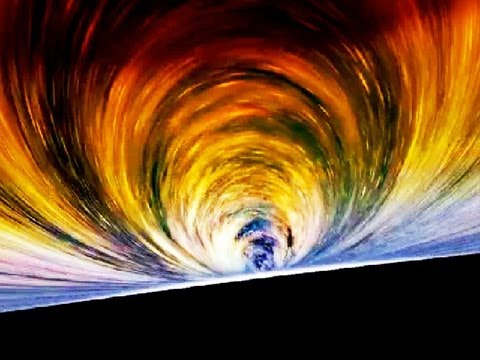
"Travel INSIDE a Black Hole" · Vsauce · 11 min · 33M views · 2012
In short: Crossing toward a black hole's event horizon distorts light and time before extreme gravity stretches matter toward a singularity.
After isolation removes ordinary sensory input, the sequence travels somewhere ordinary perception and current physics both reach their limits. Vsauce explains that anything could become a black hole if compressed within its Schwarzschild radius. A black hole's gravitational field bends light, and the distortions grow as a traveler approaches it. The event horizon is the point of no return, beyond which light cannot escape and an outside observer would see the traveler appear frozen.
The journey ends through a difference in gravitational pull across the body. As the traveler moves closer to the singularity, the stronger pull on the nearer parts stretches and tears the body apart in spaghettification. The video uses Mount Everest and the entire Earth as examples of things that could become black holes if compressed far enough. It also notes that a spinning black hole might theoretically create a wormhole, though that possibility remains unproven.
Key takeaways
Any object can mathematically become a black hole if its mass is compressed into a small enough space.
A black hole bends light through gravitational lensing, distorting the appearance of objects behind it.
At the event horizon, light cannot escape and an outside observer would see an infalling traveler freeze.
Increasing differences in gravity stretch an infalling body through spaghettification before it reaches the singularity.
Watch on YouTube · Read the summary and Q&A
7. What Amazing Events Will We Miss in the Future?
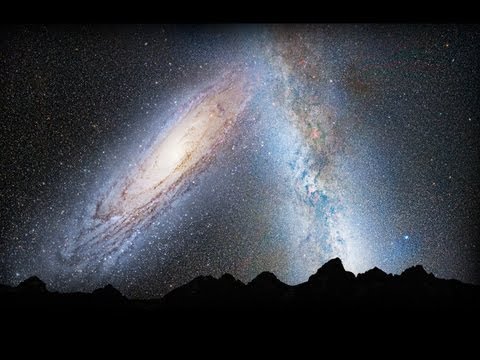
"What Will We Miss?" · Vsauce · 10 min · 32M views · 2013
In short: Human lifetimes exclude us from distant events, while future observers will also lose natural sights and landmarks visible today.
The black-hole journey stretches physical intuition; this video stretches time. Vsauce catalogs events too distant for today's viewers to witness and things that later generations will no longer see. The sequence widens from a single person's fate to the life spans of monuments, landscapes, stars, and galaxies. Its central point is reciprocal: we miss future events, but the future also misses experiences that belong to our present.
The time pyramid in Wemding, Germany, is scheduled for completion in 3183, and the Chernobyl Exclusion Zone may remain unsafe until 22,000. Niagara Falls may erode and dry up by 52,000, Mount Rushmore's faces may disappear in 7 million years, and Saturn's rings may vanish within 50 to 100 million years. In 3.75 billion years, the Milky Way and Andromeda will collide and form Milkdromeda.
Key takeaways
The final block of the time pyramid in Wemding is expected to be placed in 3183.
Supernovae such as Betelgeuse and Eta Carinae could appear brighter than the full moon and remain visible by day.
The Moon's movement away from Earth will eventually make total solar eclipses impossible for future observers.
The Milky Way and Andromeda are expected to merge into a new galaxy called Milkdromeda in 3.75 billion years.
Watch on YouTube · Read the summary and Q&A
8. What Are Coincidences and Why Do They Fascinate Us?
"Spooky Coincidences?" · Vsauce · 15 min · 30M views · 2014
In short: Coincidences feel meaningful because pattern-seeking brains and cognitive biases make statistically likely surprises seem extraordinary.
After surveying events across billions of years, the list returns to the mind that decides which events matter. Vsauce argues that coincidences become striking because people naturally search for patterns and hidden connections. Selection bias and confirmation bias then give special weight to matches while less memorable events disappear from attention. With enough moments and possible combinations in a life, Littlewood's law makes unusual experiences more likely than intuition suggests.
One example compares the digits in the speed of light with the latitude of the Great Pyramid of Giza, a numerical match that can suggest a larger power at work. The same pattern-seeking tendency makes reversed speech sound as if it contains hidden messages and leads people to see faces in random noise. Face detection can aid survival, but the wider habit also makes chance alignments feel designed when they are not.
Key takeaways
Human brains naturally look for patterns and connections even when no meaningful link exists.
Selection bias and confirmation bias make some coincidences seem more important than probability alone supports.
Reverse speech can appear to contain hidden messages because the brain tries to organize unfamiliar sounds.
The large number of possible events in a life makes unusual coincidences statistically likely to occur.
Watch on YouTube · Read the summary and Q&A
9. What Is the Explanatory Gap in Color Perception?
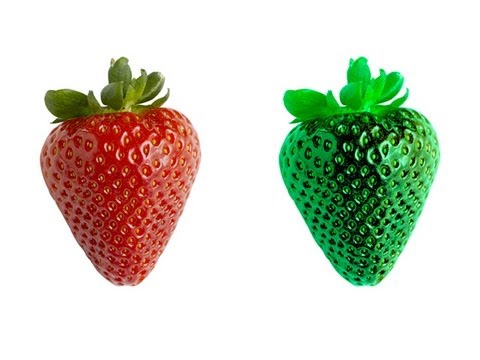
"Is Your Red The Same as My Red?" · Vsauce · 10 min · 30M views · 2013
In short: Color is an experience created by the brain, and language cannot establish whether two people experience the same color in the same way.
Coincidences show the brain imposing connections on events. The ninth video goes deeper by asking whether a basic quality of experience can ever be compared between minds. Color does not exist outside us in the way gravity or protons do. The brain converts part of the electromagnetic spectrum into color, but the resulting qualia remain private. This inability to connect physical measurements to subjective experience is the explanatory gap.
Wavelengths can be measured, yet the experience they produce cannot be observed directly in another person. Color blindness establishes that perception can differ, while the difficulty of explaining red or blue to someone blind from birth shows where familiar comparisons fail. Associations such as red with hot and blue with cold may mean nothing without visual experience. The Sally-Anne test further examines whether children and some apes recognize that others possess separate knowledge.
Key takeaways
Color is not an inherent feature of the external world but an experience constructed inside the brain.
Conditions such as color blindness show that people can receive different color experiences.
The explanatory gap is the inability to connect physical phenomena with another person's private qualia.
Describing a color to someone blind from birth exposes the limits of language for sharing subjective experience.
Watch on YouTube · Read the summary and Q&A
10. How Does Earth Move Through Space?

"How Earth Moves" · Vsauce · 22 min · 29M views · 2016
In short: Earth's spin, tilted orbit, and wider motion through the galaxy shape day, seasons, shadows, calendars, and the systems used to measure time.
The final video returns to Earth with the sequence's questions about scale, perception, and time now in view. Earth spins counterclockwise on its axis, revolves around the Sun on a tilted plane, and drifts through the galaxy. Those motions produce the apparent rise and setting of the Sun, day and night, seasons, and changes in the Sun's position. What feels stationary and regular is part of several movements at once.
The subsolar point is the location directly below the Sun, where shadows fall straight down. During Lahaina noon, this can make shadows disappear. Local apparent solar time follows such positions, but it varies too much between neighboring places, so time zones standardize clocks across regions. Calendar design solves another mismatch: the Julian calendar's leap day every four years accumulated extra time, and the Gregorian calendar improved accuracy by removing some leap years.
Key takeaways
Earth's rotation makes the Sun appear to rise in the east and set in the west, producing day and night.
Earth's tilted orbit around the Sun causes seasons and changes the Sun's apparent position in the sky.
The subsolar point identifies where sunlight falls directly and shadows point straight down.
Time zones and Gregorian leap-year rules standardize time despite the irregularities of solar days and years.
Watch on YouTube · Read the summary and Q&A
Frequently asked questions
What are the best Vsauce videos of all time?
Three enduring choices are "The Power of Suggestion," which examines placebo effects through a deactivated MRI scanner; "The Banach–Tarski Paradox," which connects infinity to a mathematically valid duplication; and "Is Your Red The Same as My Red?," which explains why subjective color experience cannot be directly shared.
How long does it take to watch all ten Vsauce videos?
The full list takes 174 minutes, or 2 hours 54 minutes. The shortest video is "What If Everyone JUMPED At Once?" at 7 minutes, while "Isolation - Mind Field (Ep 1)" is the longest at 35 minutes. The other eight videos range from 10 to 29 minutes.
Can suggestion really reduce symptoms such as ADHD and migraines?
The McGill study featured in "The Power of Suggestion" used a deactivated MRI machine while children believed the scanner could help them heal. Participants experienced reduced symptoms including ADHD, migraines, and skin picking, along with less anxiety, better concentration, and greater confidence. Their parents knew the scanner was inactive.
Can the Banach-Tarski paradox happen in the real world?
No. The paradox is mathematically valid, but its physical construction would require detail that real objects and measurements cannot provide, as well as impractical amounts of time. The chocolate-bar version is different: it is only an illusion created by cuts, rearrangement, and concealed changes in the height of each square.
Would everyone jumping at once cause an earthquake?
No. A simultaneous jump by the whole human population would move Earth only one-hundredth the width of a hydrogen atom, after which the planet would return to its original position. It would not create meaningful seismic activity or noticeably change Earth's rotation, because human mass is tiny compared with the planet.
What does isolation do to the brain?
Isolation and sensory deprivation remove the variety and stimulation the brain seeks. They can disrupt circadian rhythms, reduce cognitive ability, and contribute to hallucinations, disorientation, loneliness, and depression. People may count, exercise, or revisit memories to stimulate themselves, but harsh or extended isolation can still have lasting mental-health effects.
Is color a property of the outside world?
Not in the form people experience it. The brain converts a range of the electromagnetic spectrum into color, creating private qualia. Physical wavelengths can be measured, but another person's experience of red cannot be directly observed or fully conveyed through language. That disconnect between a physical phenomenon and subjective experience is the explanatory gap.
Which Vsauce video should I watch first?
Start with "The Power of Suggestion." Its deactivated-scanner experiment establishes the list's central tension between an external setup and the mind's interpretation of it. From there, the sequence expands into mathematical reality, planetary scale, evidence about Earth's shape, isolation, space, deep time, coincidence, color perception, and timekeeping.
Are older Vsauce videos still worth watching?
Yes. Every video here was released between 2012 and 2017, but the questions concern mathematical infinity, Earth's shape and motion, black holes, isolation, probability, and subjective perception. Their examples still explain the ideas at issue, from Eratosthenes and bridge curvature to gravitational lensing and the limits of describing color.
How to use this list
Watch the videos in order. The sequence moves from suggestion and belief to mathematical possibility, physical scale, evidence, sensory deprivation, black holes, deep time, pattern detection, private experience, and Earth's motion. If you only have twenty minutes, start with "What If Everyone JUMPED At Once?" for a seven-minute lesson in planetary scale. If you want the single video that connects a familiar illusion to infinity and the limits of physical reality, choose "The Banach–Tarski Paradox."
Related lists
💡 Want summaries and transcripts for any YouTube video? Try YouTube Summary with ChatGPT & Claude.