Is the Earth Really Flat or Round?
TL;DR
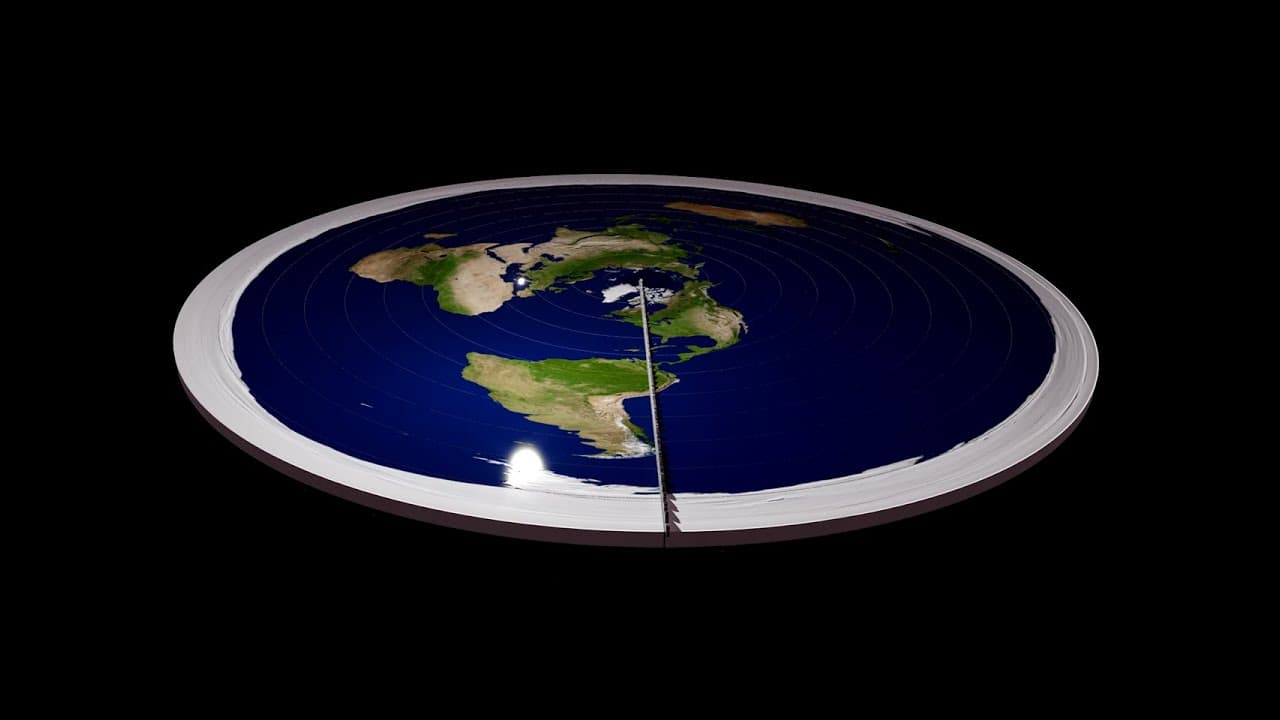
The Earth is not flat; it is round, supported by scientific evidence such as the curvature observable in structures like the Verrazano-Narrows Bridge and measurements by Eratosthenes. While flat Earth theories exist, they rely on flawed reasoning and ad hoc explanations that contradict extensive evidence confirming Earth's spherical shape.
Transcript
Hey, Vsauce. Michael here. In 2003, researchers did the measurements and found that Kansas is in fact literally flatter than a pancake. Of course, the Earth is not flat, the Earth is round. Otherwise travellers would be falling off the edge all the time. Right? Wrong. If the Earth was not a ball shaped, but was instead a flat disk, like this plate,... Read More
Key Insights
- 🫓 Kansas has been proven to be flatter than a pancake, but this does not mean the Earth overall is flat.
- 🫵 The belief in a flat Earth originated as a misconception and insult, falsely attributing the view to many people in the past.
- 🗼 The Verrazano-Narrows Bridge serves as evidence of Earth's curvature, as its towers are further apart at the top due to the roundness of the Earth.
- 👾 Historical figures like Eratosthenes measured and calculated the Earth's roundness long before modern space travel, establishing its acceptance among scholars.
- 😎 Wilbur Glenn Voliva and his religious sect in Zion, Illinois enforced the belief in a flat Earth, offering alternative explanations for phenomena such as sun distance and size.
- 🫓 Modern flat Earthers use ad hoc explanations to counter scientific evidence, including time zones and the shape of the Earth's shadow.
- 🌍 The inability to definitively answer every question about the Earth's shape does not negate the overwhelming scientific consensus supporting a round Earth.
Install to Summarize YouTube Videos and Get Transcripts
Explore YouTube Video Summarizer or Get YouTube Transcript Extractor
Questions & Answers
Q: What would it be like to live on a flat Earth?
Living on a flat Earth would involve gravity skewing towards the edge, creating the sensation of climbing up a steeper hill. Structures closer to the edge would need to be built, making it feel like down is perpendicular to the floor.
Q: Is there any evidence to support the flat Earth theory?
The flat Earth theory fails to explain various phenomena, such as circumnavigation, the round shadow the Earth casts on the Moon during a lunar eclipse, and the existence of time zones.
Q: Why do some people still believe in a flat Earth?
In the age of the internet, modern flat Earthers have emerged, providing ad hoc explanations for evidence contradicting a flat Earth. Conspiracy theories involving space agencies, airlines, and globe manufacturers contribute to the belief.
Q: Can the Earth be both flat and round?
Due to the effects of relativity and perspective at near-light speeds, the Earth can be perceived as flat to some observers and round to others. However, scientific evidence overwhelmingly supports a round Earth.
Summary & Key Takeaways
-
Kansas is scientifically proven to be flatter than a pancake, but this does not mean the Earth itself is flat.
-
Living on a flat Earth would involve increasingly diagonal gravity, creating the illusion of a steeper hill towards the edge.
-
Contrary to popular belief, falling off the edge of a flat Earth would not be a concern, as gravity would pull individuals back to the center.
Read in Other Languages (beta)
Share This Summary 📚
Summarize YouTube Videos and Get Video Transcripts with 1-Click
Try YouTube Summary with ChatGPT & Claude or YouTube Transcript Generator
Explore More Summaries from Vsauce 📚
Summarize YouTube Videos and Get Video Transcripts with 1-Click
Try YouTube Summary with ChatGPT & Claude or YouTube Transcript Generator