What are the 7 anxiety disorders and how they differ
TL;DR
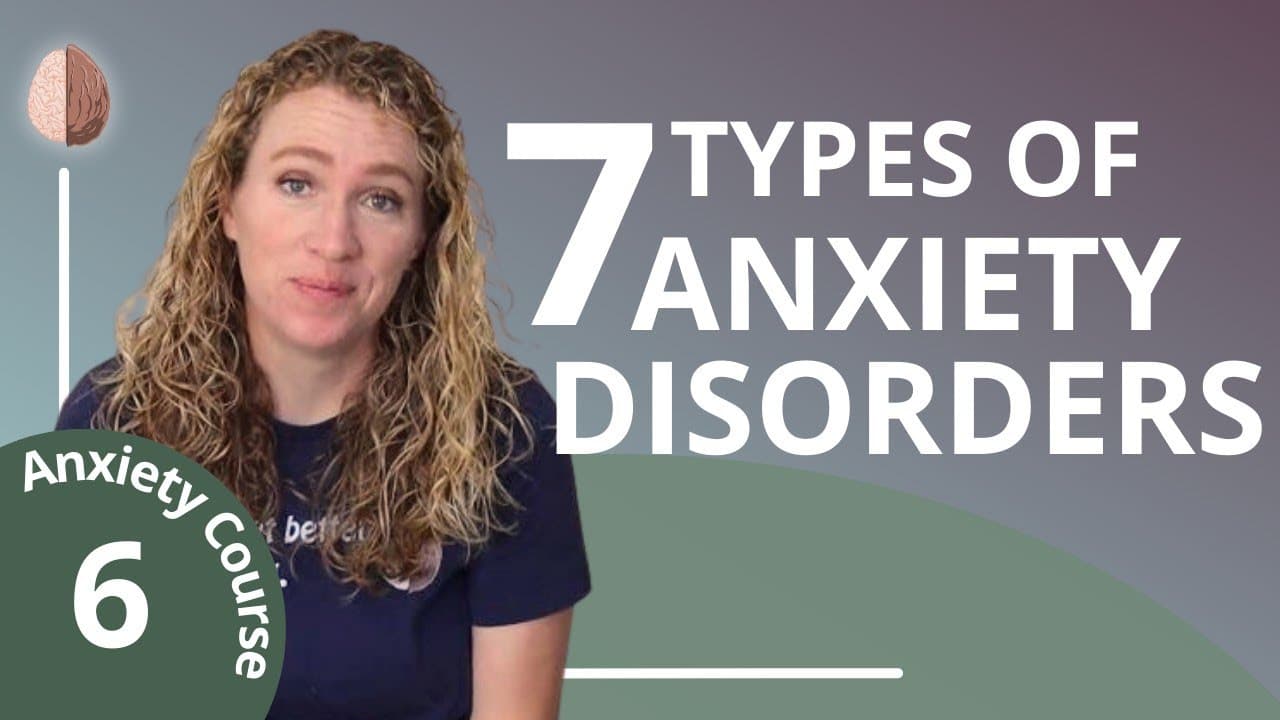
General understanding matters because anxiety disorders are not just intensified nerves. The seven types include generalized anxiety disorder, social anxiety, panic disorder, agoraphobia, specific phobias, selective mutism, and separation anxiety. Each has distinct patterns and treatments, and management improves with skills, practice, and professional guidance.
Transcript
There are seven types of anxiety disorders listed in the DSM-5-TR. This is the bible of mental health diagnoses in the U.S. In this video you'll learn what they are. Because when you have a name for something it can help you find the skills and resources to manage it. Now, if you experience an anxiety disorder, it's not your fault, but there is... Read More
Key Insights
- GAD is diagnosed when worry is persistent and widespread, affecting daily functioning.
- Social anxiety disorder involves fear of social evaluation and leads to self conscious behavior.
- Panic disorder is marked by recurrent panic attacks and avoidance of potential trigger situations.
- Agoraphobia involves avoidance of places or situations where escape might be hard.
- Specific phobias are extreme fears of a single object or situation.
- Selective mutism occurs mainly in children where speaking is limited to certain settings.
- Separation anxiety is excessive worry about being apart from attachment figures.
- OCD is not classified as an anxiety disorder in DSM-5-TR and requires different treatment approaches.
Install to Summarize YouTube Videos and Get Transcripts
Explore YouTube Video Summarizer or Get YouTube Transcript Extractor
Questions & Answers
Q: What is generalized anxiety disorder and how is it diagnosed according to the video?
Generalized anxiety disorder is described as chronic worrying about many issues. It is diagnosed when worrying occurs on most days for at least six months and is disproportionate to the actual situation. The condition also involves physical symptoms and a sense of being unable to control the worry. This defines a persistent pattern rather than a temporary state.
Q: How does social anxiety disorder manifest and what are common signs?
Social anxiety disorder involves high levels of anxiety in social situations and fear of being judged or making embarrassing mistakes. People may be self conscious about hand positions or eye contact and may experience symptoms like blushing, sweating, trembling, or nausea. The condition can include rumination before events and panic attacks for some individuals.
Q: What distinguishes panic disorder from other anxiety disorders as described in the video?
Panic disorder is characterized by recurrent, unexpected panic attacks that peak within minutes. People worry about another attack and may avoid situations where attacks occurred. Attempts to suppress symptoms can worsen the disorder, and about 4.7 percent of people are estimated to develop panic disorder after experiencing panic attacks.
Q: What is agoraphobia and how is it defined in the presentation?
Agoraphobia is defined as fear and avoidance of places or situations where escape might be difficult. It requires fear or anxiety about at least two situations such as public transportation, open or enclosed spaces, being outside, or being home alone. It can lead to a shrinking perimeter of safe places and limited mobility.
Q: How are specific phobias described in the video and what impact do they have?
Specific phobias are extreme fears of particular objects or situations like snakes, spiders, heights, or flying. They may trigger panic attacks or cause elaborate avoidance routines, interfering with daily living and broad life activities. They typically develop in childhood and affect a notable portion of the population.
Q: What does the video say about selective mutism and its prevalence?
Selective mutism is mainly a childhood condition where a person cannot speak in certain settings but can speak in others, such as at home. It can appear as refusal to speak but is often a feeling of being frozen. It occurs in about 0.7 percent of the general population and is more common in children.
Q: What is separation anxiety and who is most affected?
Separation anxiety involves excessive worry about being away from parents or home. It affects about four percent of the general population and often co occurs with other anxiety disorders such as generalized anxiety or social anxiety. The video notes its presence in childhood contexts.
Q: How does the video distinguish anxiety disorders from obsessive compulsive disorder and PTSD?
The video explains that OCD was moved to its own category, though anxiety is a feature. OCD responds to exposure and prevention strategies, whereas generalized anxiety responds better to CBT focused on thoughts. PTSD is described as a mental injury triggered by trauma, not simply an anxiety disorder, and not all trauma leads to PTSD.
Summary & Key Takeaways
-
General anxiety disorders involve chronic worry across many topics and lasting at least six months, impacting functioning.
-
Social anxiety centers on fear of judgment in social situations and can include physical symptoms and rumination before events.
-
Panic disorder features recurrent panic attacks and avoidance driven by fear of future attacks, interfering with daily life.
Read in Other Languages (beta)
Share This Summary 📚
Summarize YouTube Videos and Get Video Transcripts with 1-Click
Try YouTube Summary with ChatGPT & Claude or YouTube Transcript Generator
Explore More Summaries from Therapy in a Nutshell 📚

Summarize YouTube Videos and Get Video Transcripts with 1-Click
Try YouTube Summary with ChatGPT & Claude or YouTube Transcript Generator