How Does Purpose Appear in Living Systems?
TL;DR
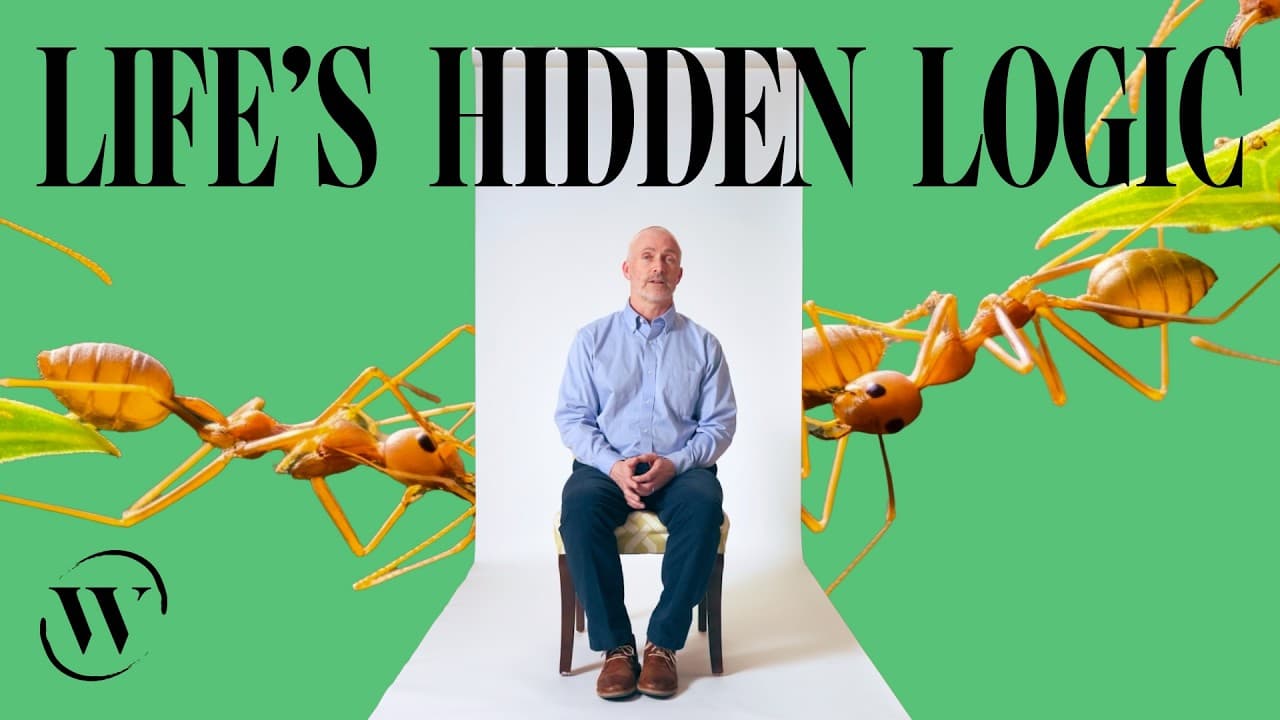
Purpose in biology can be studied rigorously without assuming an external designer. Concepts such as agency, directionality, and function describe how organisms maintain themselves, pursue goals, modify environments, and perform traits or behaviors with identifiable effects. Examining these capacities across biological scales may reshape research in biology, medicine, artificial intelligence, and the philosophy of science.
Transcript
A answer that is sometimes given to the question, you know, do we as humans have a purpose? The response is no, we're just a kind of organized bag of molecules that has been shaped by historical processes. That picture sort of doesn't take seriously just how significant the organizational structure that we exhibit is. So when somebody asks me, is p... Read More
Key Insights
- Teleology is the study of purposes or goals, and biological questions about how organisms accomplish functions belong broadly within this domain. Everyday statements such as teeth being for chewing feel natural, yet their apparent connection to intentional design made this vocabulary controversial within biology.
- Purpose language was often censored in twentieth-century biology because researchers feared that descriptions of traits as being for something would imply a designer. Love argues that teleological concepts are more varied than this rejected interpretation and can be supported by philosophically and epistemologically valid approaches.
- The broken-wing display is a goal-directed behavior in which an adult bird appears injured and moves away from its nest to attract a predator. Its success can be assessed by whether the predator follows the adult and fails to discover the eggs or chicks.
- Biological purpose can be investigated through both functional and capacity-based questions. Researchers can ask what a behavior is for, but they can also examine the triggers, mechanics, recognition processes, and system-level capacities that make the behavior possible for a living organism.
- Agency is the capacity of organisms to maintain themselves and select behavioral options from available choices while pursuing goals such as reproduction or foraging. Contemporary biological thinking increasingly questions the view that organisms are merely glorified robots responding automatically to environmental stimuli.
- Niche construction occurs when an organism modifies its environment in ways that support its continued existence. Earthworms create such effects by moving through, consuming, defecating, and churning soil, while the resulting environment can persist beyond an individual organism's lifetime and influence longer-term evolutionary processes.
- Directionality in living systems differs from ordinary physical movement because organismal activity is associated with goals or aims. A squirrel moving to collect food displays this biological directionality, whereas a ball rolling downhill moves in a way that is not interpreted as pursuing a goal.
- Biological functions are not uniform across the tree of life, and the traits supporting eating or mating can take very different forms. Important research questions include how new functions arise, how one function changes into another, and how a single trait can perform multiple functions simultaneously.
Install to Summarize YouTube Videos and Get Transcripts
Explore YouTube Video Summarizer or Get YouTube Transcript Extractor
Questions & Answers
Q: What is teleology in biology?
Teleology is the study of purposes or goals. In biology, it encompasses questions about how organisms and their traits accomplish particular functions, such as seeing, chewing, feeding, mating, or protecting offspring. The concept is scientifically contentious because purpose language historically appeared to imply intentional design, but Alan Love argues that it can be framed rigorously without relying on that implication.
Q: Why did biologists avoid talking about purpose?
Biologists often avoided purpose language because statements such as eyes being for seeing could appear to imply that something intentionally designed organisms and their traits. As evolutionary and mechanistic approaches developed, researchers became wary of making that inference. The result was a tension between avoiding problematic assumptions and using language that naturally describes the organized, functional character of living systems.
Q: How can purpose be studied scientifically without assuming design?
Purpose can be studied by separating goal-directed organization from claims about an external designer and by defining concepts that support experimentation, data collection, and rigorous theorizing. Researchers can examine observable behaviors, their success conditions, their triggers, their mechanisms, and the capacities required to produce them. Philosophical analysis helps clarify these concepts and makes them usable across scientific disciplines.
Q: What does the broken-wing display reveal about biological purpose?
The broken-wing display shows a bird behaving toward an identifiable outcome. When a predator approaches a nest containing eggs or chicks, the adult appears injured and moves away, encouraging the predator to follow it instead of finding the nest. The behavior invites questions about its protective function, its triggers, its physical execution, and the bird's capacity to deploy it appropriately.
Q: What is agency in a living organism?
Agency is an organism's capacity to maintain itself and select among available behavioral options in pursuit of goals, including reproduction and foraging. The concept raises a major explanatory question: whether analyzing nervous systems, brains, or other lower-level mechanisms eliminates agency or instead explains how genuine agency is possible. Love notes that contemporary biology is increasingly uncomfortable with treating organisms as glorified stimulus-driven robots.
Q: How does niche construction connect agency and evolution?
Niche construction occurs when organisms modify their surroundings in ways that make those environments more conducive to continued existence. Earthworms illustrate this process by moving through, consuming, defecating, and churning soil. Because the modified environment can persist beyond an individual earthworm's life, seemingly mundane organismal activities can have longer-term consequences for evolutionary processes and the emergence of biological functions.
Q: What is directionality in biological behavior?
Directionality concerns forms of empirical behavior that are characteristically associated with living systems and their goals. A squirrel moving through trees or across the ground to collect food exhibits movement directed toward an aim. A ball rolling downhill also moves in a direction, but its motion is not treated as goal pursuit. This contrast helps identify what may be distinctive about living activity.
Q: How do biological functions arise and change?
Biological functions are associated with traits that enable organisms to perform necessary activities, such as eating and mating. Their forms vary across the tree of life, as shown by differences in how whales and squirrels eat and by the diversity of mating behavior. Research therefore asks how new functions arise, how existing functions change, and how one trait can support multiple functions at once.
Summary & Key Takeaways
-
Teleology concerns purposes and goals, including familiar biological descriptions such as teeth being for chewing and eyes being for seeing. Biologists historically avoided such language because it appeared to imply design. Alan Love argues that careful philosophical frameworks can make purpose scientifically tractable without relying on religious or otherwise problematic assumptions about a designer.
-
The broken-wing display illustrates goal-directed biological behavior. A nesting bird appears injured and moves away from its nest, drawing a nearby predator toward itself and away from eggs or chicks. Researchers can investigate both the behavior's function and the mechanisms, triggers, and capacities that allow an organism to perform this deception successfully.
-
Agency, directionality, and function describe related aspects of biological purpose. Agency includes self-maintenance and selecting among behavioral options. Directionality distinguishes goal-oriented organismal movement from motion such as a ball rolling downhill. Function concerns traits that enable activities such as eating and mating, including how functions arise, change, and coexist within one trait.
Read in Other Languages (beta)
Share This Summary 📚
Summarize YouTube Videos and Get Video Transcripts with 1-Click
Try YouTube Summary with ChatGPT & Claude or YouTube Transcript Generator
Explore More Summaries from The Well 📚

Summarize YouTube Videos and Get Video Transcripts with 1-Click
Try YouTube Summary with ChatGPT & Claude or YouTube Transcript Generator